Science
Benjamin Franklin Put His Swim Fins on His Hands
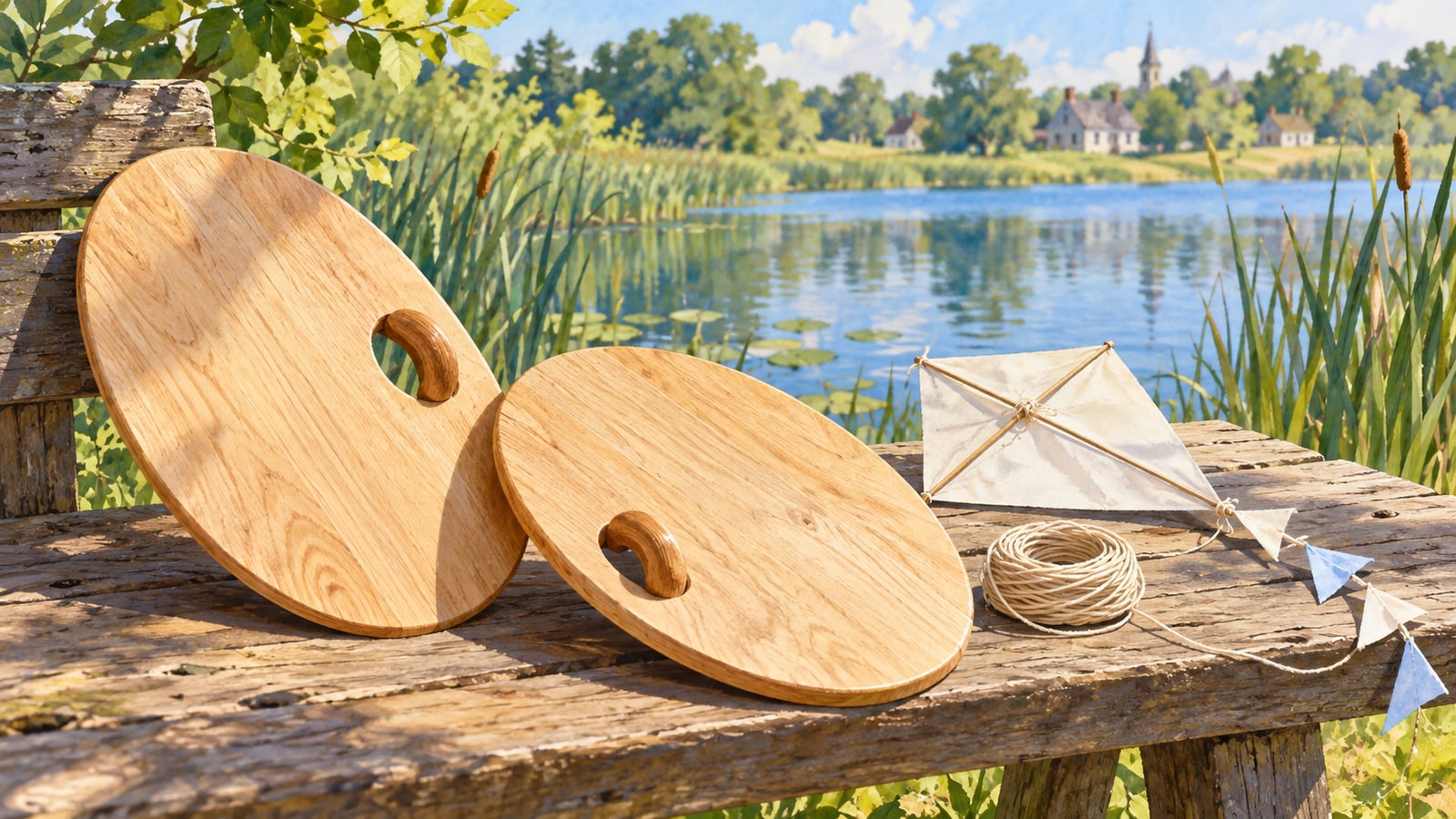
Young Franklin tried wooden hand paddles and a kite-assisted swim. His later account remembered both the practical drawbacks and the pleasure of experimenting.
SCIENCE
Young Franklin tried wooden hand paddles and a kite-assisted swim. His later account remembered both the practical drawbacks and the pleasure of experimenting.
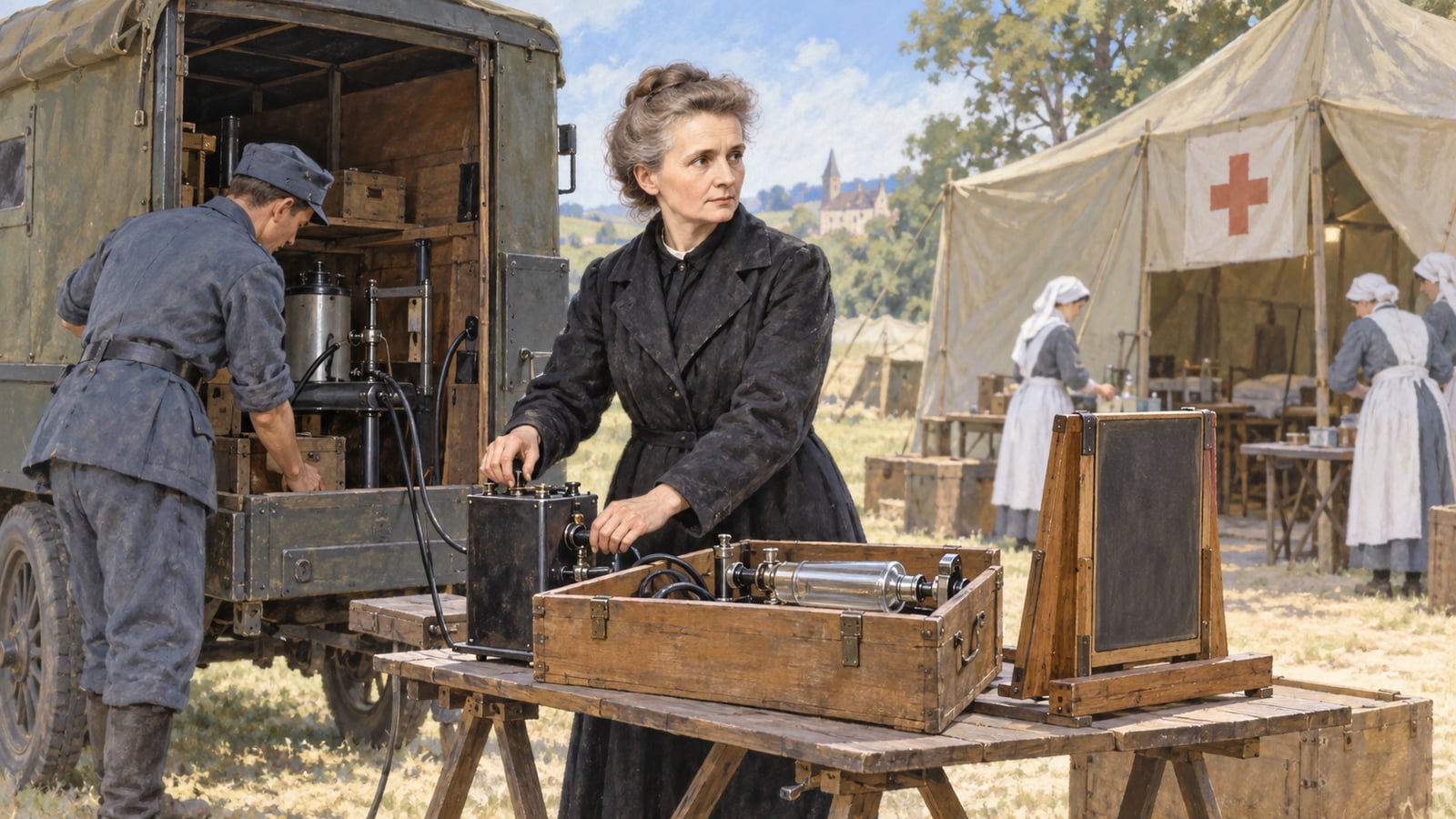
Taking X-rays to wartime hospitals required much more than a car. Marie Curie's mobile teams had to supply power, assemble equipment and train operators.
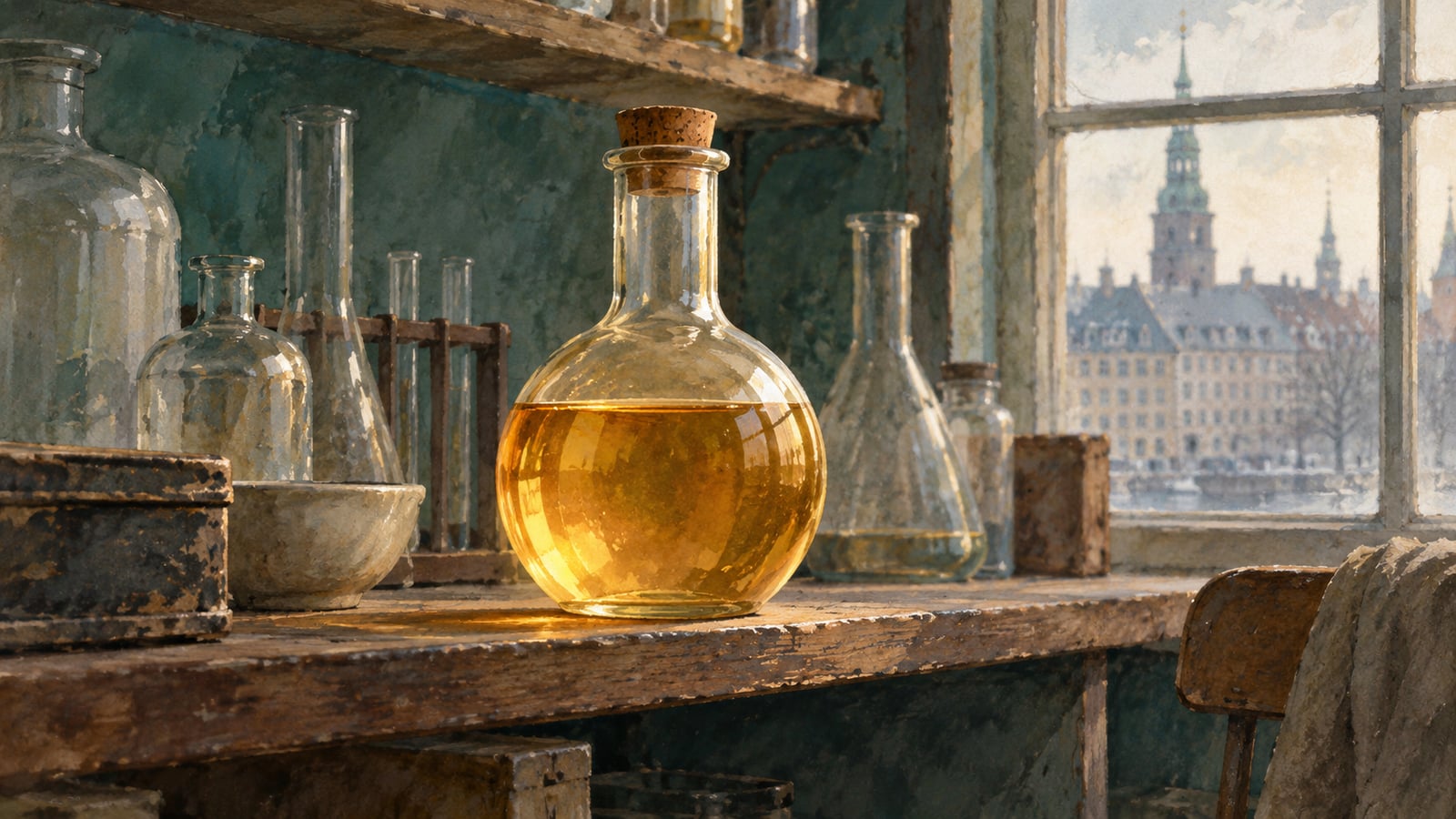
Two named Nobel medals became dangerous evidence when Germany occupied Denmark. George de Hevesy hid them by dissolving their recognizable form.
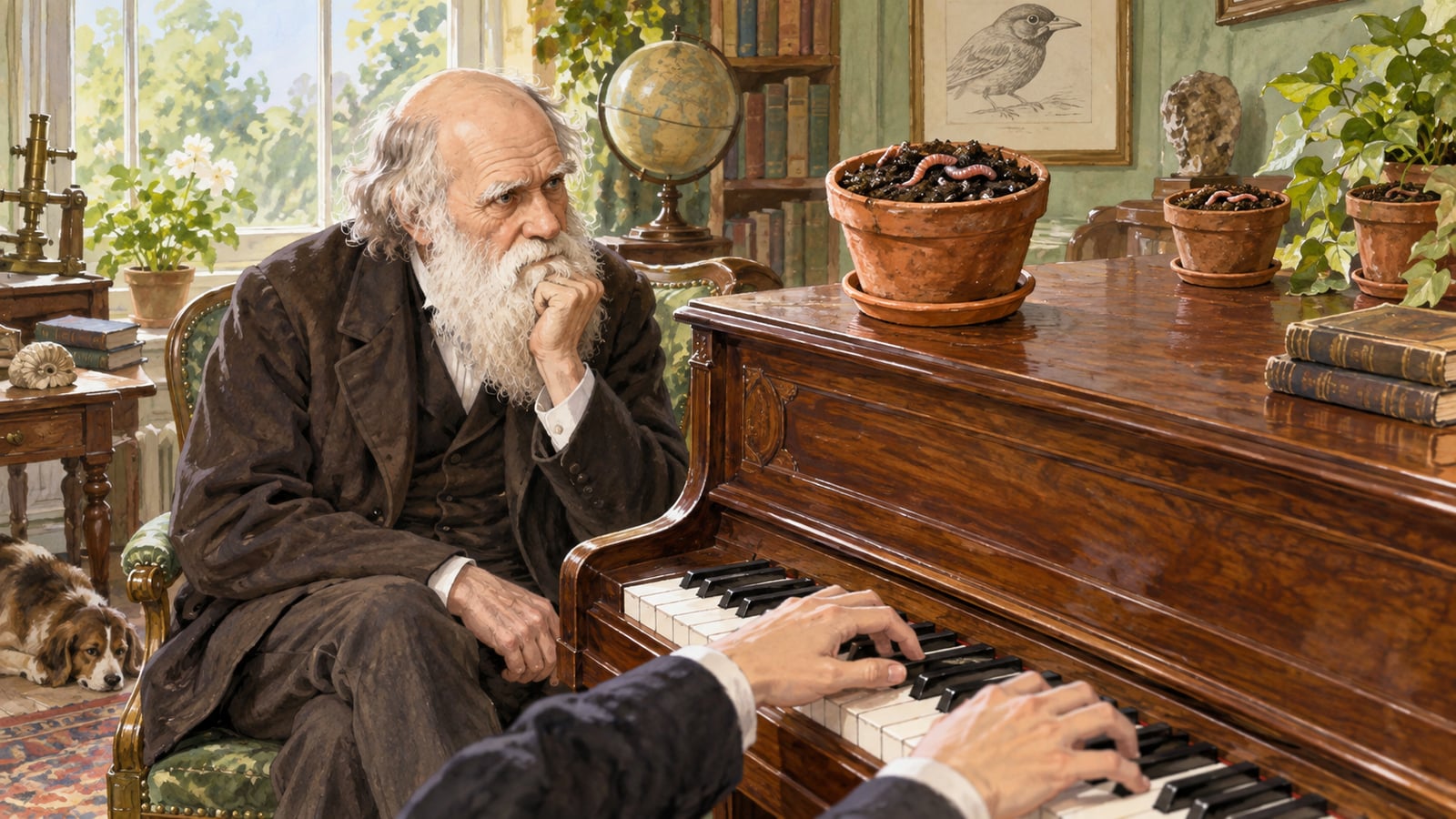
Darwin's earthworms ignored loud music. Moving their pots onto the piano changed the experiment—and revealed a distinction between sound and vibration.
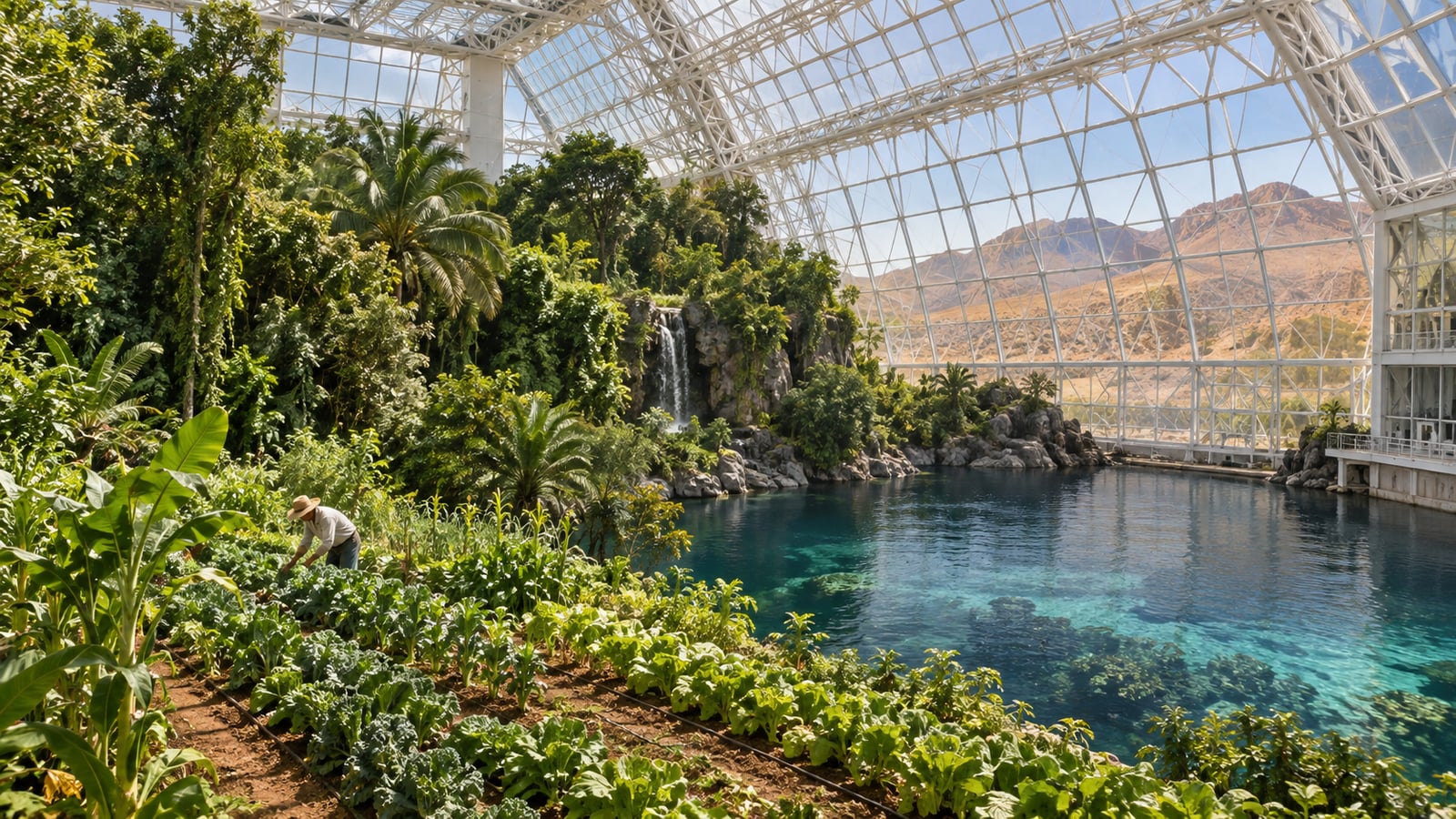
Eight people moved into a glass enclosure containing forests, water and farmland. Explaining its oxygen loss meant investigating both the soil and the building itself.
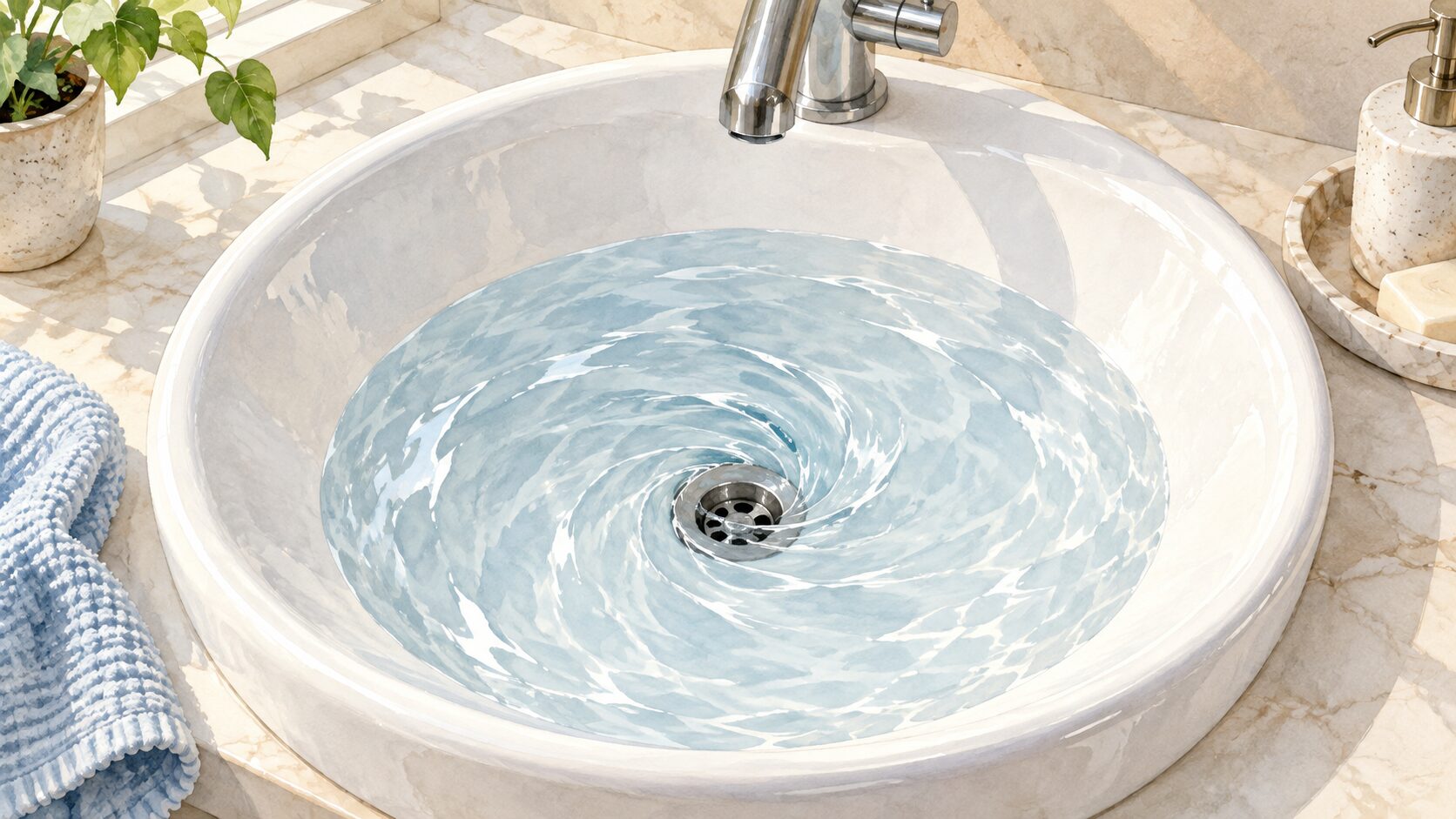
Household drains can swirl either way in either hemisphere. Filling conditions, residual currents, and basin geometry usually outweigh Earth's small rotational influence, unlike carefully controlled experiments.
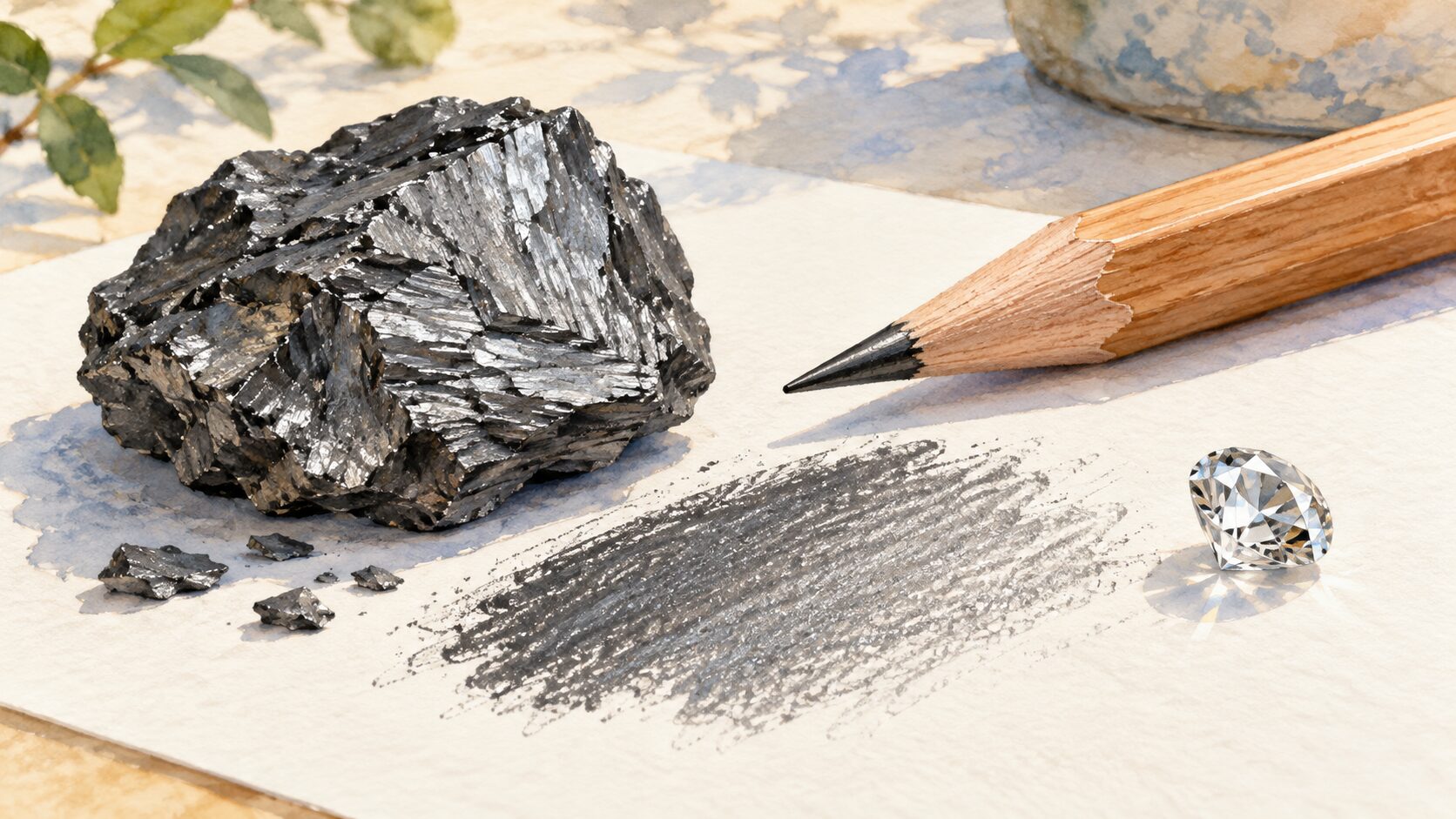
Graphite has strong carbon sheets with weak attractions between them; diamond has a three-dimensional bond network. Their structures explain differences in softness, scratch resistance, and electrical behavior.
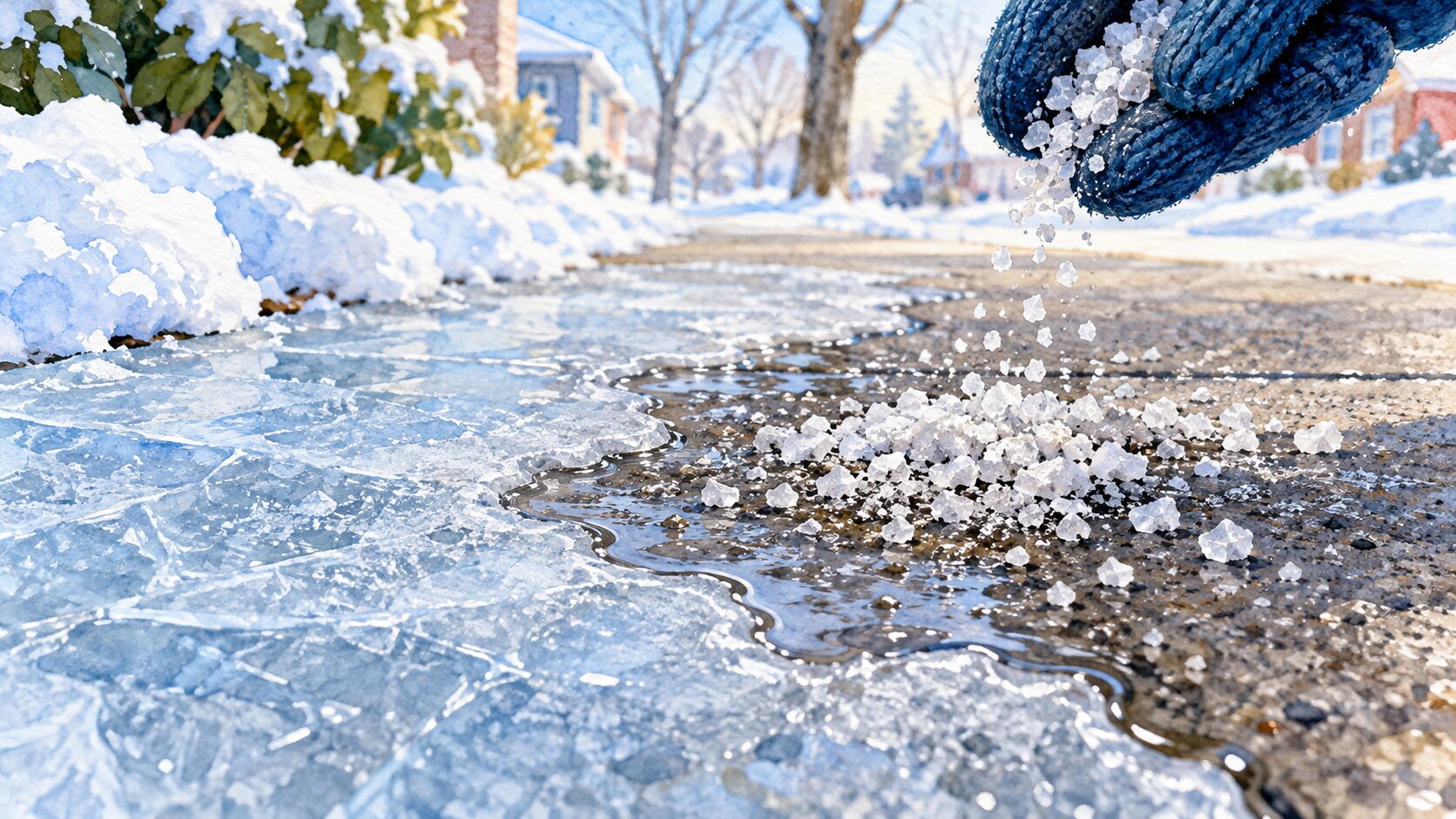
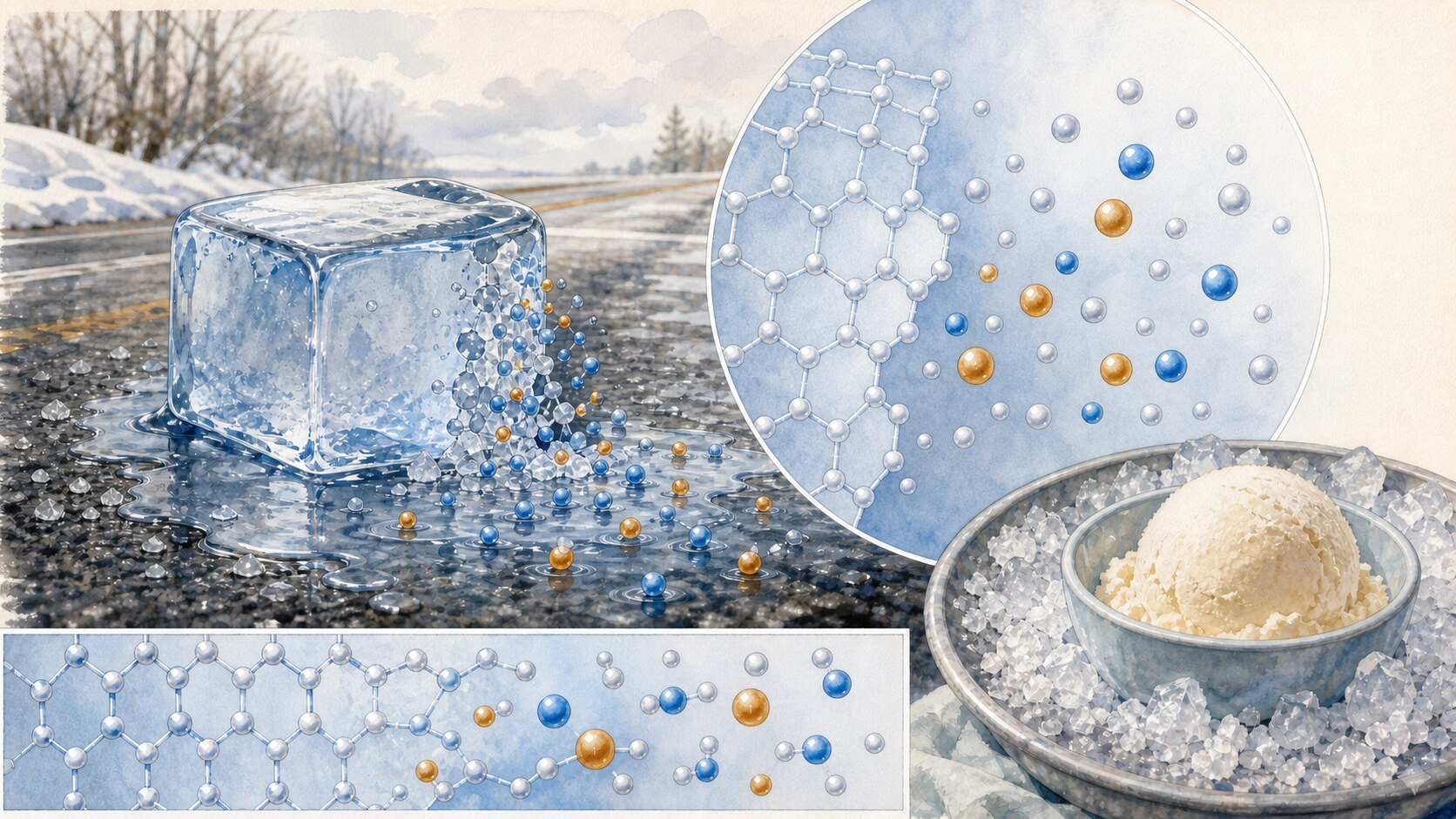
Salt dissolves into water at the ice surface to make brine, which freezes at a lower temperature than pure water. Its effect depends on pavement temperature, moisture, and brine concentration.
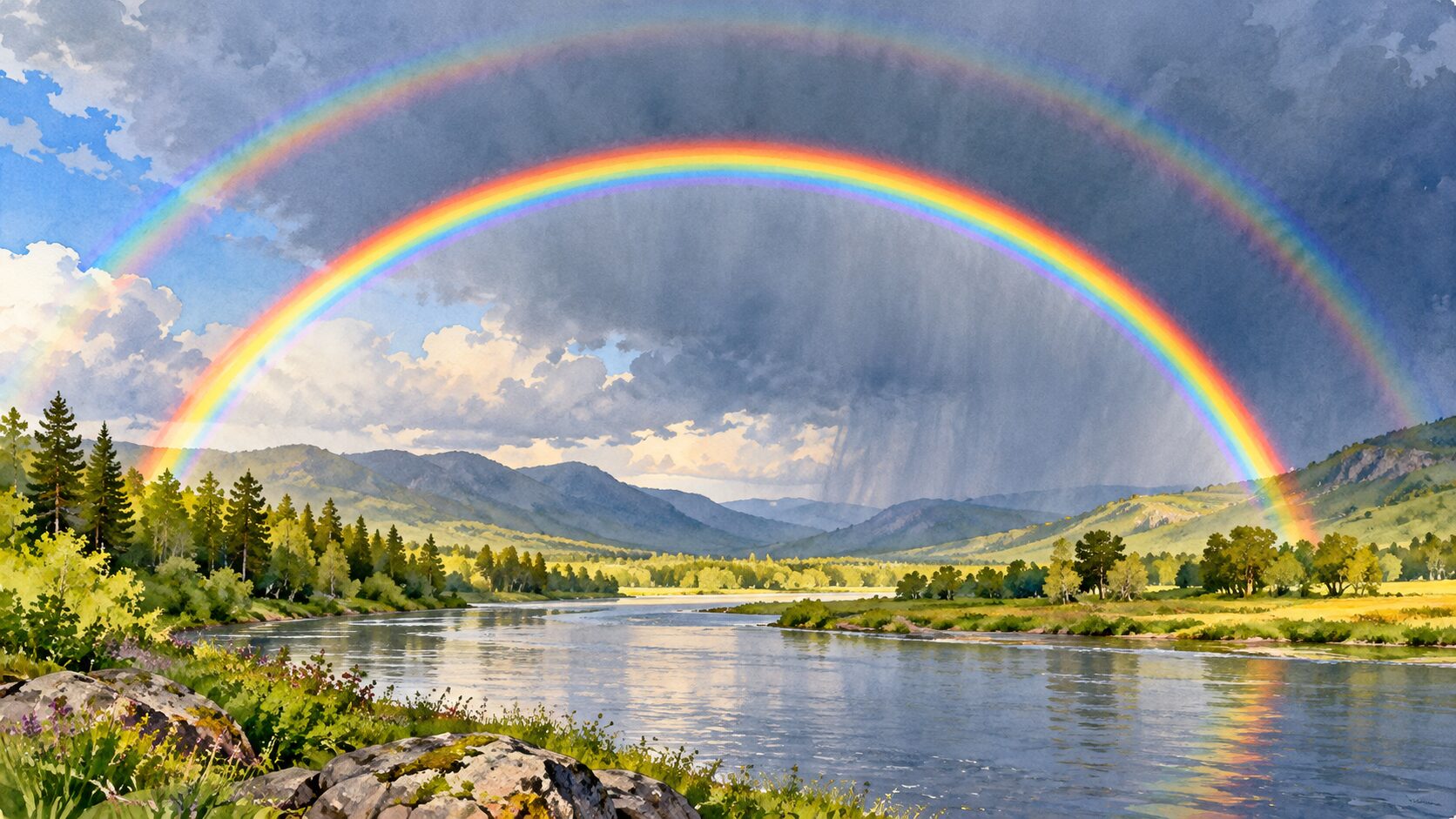
The faint outer rainbow comes from sunlight reflected twice inside raindrops. That extra reflection changes the light's exit path and reverses the color order of the inner rainbow.
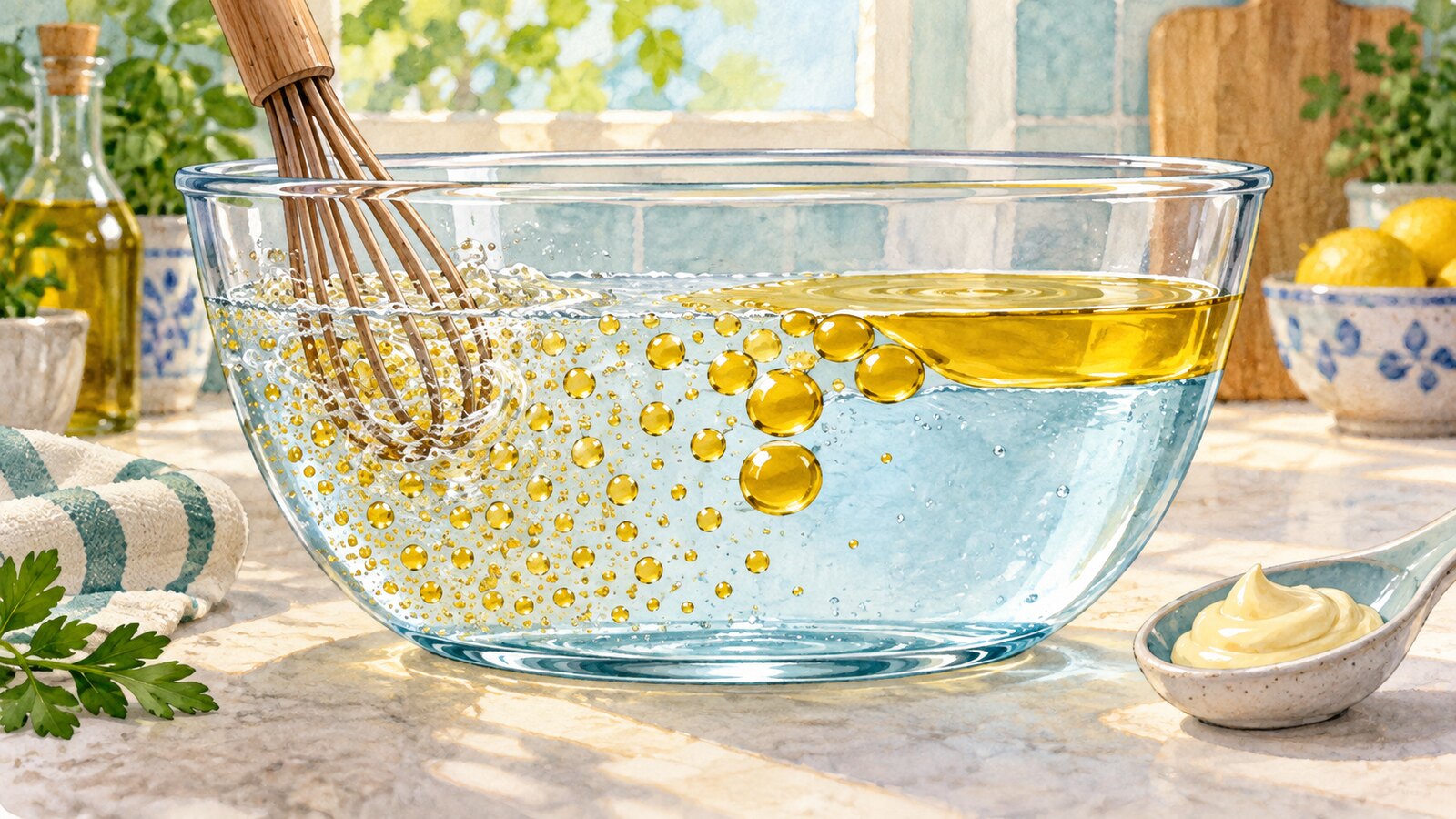
Polar water molecules favor interactions with one another over a broad boundary with nonpolar oil. The droplets created by stirring collide and merge without a protective emulsifier, rebuilding a separate layer.
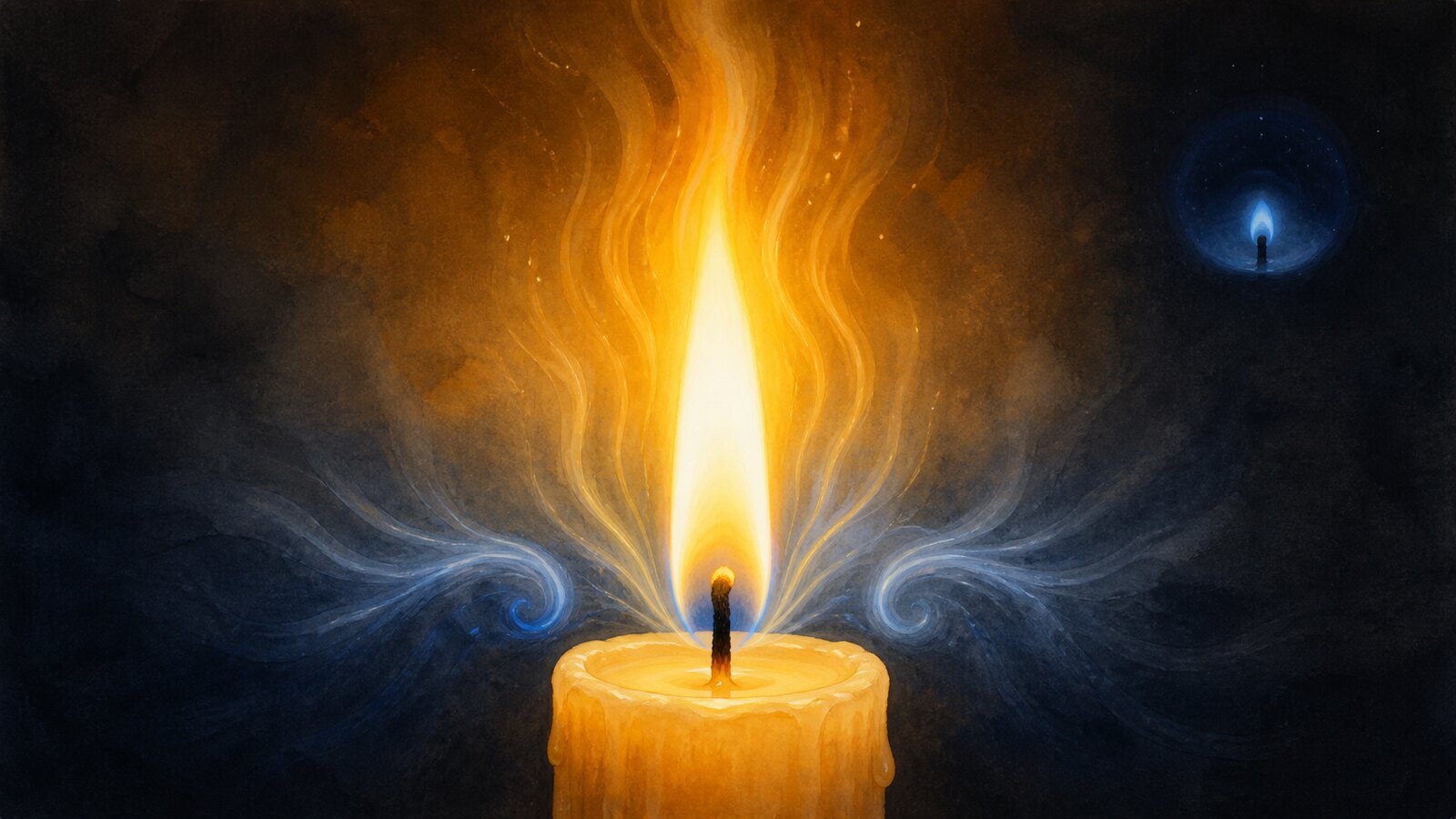
Hot combustion gases become less dense and rise in gravity while cooler oxygen-rich air enters below. This buoyant convection pulls the reaction zone upward into the familiar elongated flame.
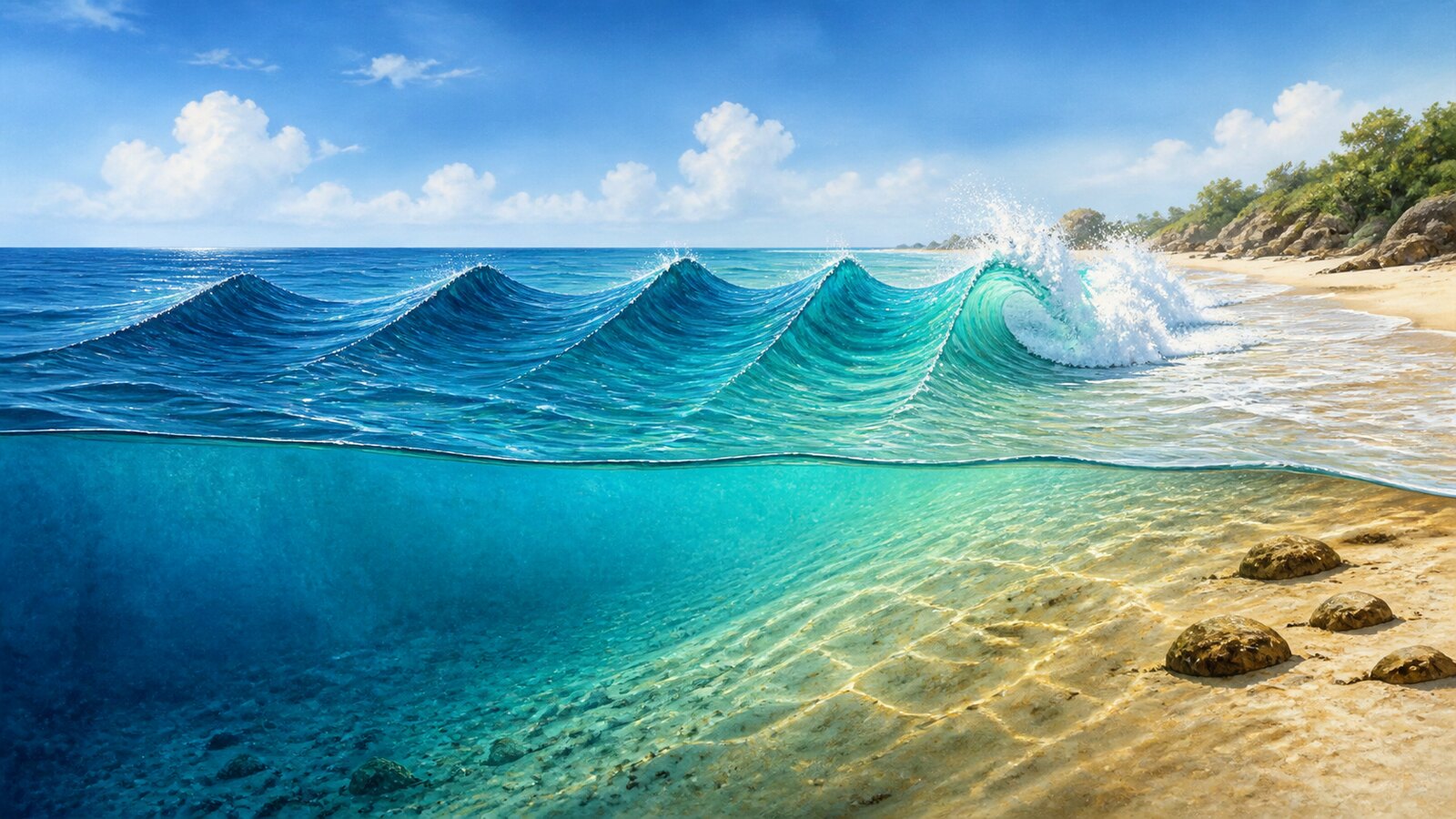
As waves enter shallow water, the seabed slows them and shortens their wavelength while their height and steepness increase. When the water can no longer support that shape, the crest topples forward as a breaker.
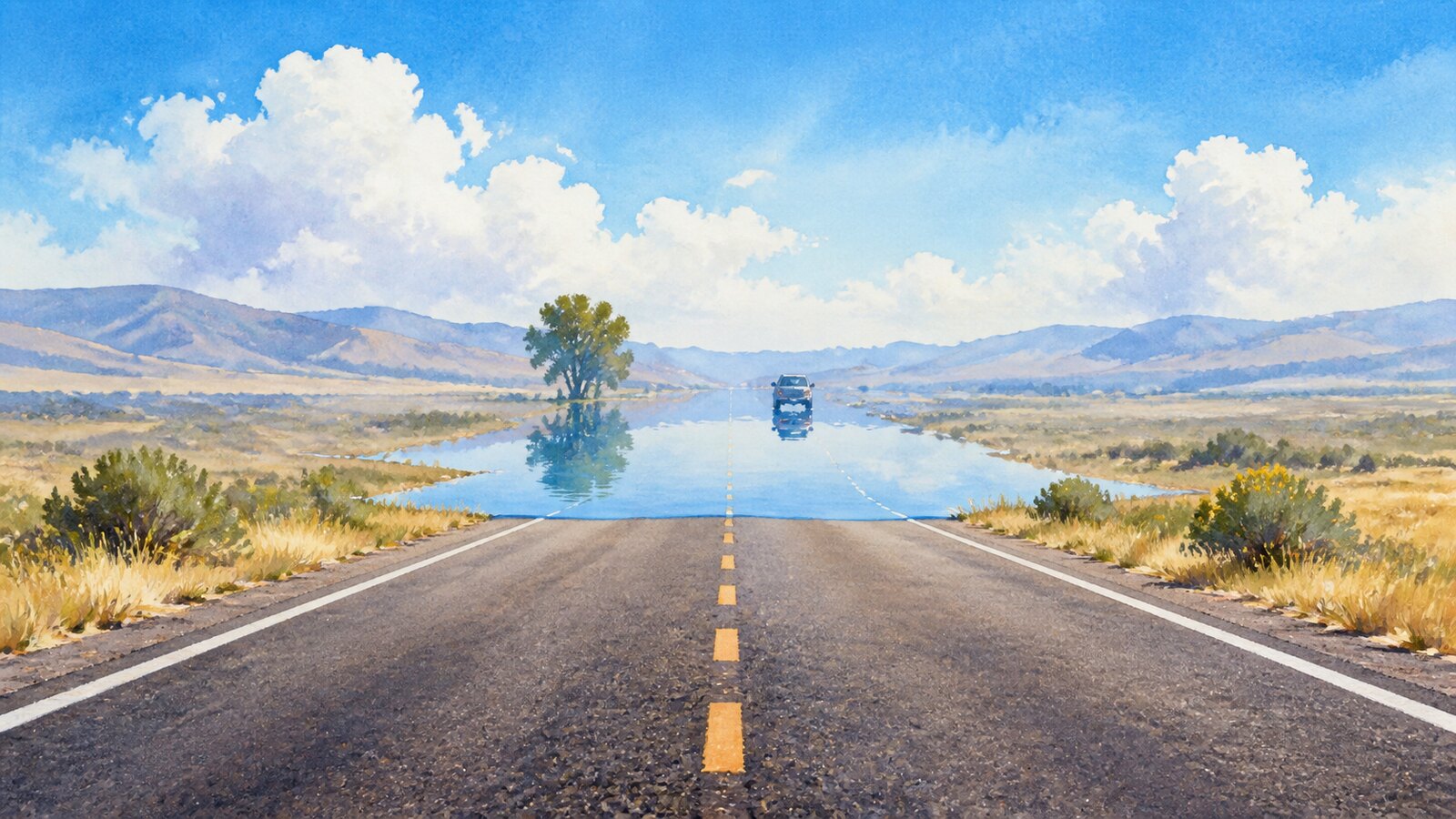
Air just above sun-heated asphalt is hotter and less dense than the layers above it. A continuous refractive-index gradient bends sky light upward, and the brain traces it back below the road as a puddle-like inferior mirage.
Warm humid breath cools below its dew point as it mixes with cold air, forming tiny droplets or ice crystals. The visible cloud is light scattered by those particles, not water vapor itself or carbon dioxide.

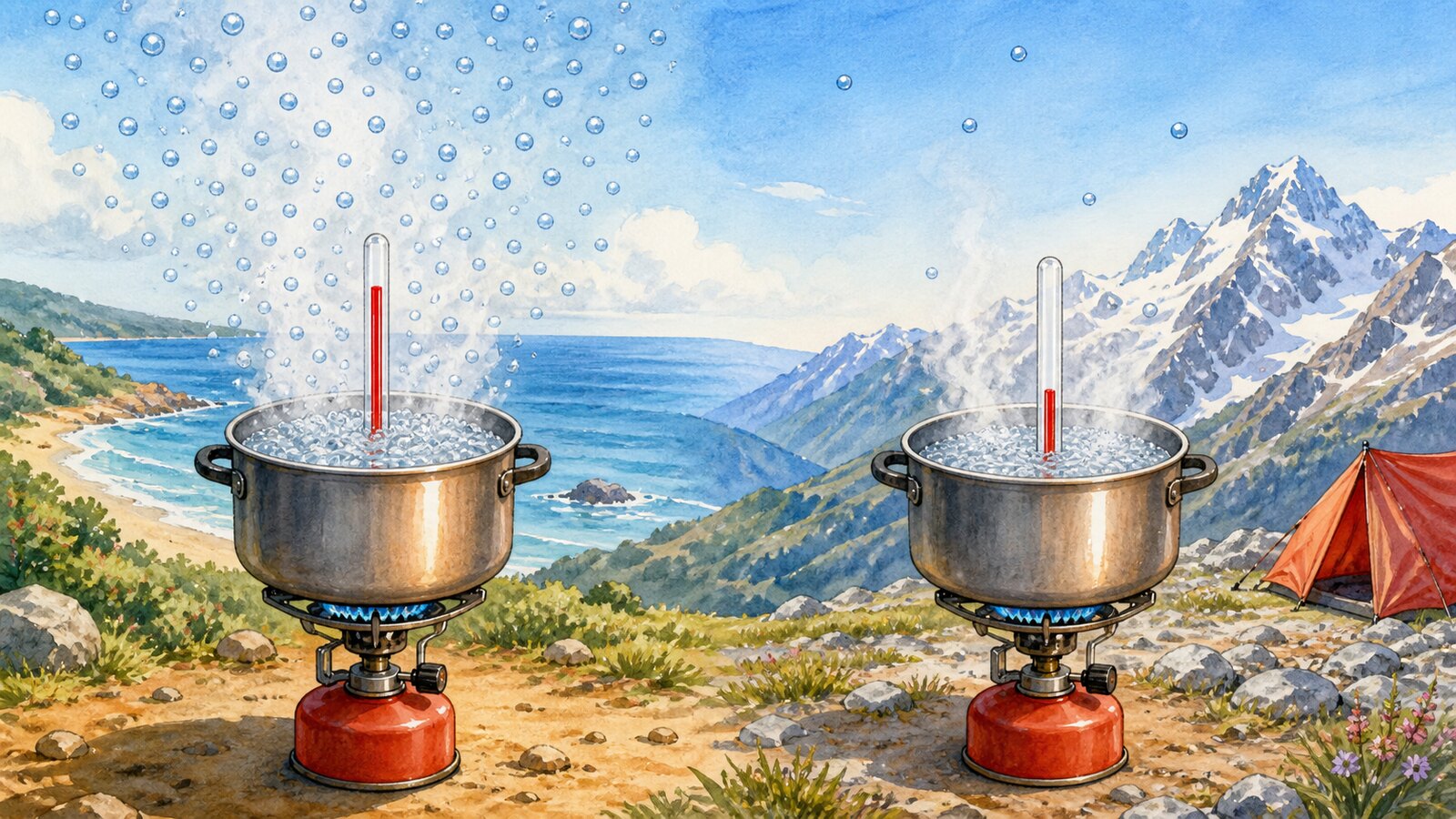
At high altitude, lower air pressure lets water's vapor pressure match the surroundings at a lower temperature. The pot boils below 100°C, yet food can cook more slowly.
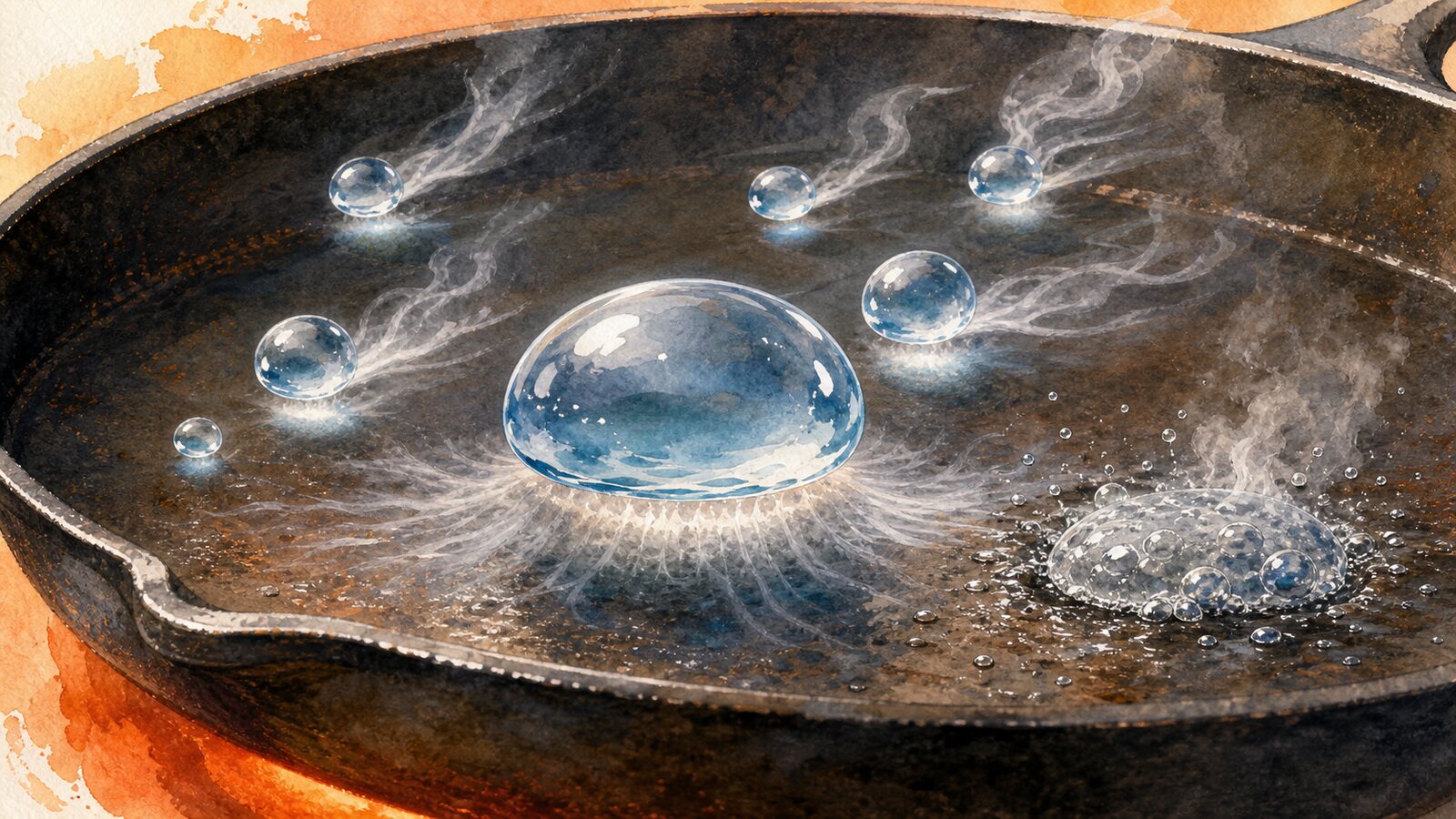
On a sufficiently superheated pan, vapor generated beneath a drop supports it while reducing contact, friction, and heat transfer. This Leidenfrost state lets the water round up and glide.
Friction and force chains redirect much of the pile's load into neighbors and walls. Discharge depends mainly on the neck and local grain rearrangement, though end effects, clogs, air, and humidity introduce error.
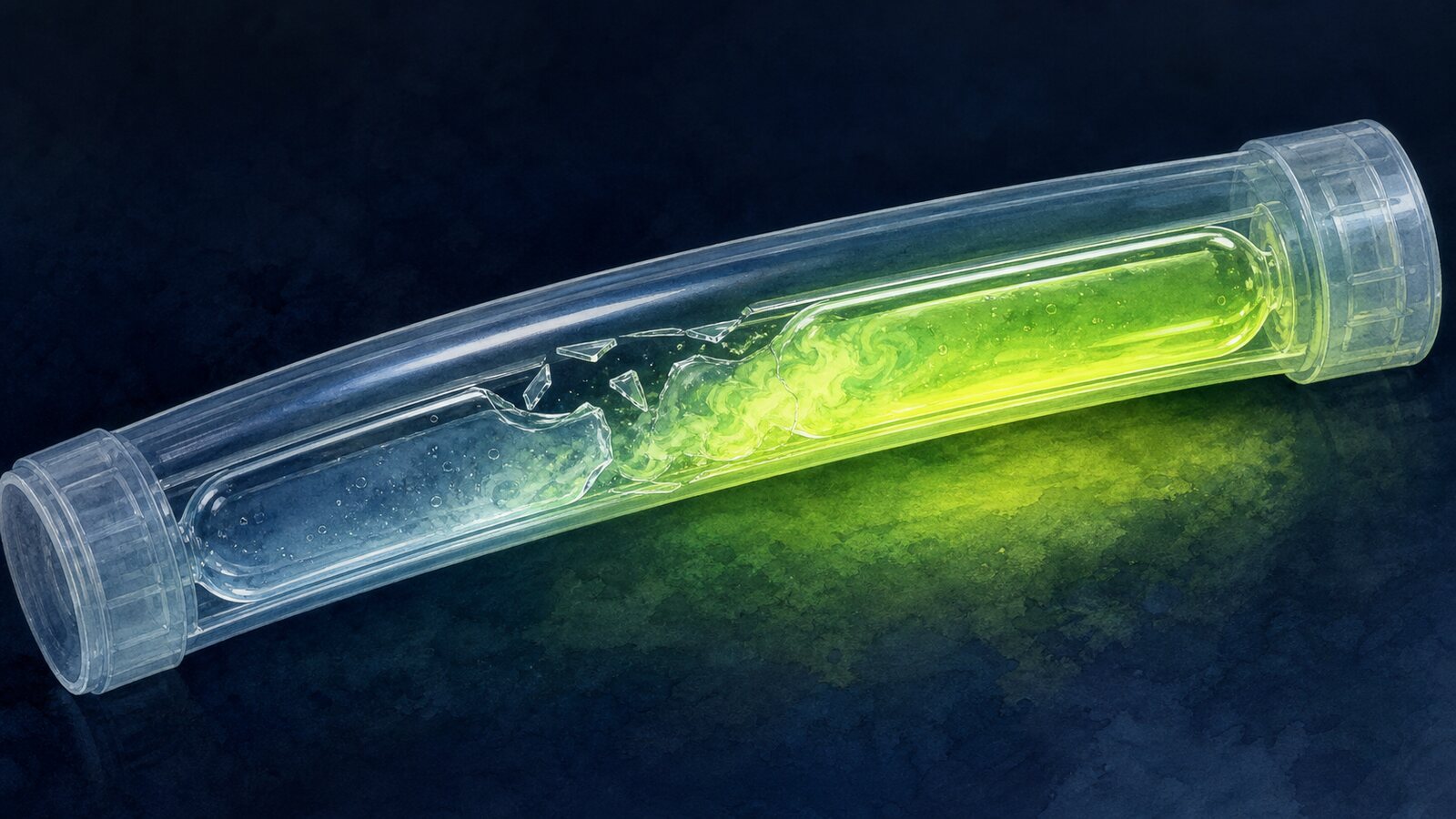
Bending a glow stick breaks an inner vial so hydrogen peroxide and an oxalate solution can mix. The reaction excites a fluorescent dye, which emits light as it returns to its ordinary state.
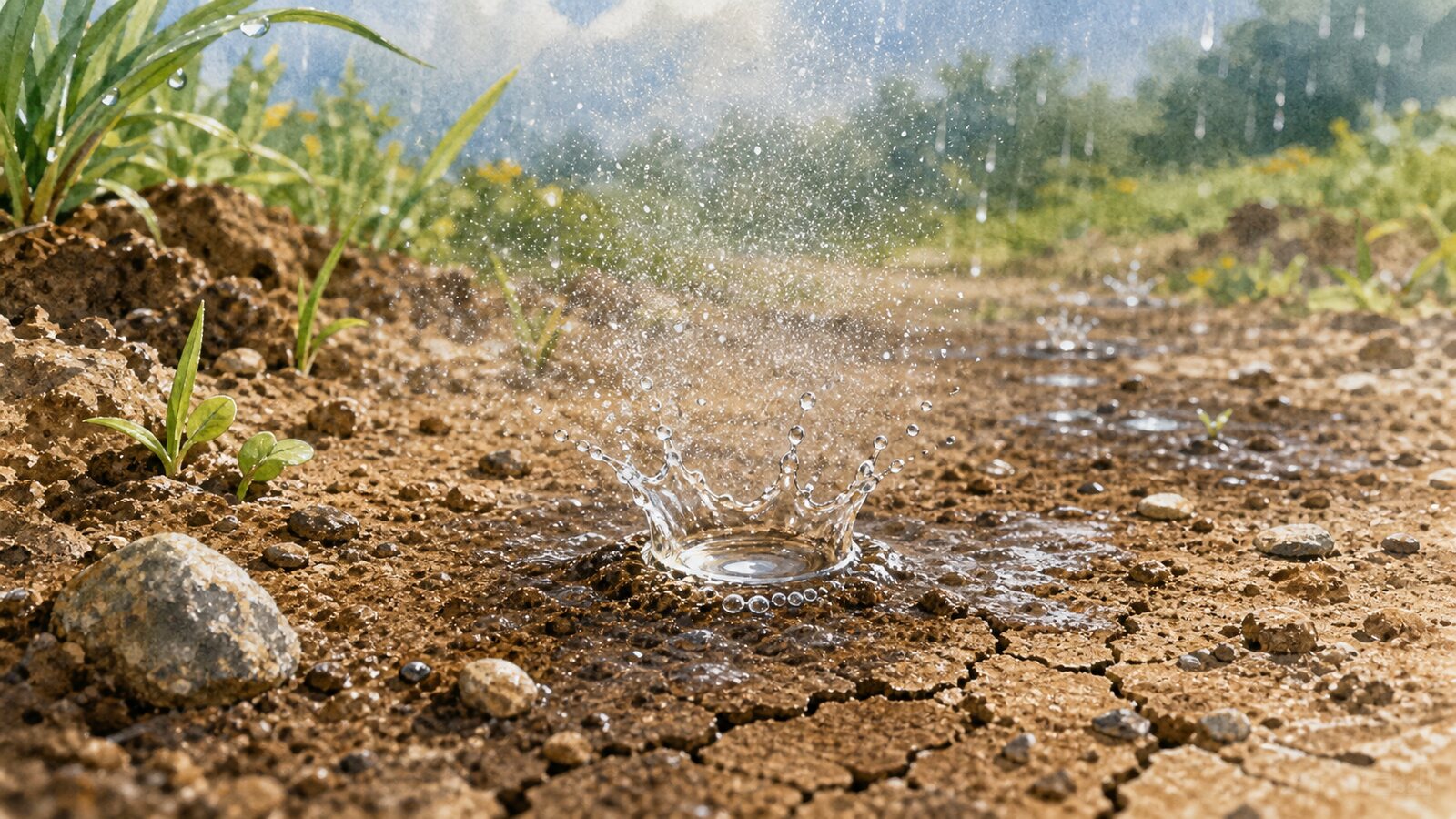
Raindrop impacts launch geosmin and plant-derived compounds from dry porous ground in microscopic aerosols. That mixed earthy aroma after first rain is called petrichor.
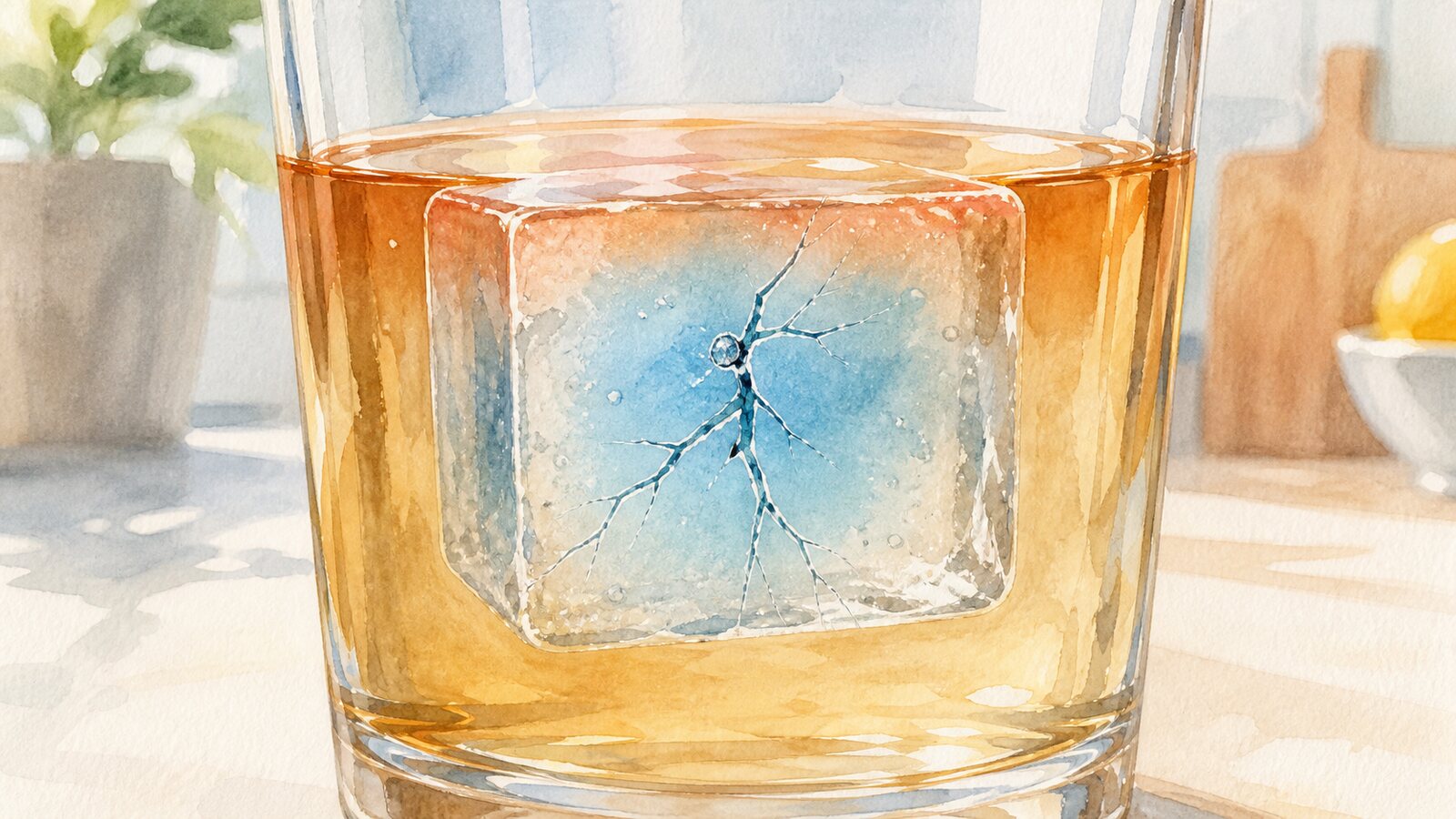
A drink warms an ice cube's surface before its core, so the bonded layers try to expand by different amounts. Thermal stress concentrates at bubbles and grain boundaries until a crack races through with a sharp pop.
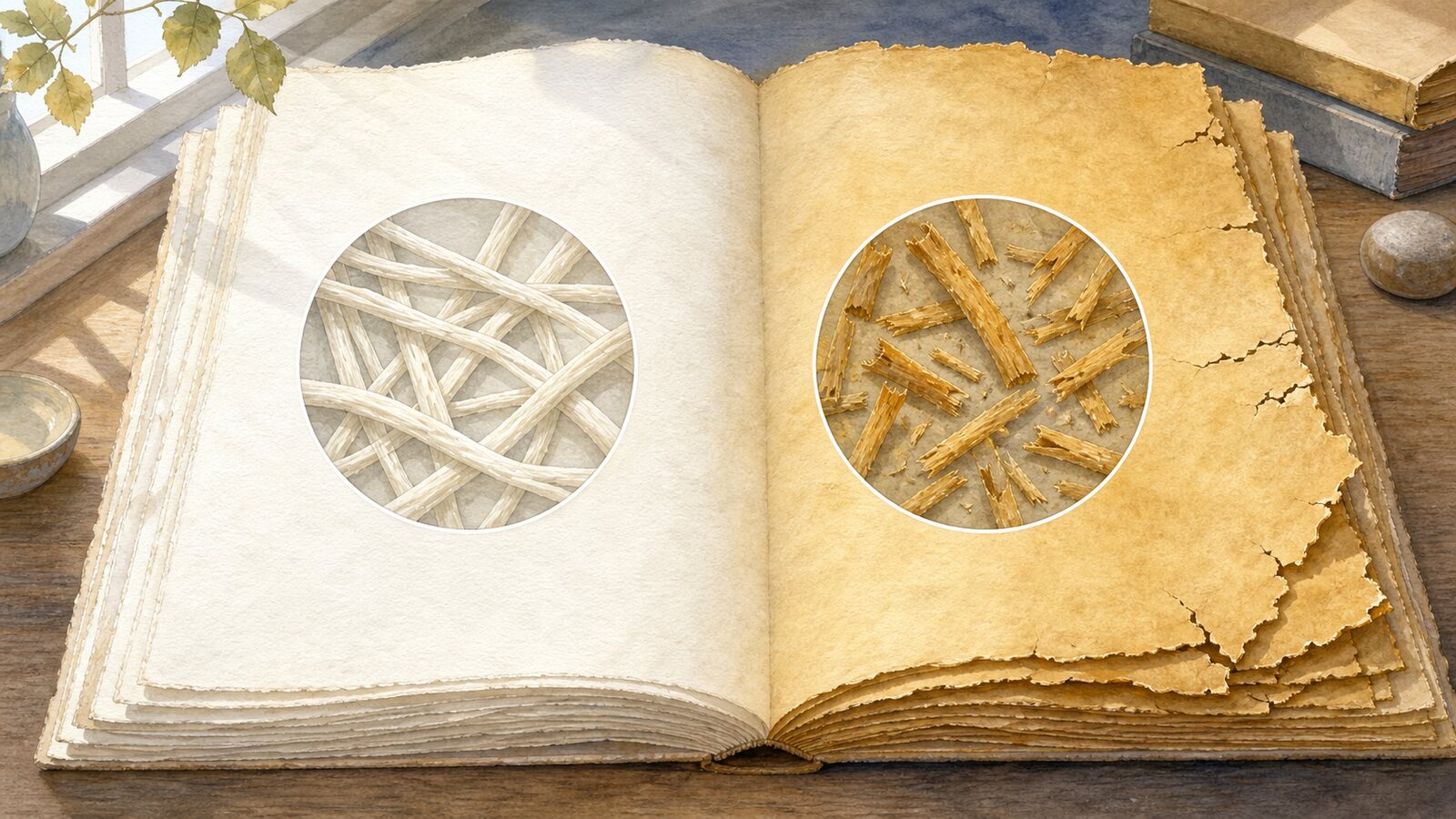
Oxidation creates chromophores that absorb blue-violet light and make paper look yellow. At the same time, acid hydrolysis and oxidation cut cellulose chains, weakening the fiber network until it becomes brittle.
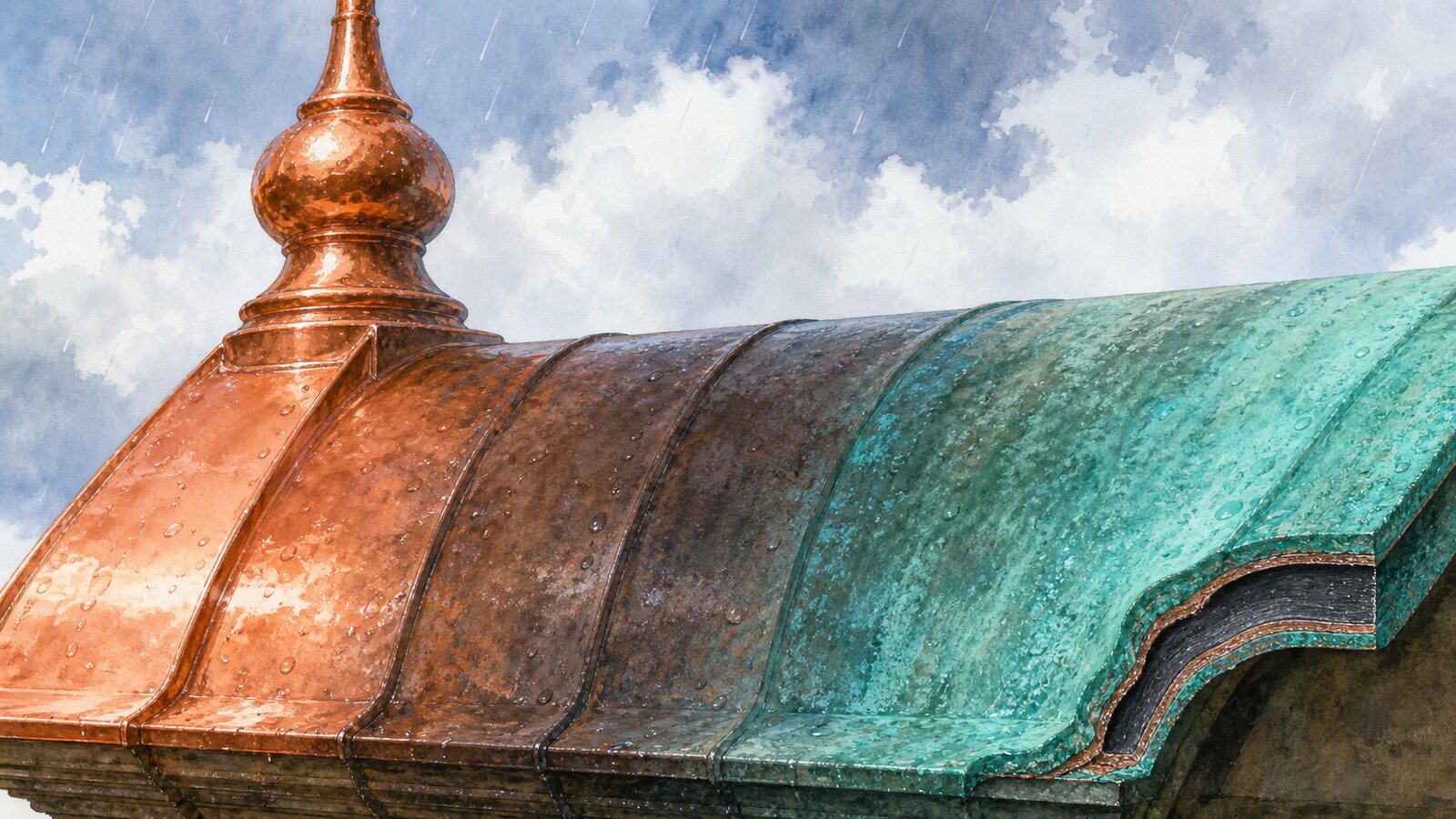
Copper first develops a brown cuprite layer, then moisture and airborne compounds build blue-green sulfates, chlorides, and related minerals above it. This environment-specific layered surface is patina.
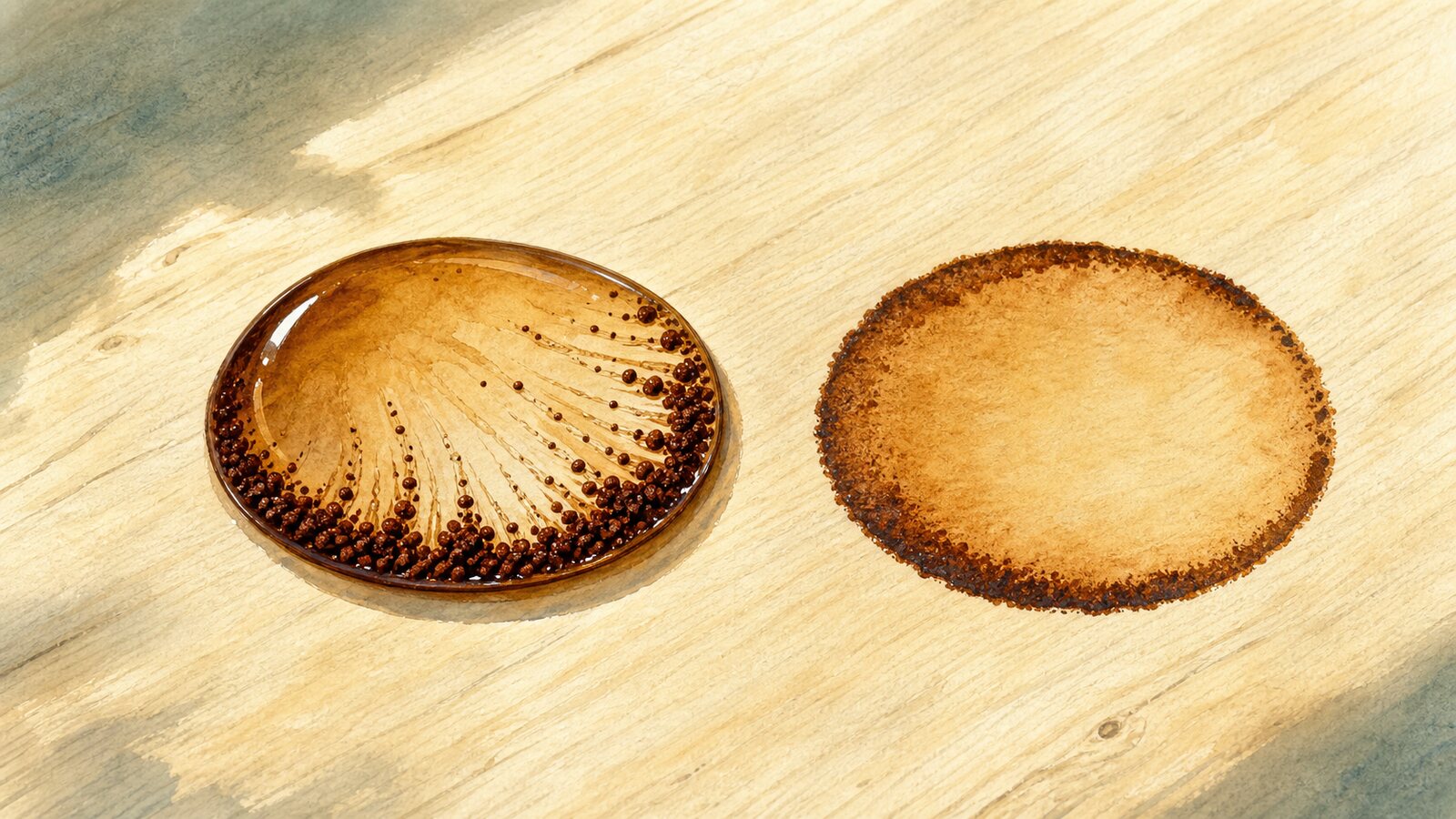
When a droplet's rim stays pinned, outward flow replaces water evaporating near the edge. That flow carries coffee particles to the original contact line, leaving a darker ring around a paler center.
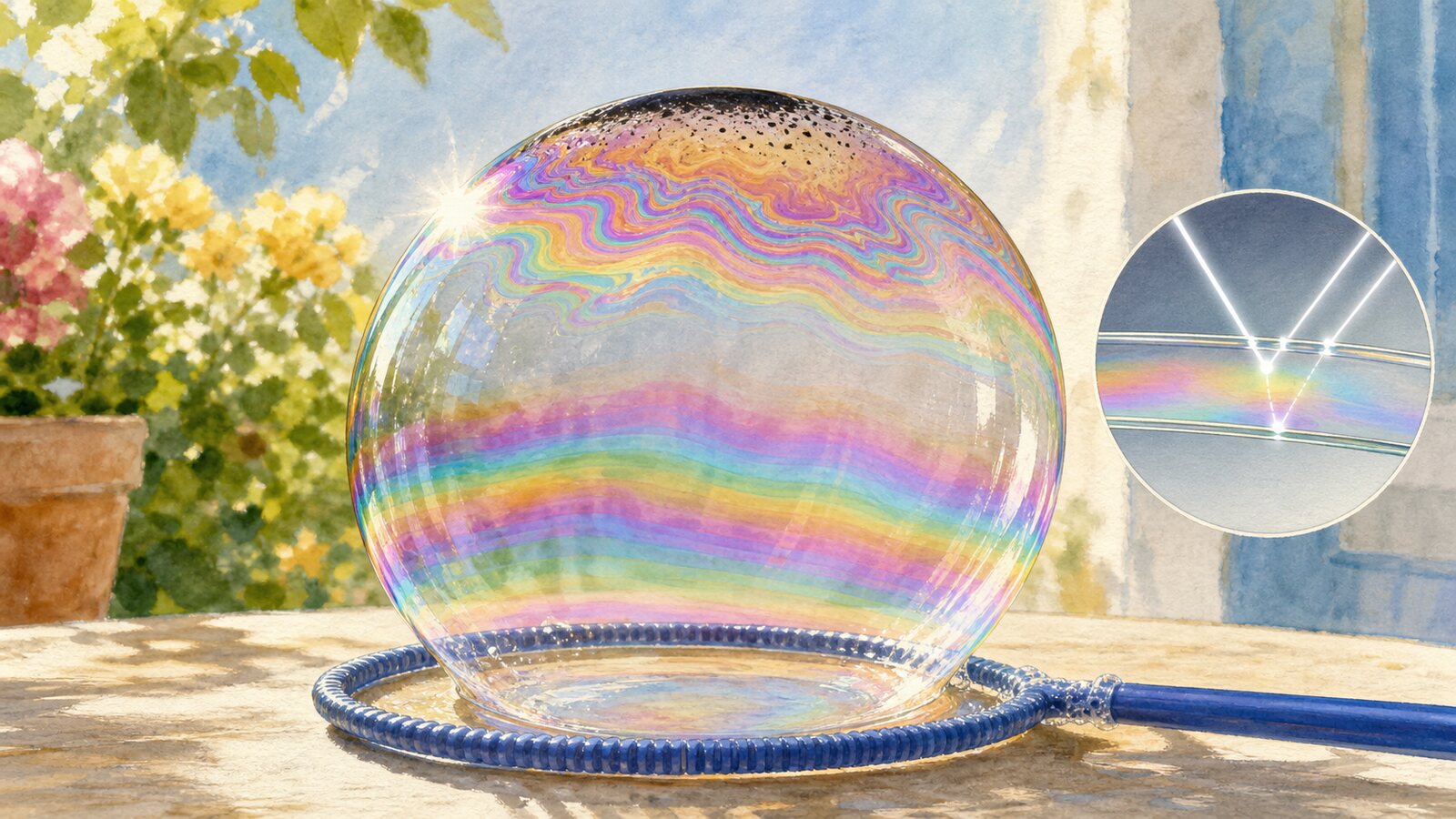
Light reflected from the two surfaces of a soap film reinforces or cancels different wavelengths according to thickness and angle. Drainage and evaporation move the bands, while an extremely thin patch can reflect so little light that it looks black.
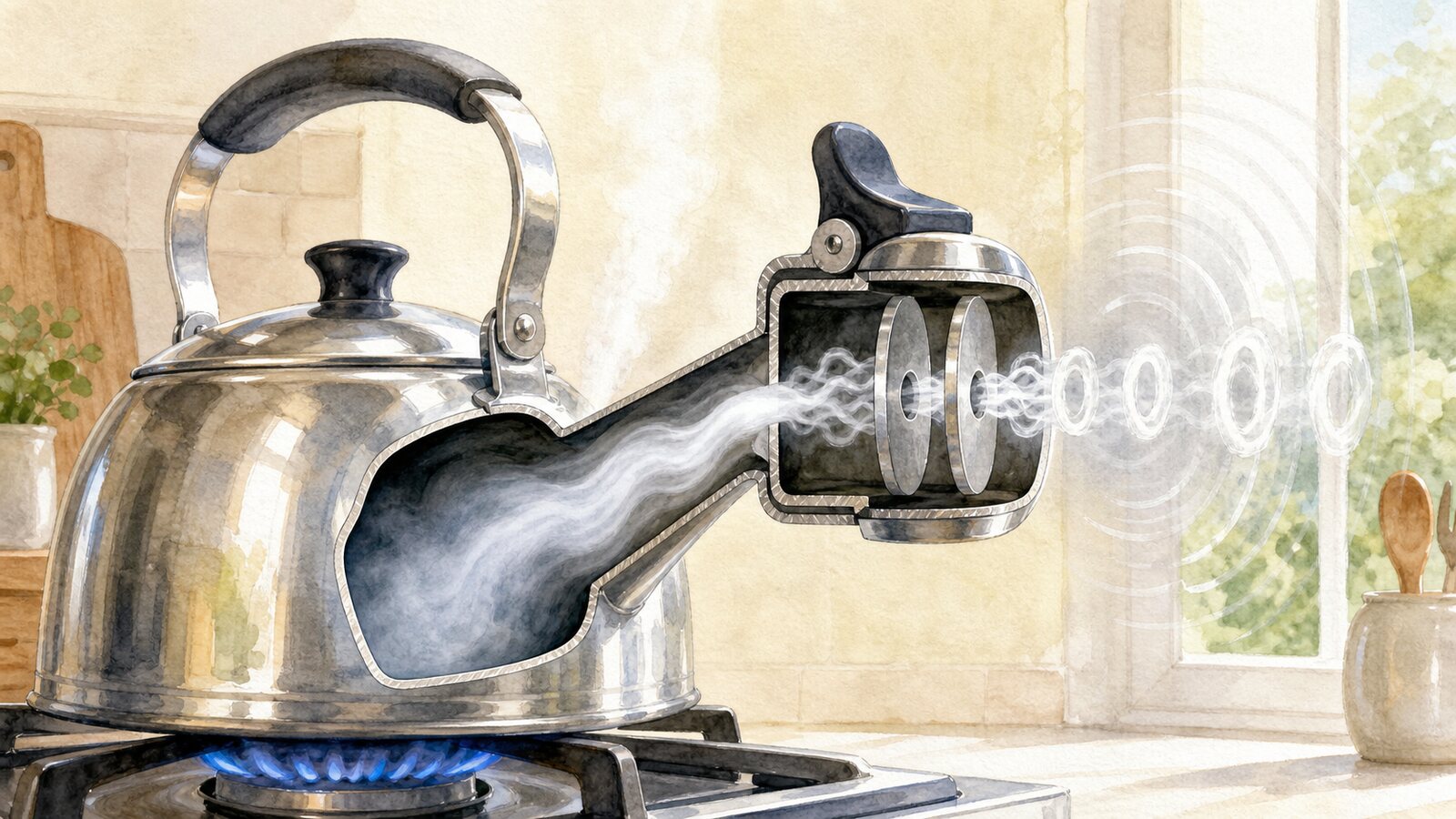
A classic two-hole kettle cap turns a steam jet into periodic pressure changes. Helmholtz resonance dominates at lower flow, while vortex shedding couples with resonances in the spout as the flow becomes stronger.
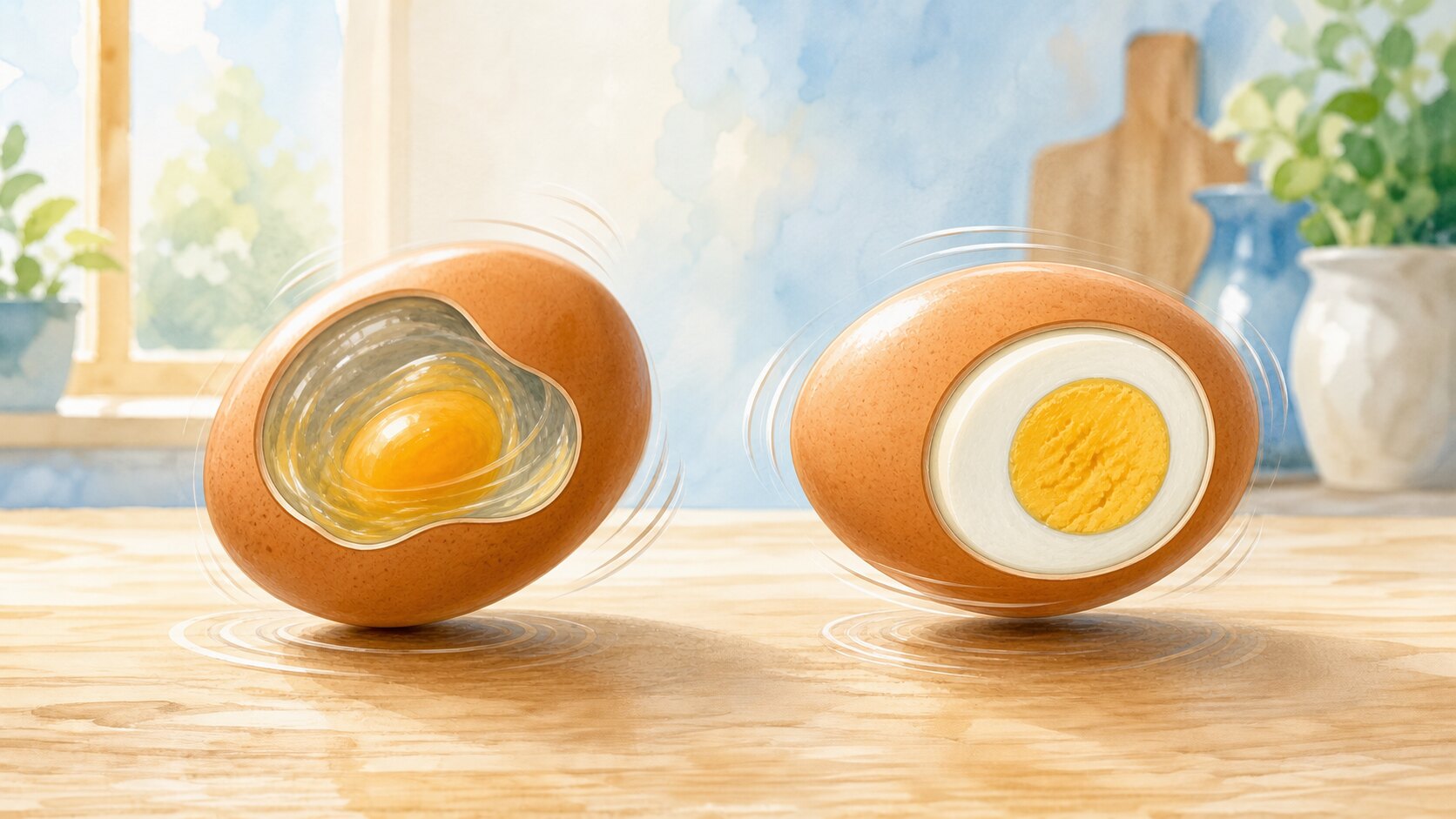
A hard-boiled egg rotates almost as one rigid body, while a raw egg's shell moves before its fluid interior catches up through viscosity. Internal shear dissipates energy, making the raw egg's spin slower and less stable.
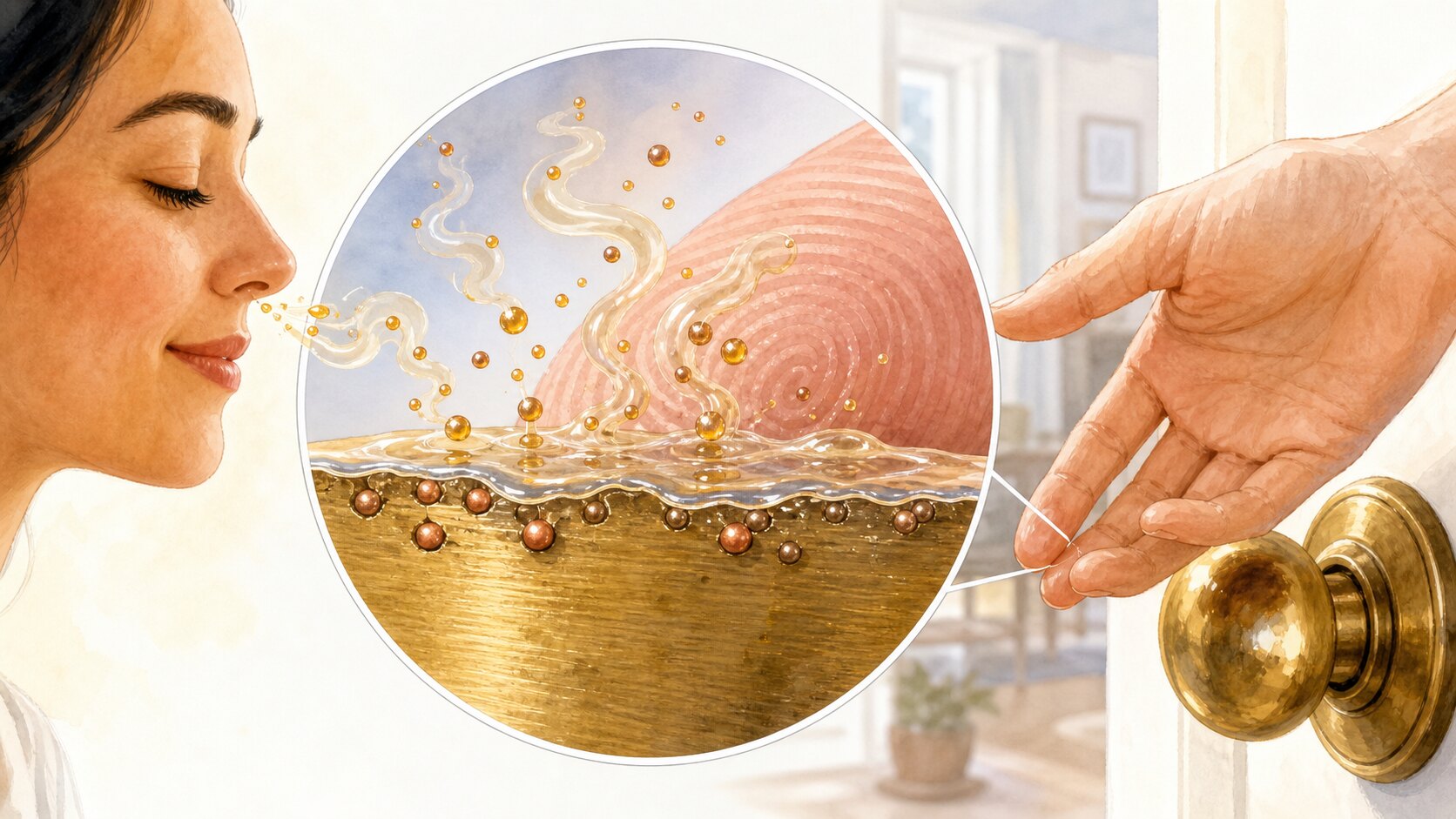
Metal itself is not evaporating. Metal ions formed at the damp contact surface decompose peroxides in skin oils into volatile aldehydes and ketones, and the nose perceives that organic mixture as metallic.
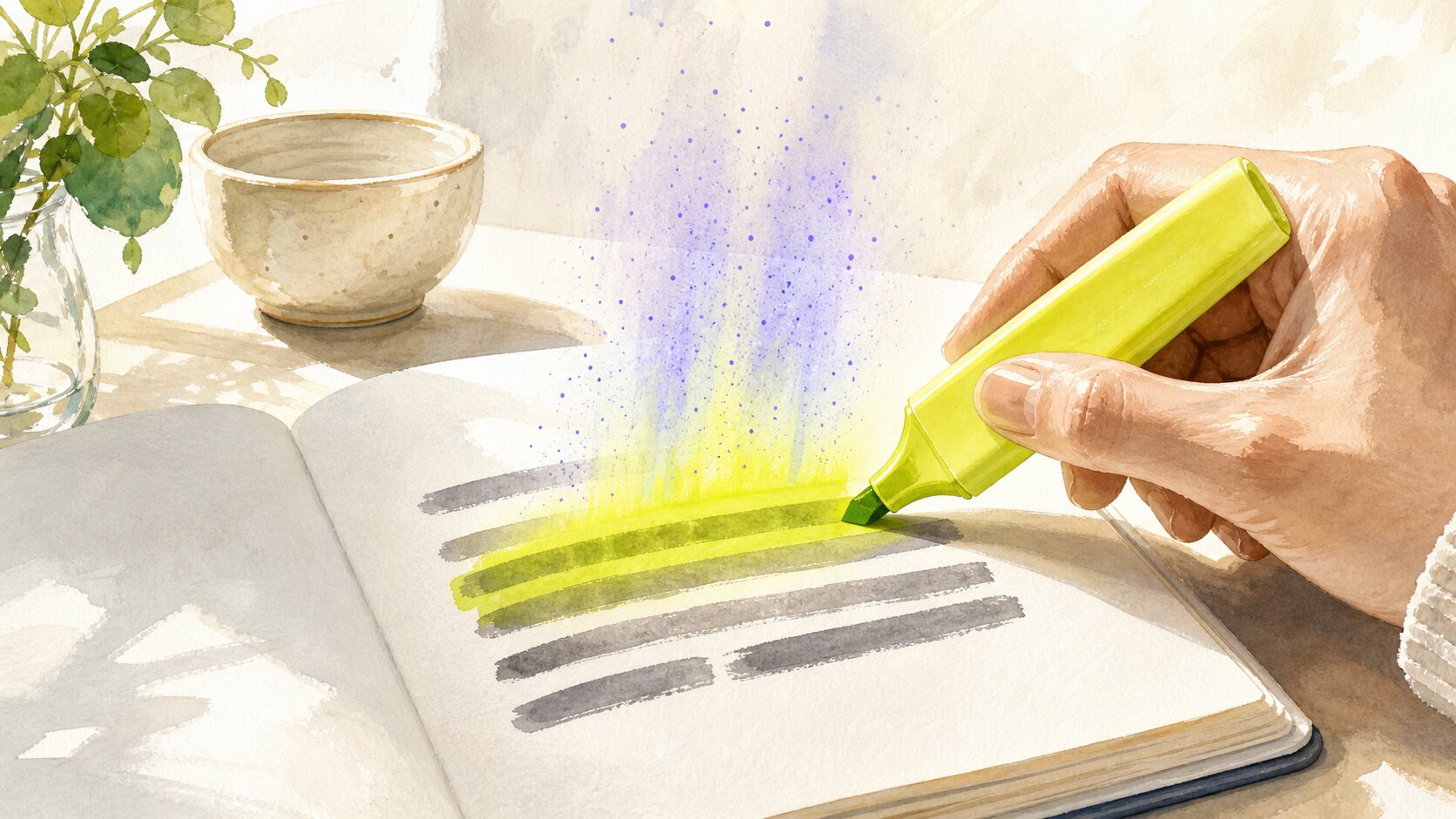
Fluorescent dyes absorb ultraviolet, violet, or blue light and promptly emit lower-energy visible light at longer wavelengths. That emission adds to reflection while the transparent ink layer keeps the print beneath readable.
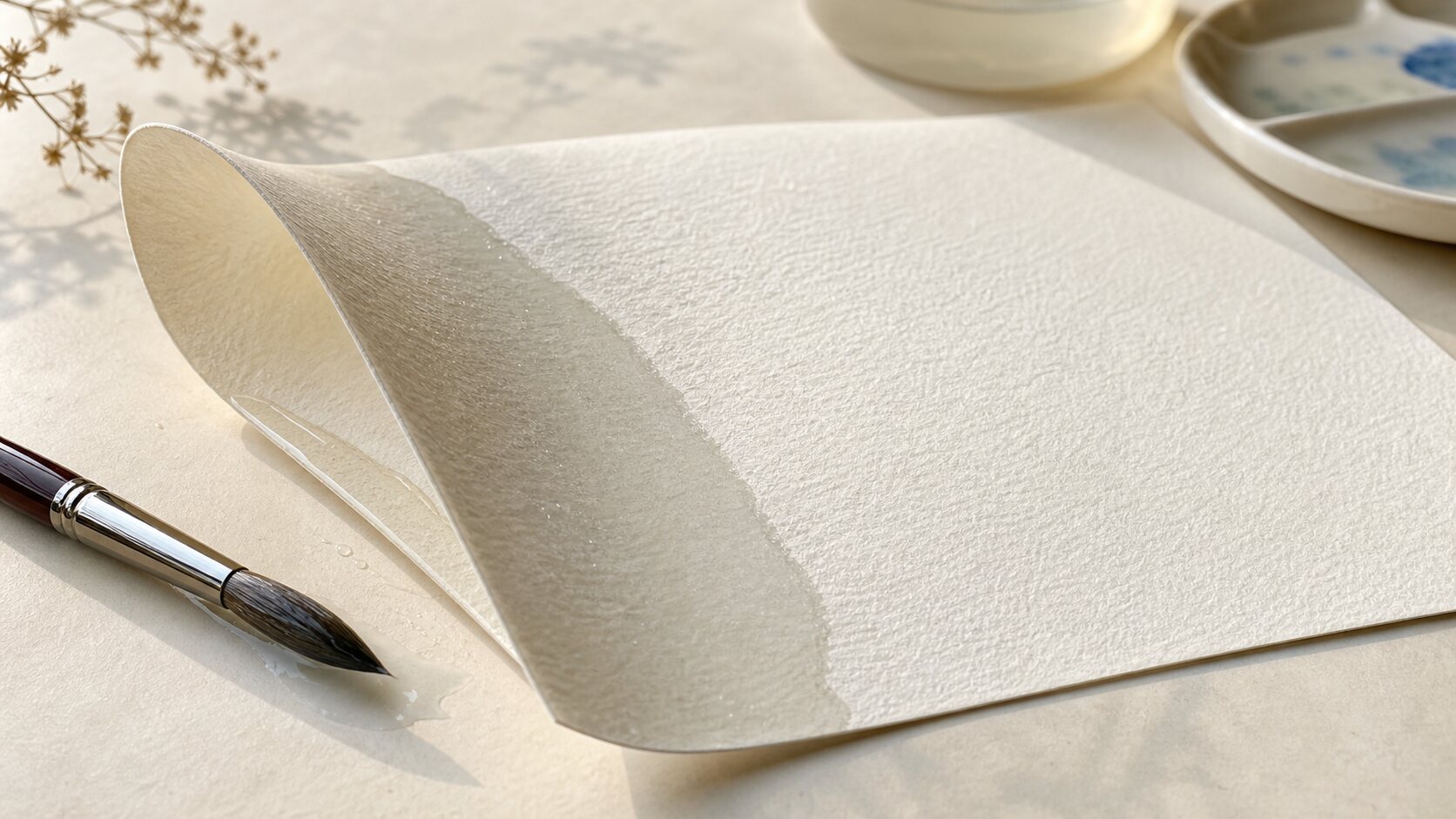
Fibers on the wet face swell before those on the dry face, creating a strain gradient that bends the bonded sheet. Moisture diffusion, drying, fiber orientation, and coatings can then alter or reverse the curl.
Water does not add pigment. It reduces bright scattering at air–hair boundaries, sends more light along paths where melanin can absorb it, and clumps strands into denser-looking locks.

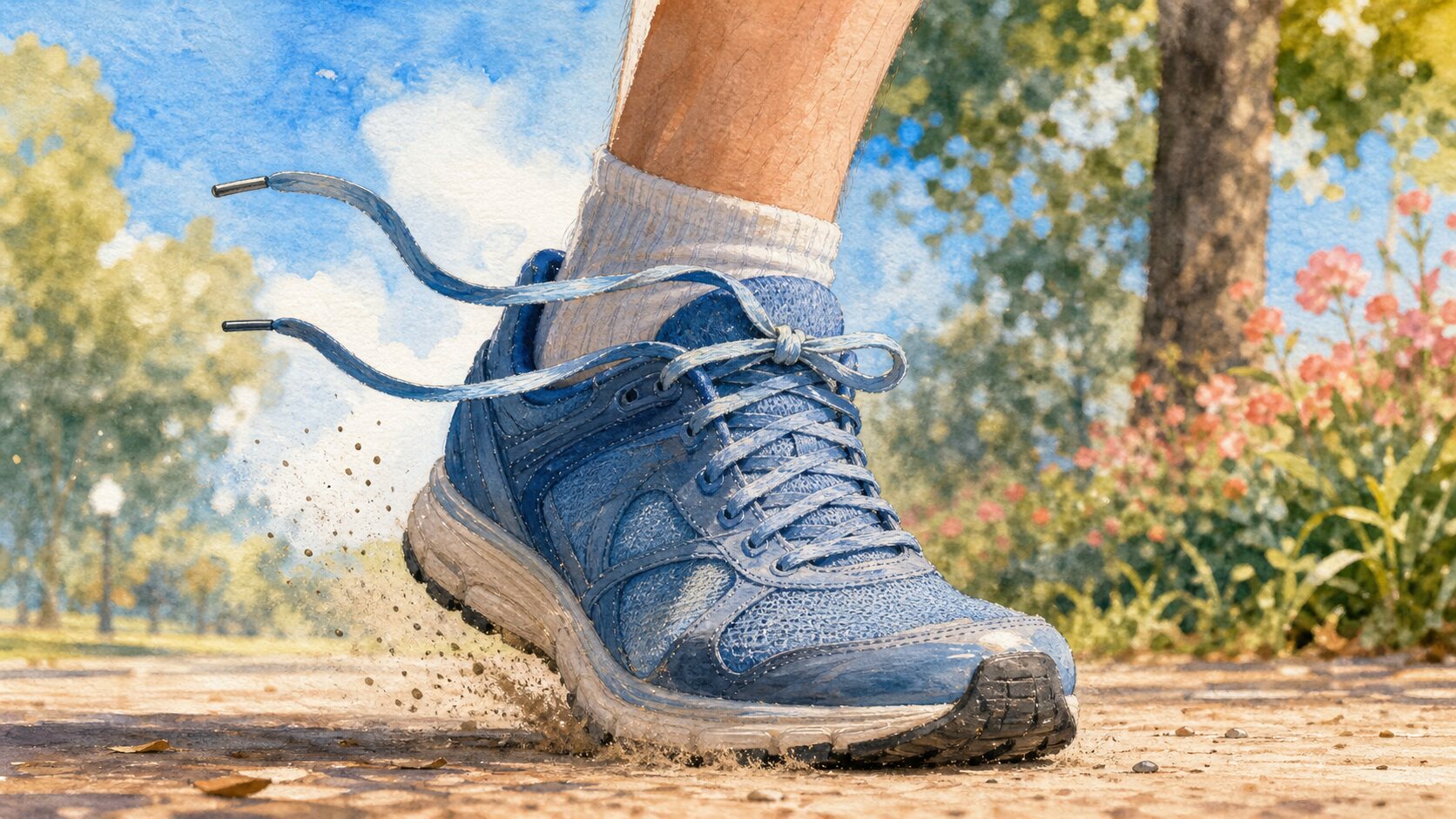
Foot-strike impacts loosen the knot's frictional center, then inertia in the swinging lace ends pulls a loop through it. Knot handedness and tail length influence how quickly failure runs away.
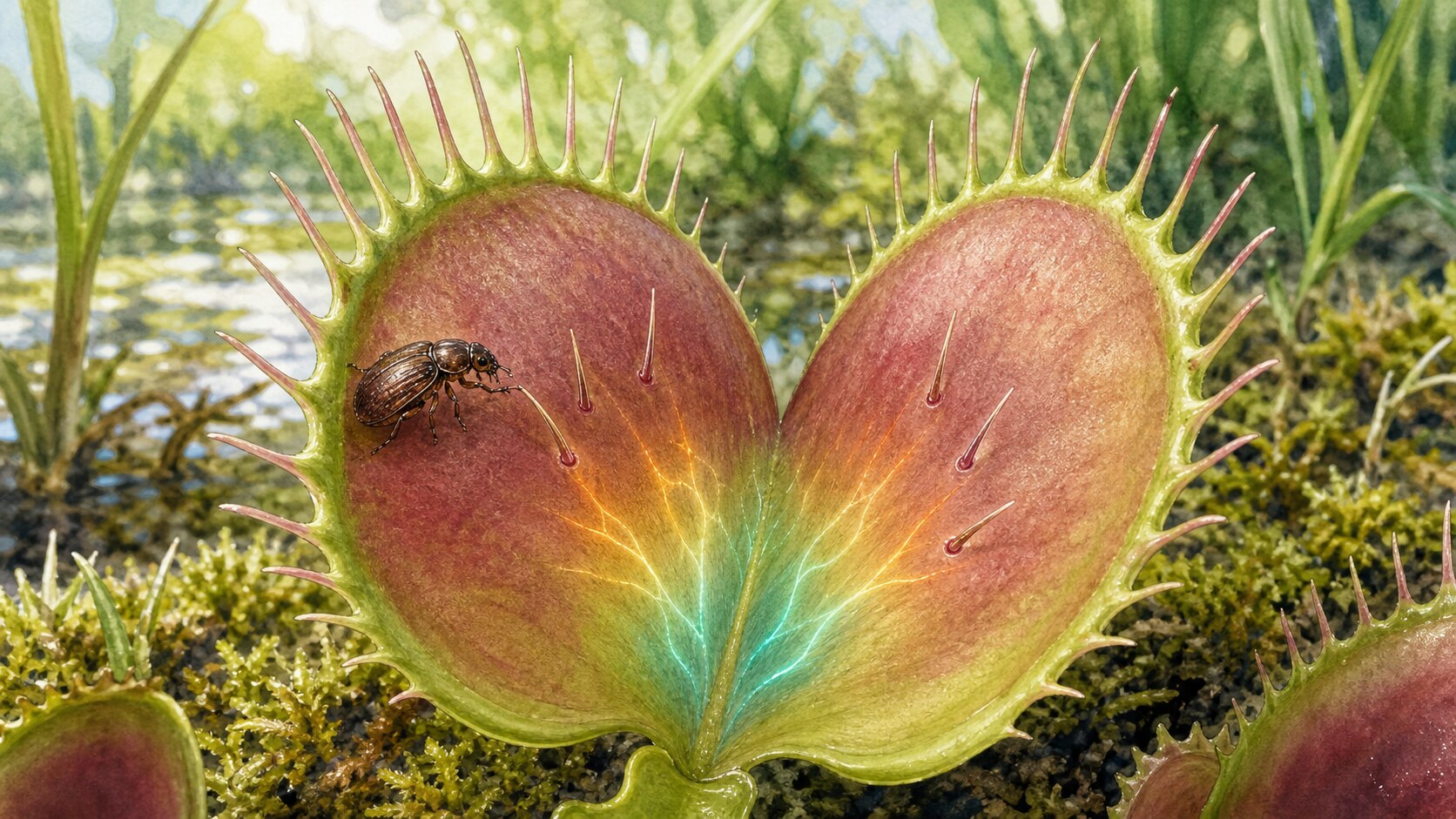
A Venus flytrap integrates action potentials and calcium signals until they cross a closure threshold. One strong contact can sometimes generate two electrical events, so the trap tracks signal number and timing more directly than touch count.
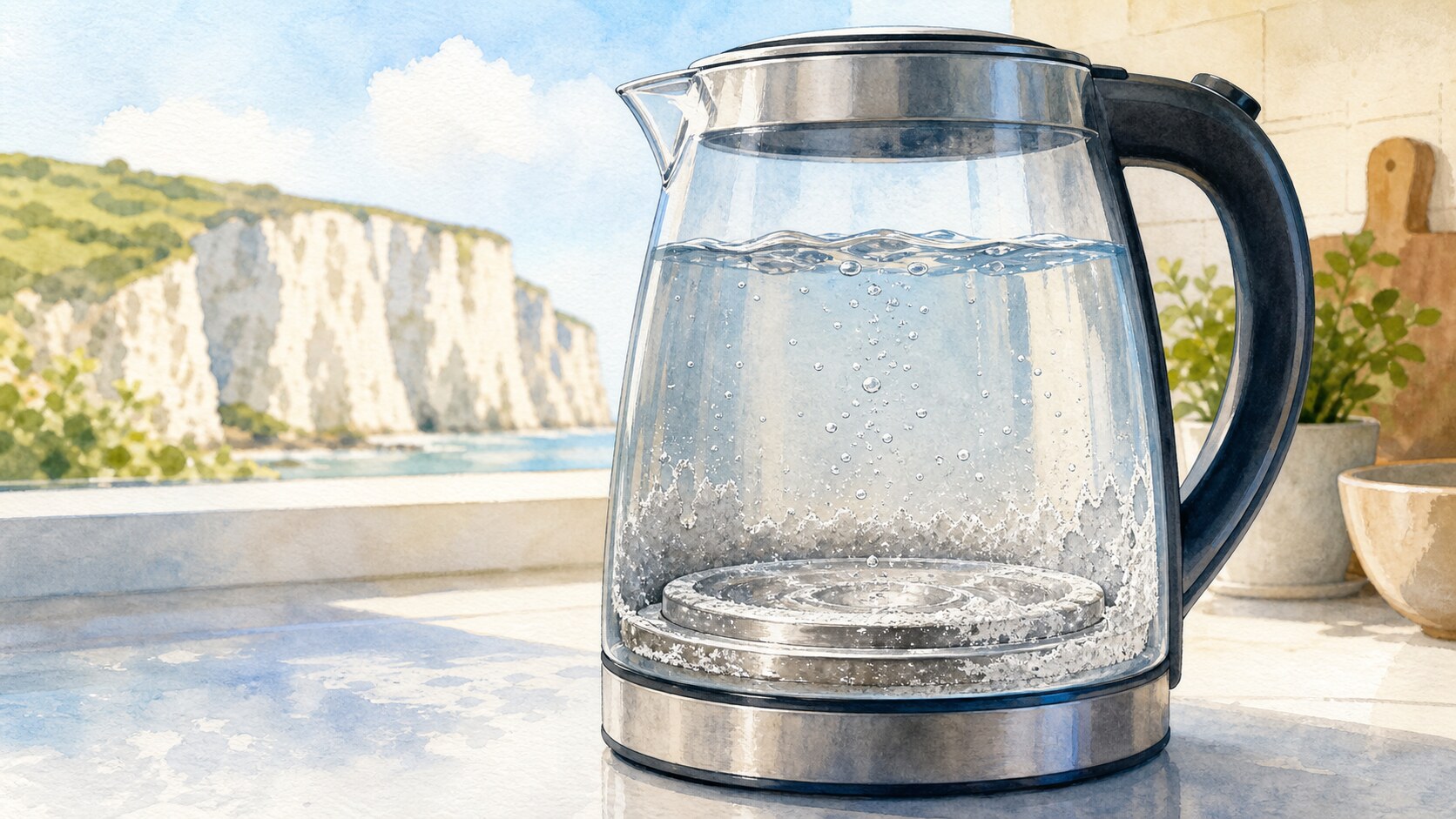
As hard water heats, dissolved carbon dioxide escapes and calcium can precipitate as calcium carbonate. Repeated boiling and evaporation let those crystals accumulate on the hot base and inner wall.
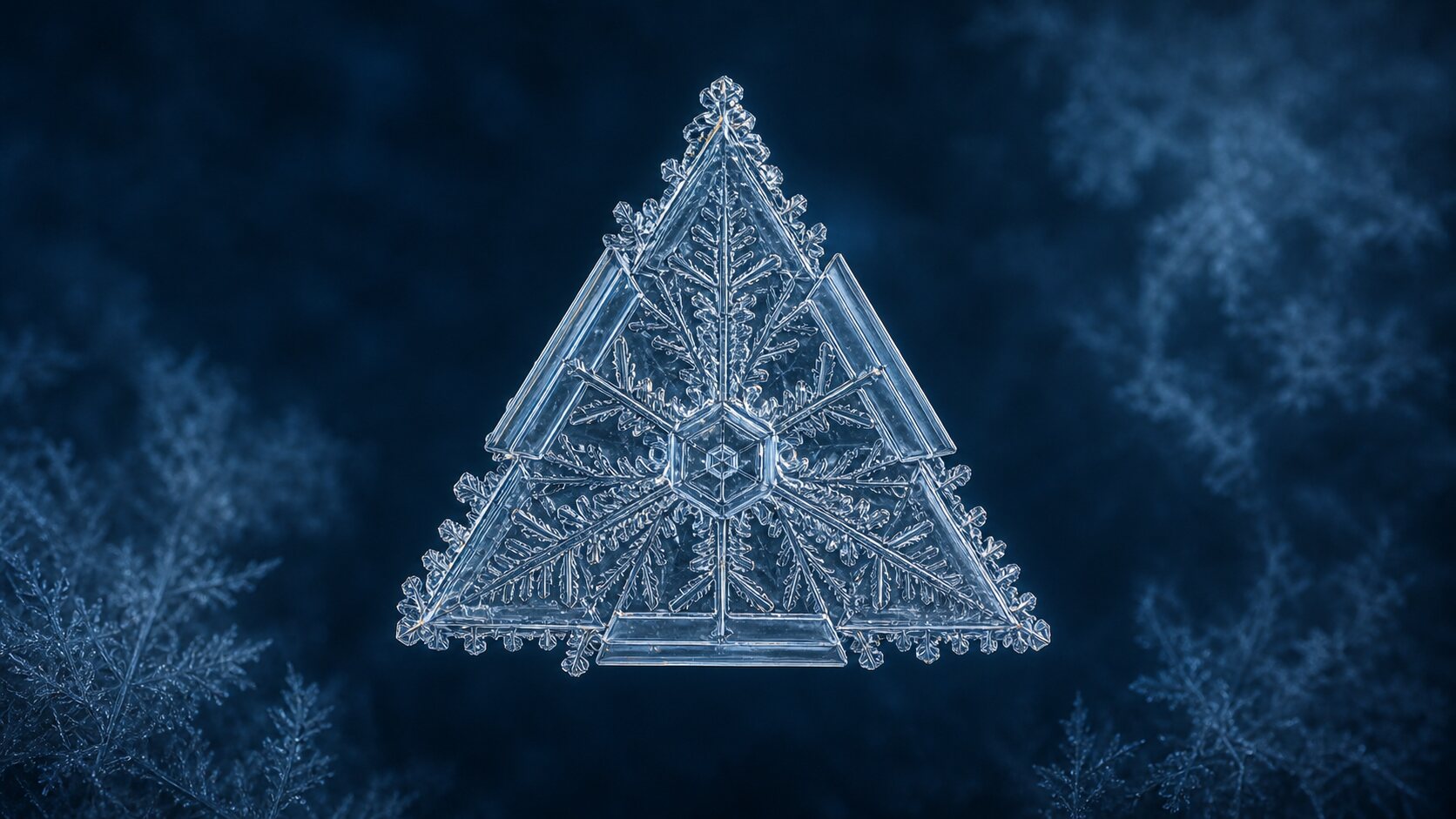
Rare triangular-looking snow crystals often remain hexagonal ice whose three alternating sides outgrow the other three. Atmospheric conditions, airflow, and in some particles internal stacking can select that asymmetry.
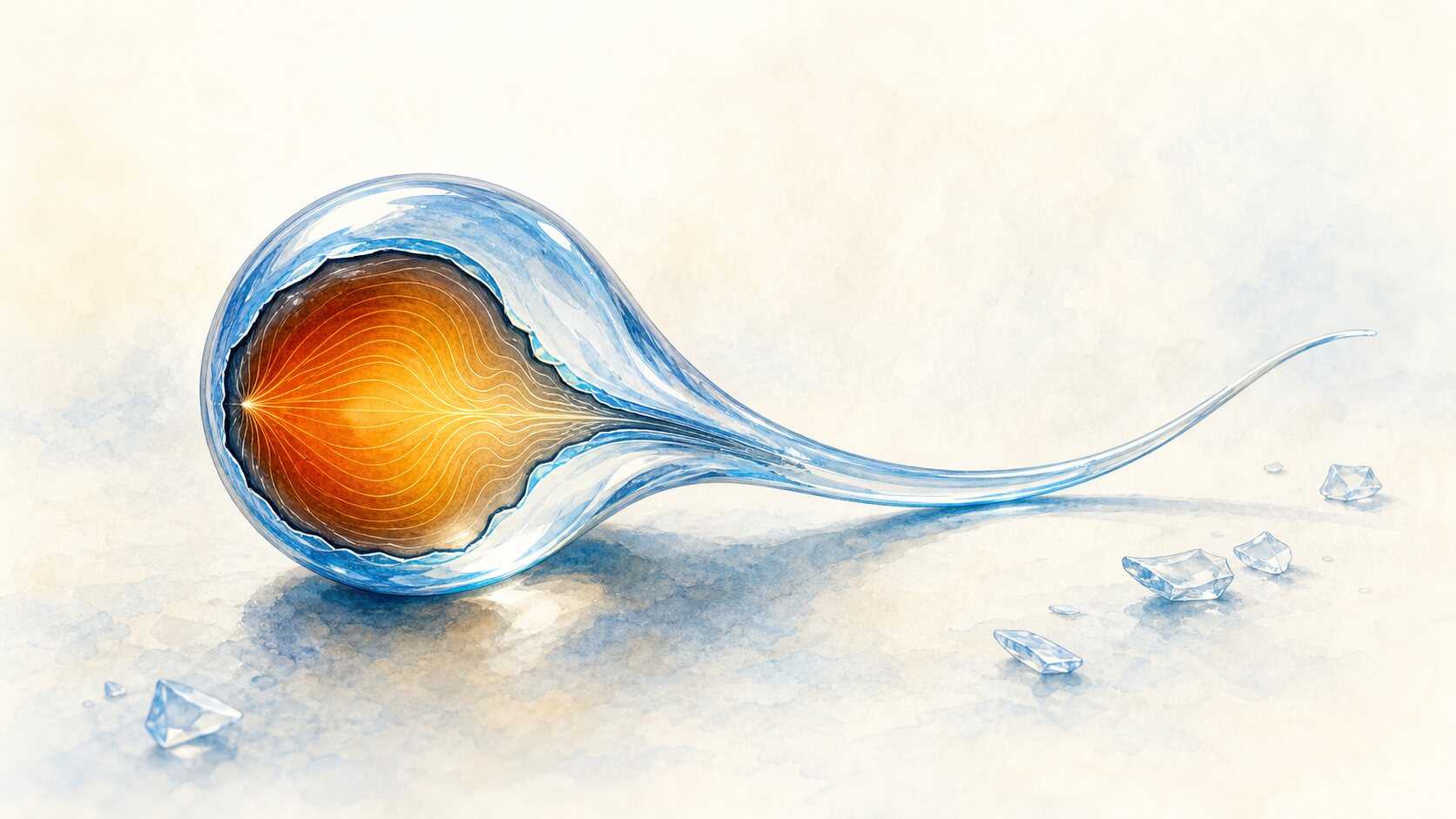
A Prince Rupert's drop locks surface compression and internal tension into rapidly cooled glass. Its head suppresses cracks, while damage to the tail can release stored stress and fragment the whole drop.
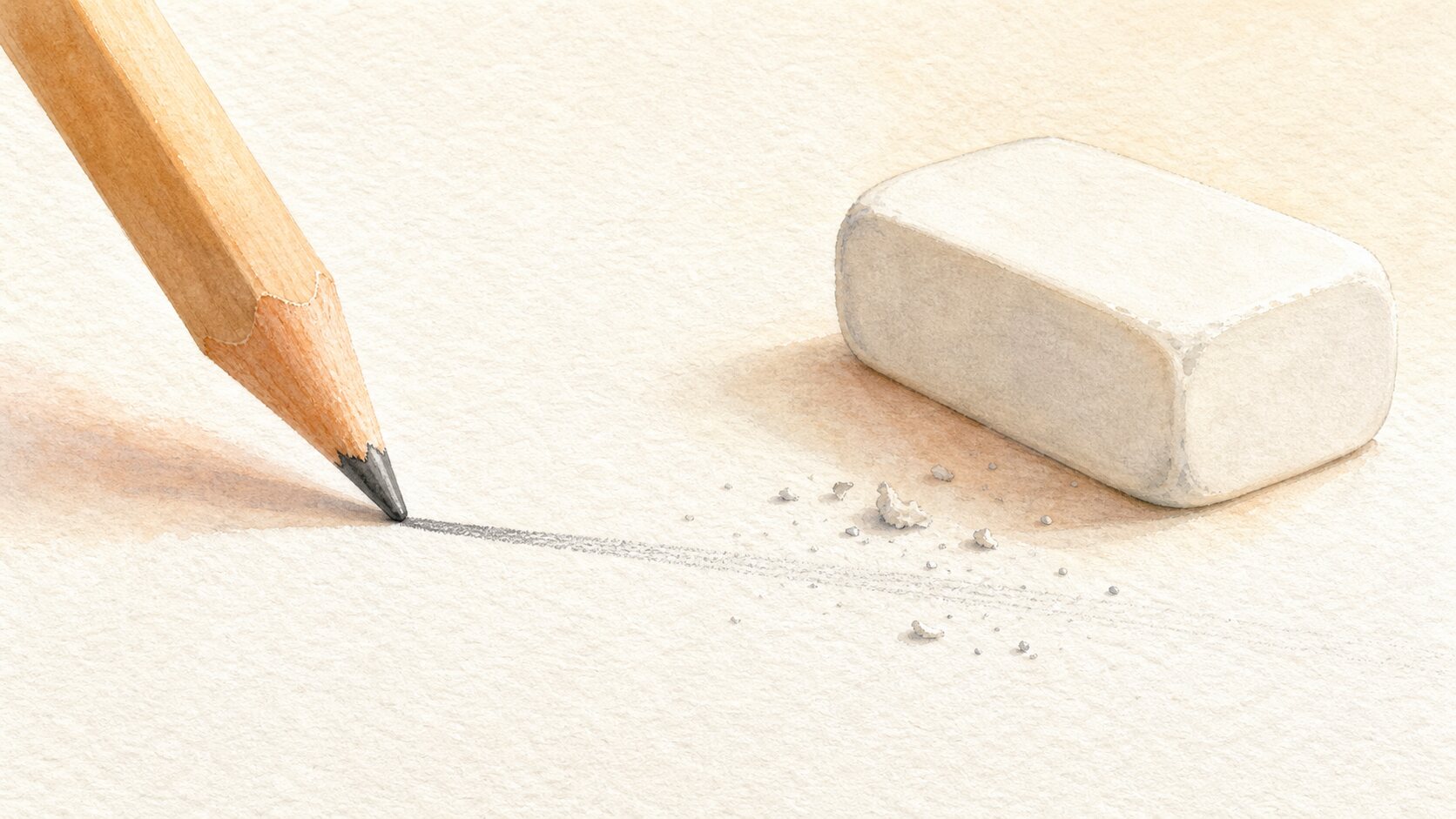
Pencils leave graphite particles on and between paper fibers. An eraser uses friction and adhesion to capture those particles more effectively than the paper, carrying them away with tiny eraser fragments.
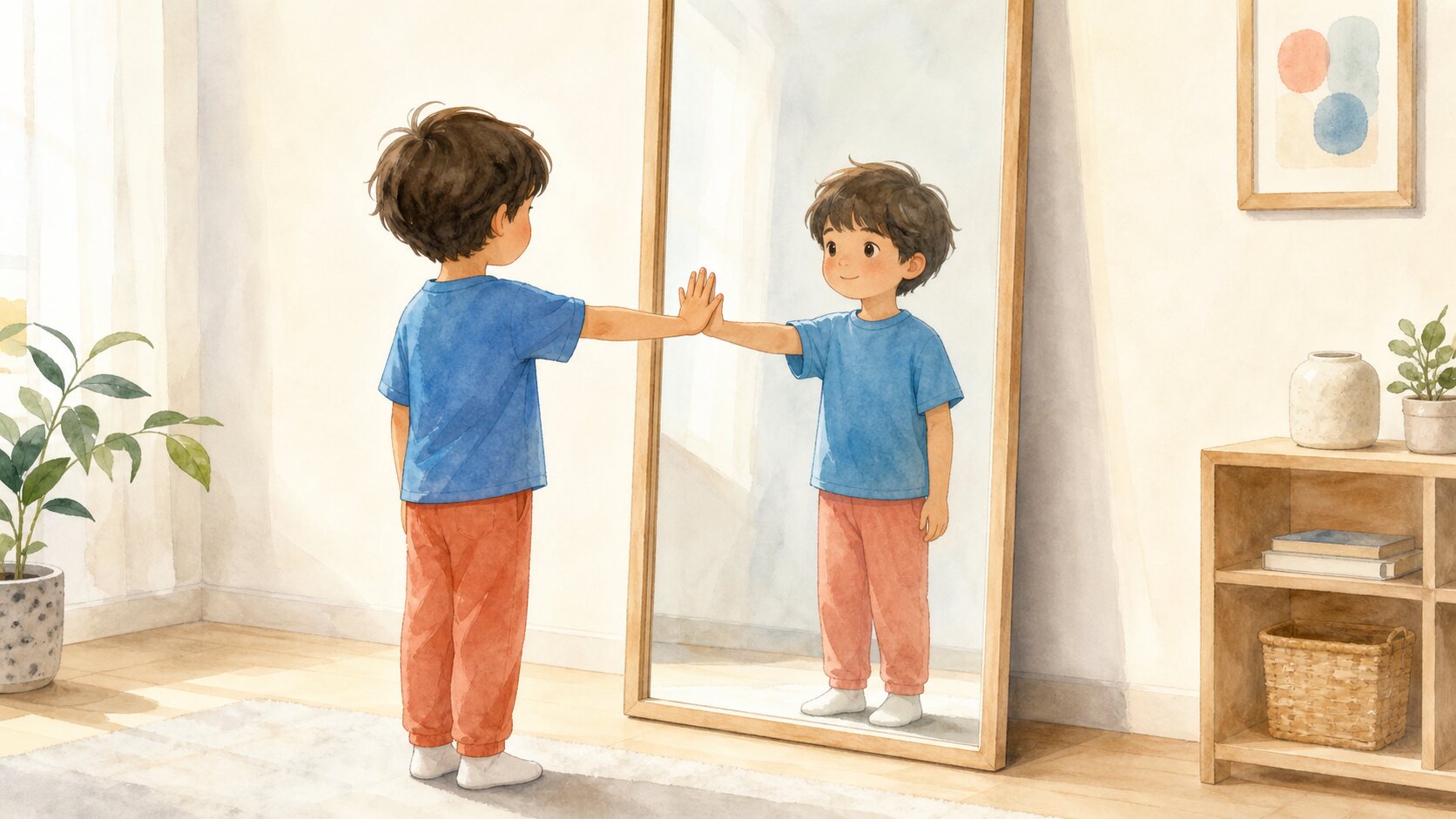
A flat mirror reflects front to back across its surface, not left to right. Left-right reversal is the impression created when we mentally compare the reflection with a person facing us.
Cut flowers must take water up through stem vessels without roots. They wilt when water loss exceeds uptake or when air, damage, and microbes block that route and lower the pressure inside their cells.

Fresh fluffy snow is a porous layer with many air spaces, so it absorbs some sound that would otherwise reflect from the ground. Compacted or refrozen snow can reflect sound instead, changing the effect.

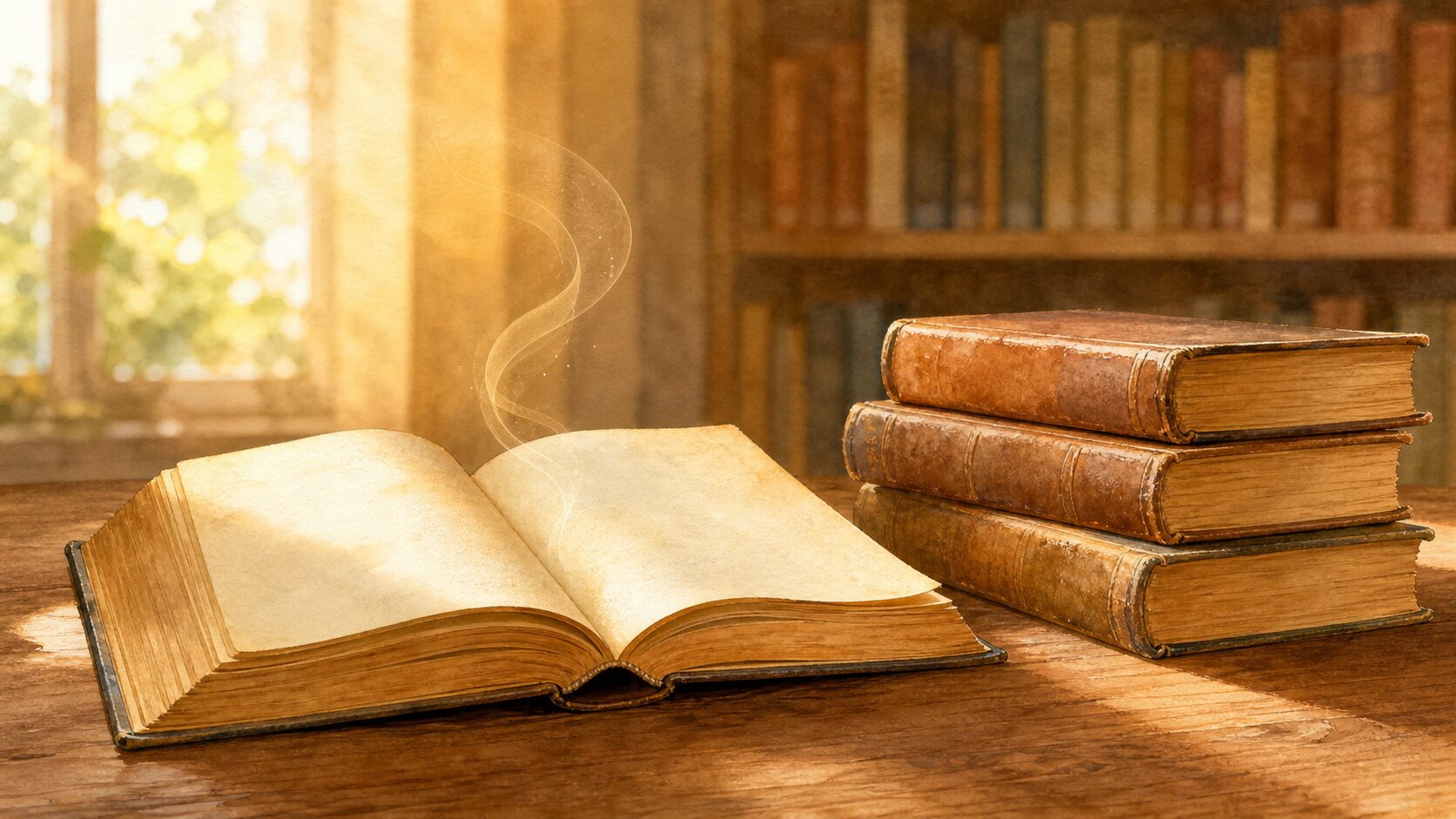
The scent of an old book is a mixture of volatile compounds emitted by paper, ink, adhesives, and storage materials. It can offer clues to material change, while mold and moisture damage need separate attention.
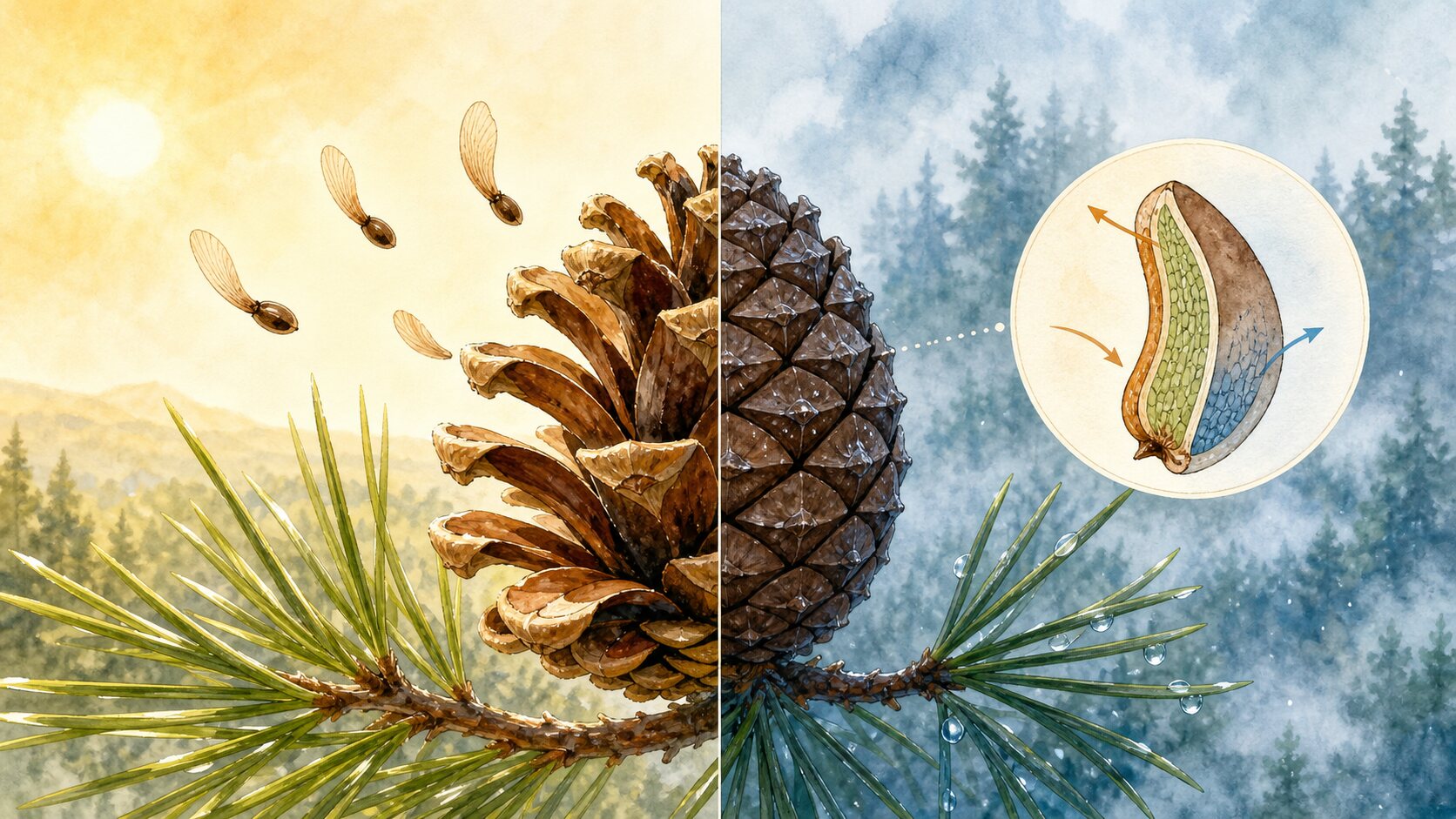
Pine cone scales contain tissue layers that change size differently with humidity, so they bend passively. In dry air the scales open, making it easier for winged seeds to travel on the wind.
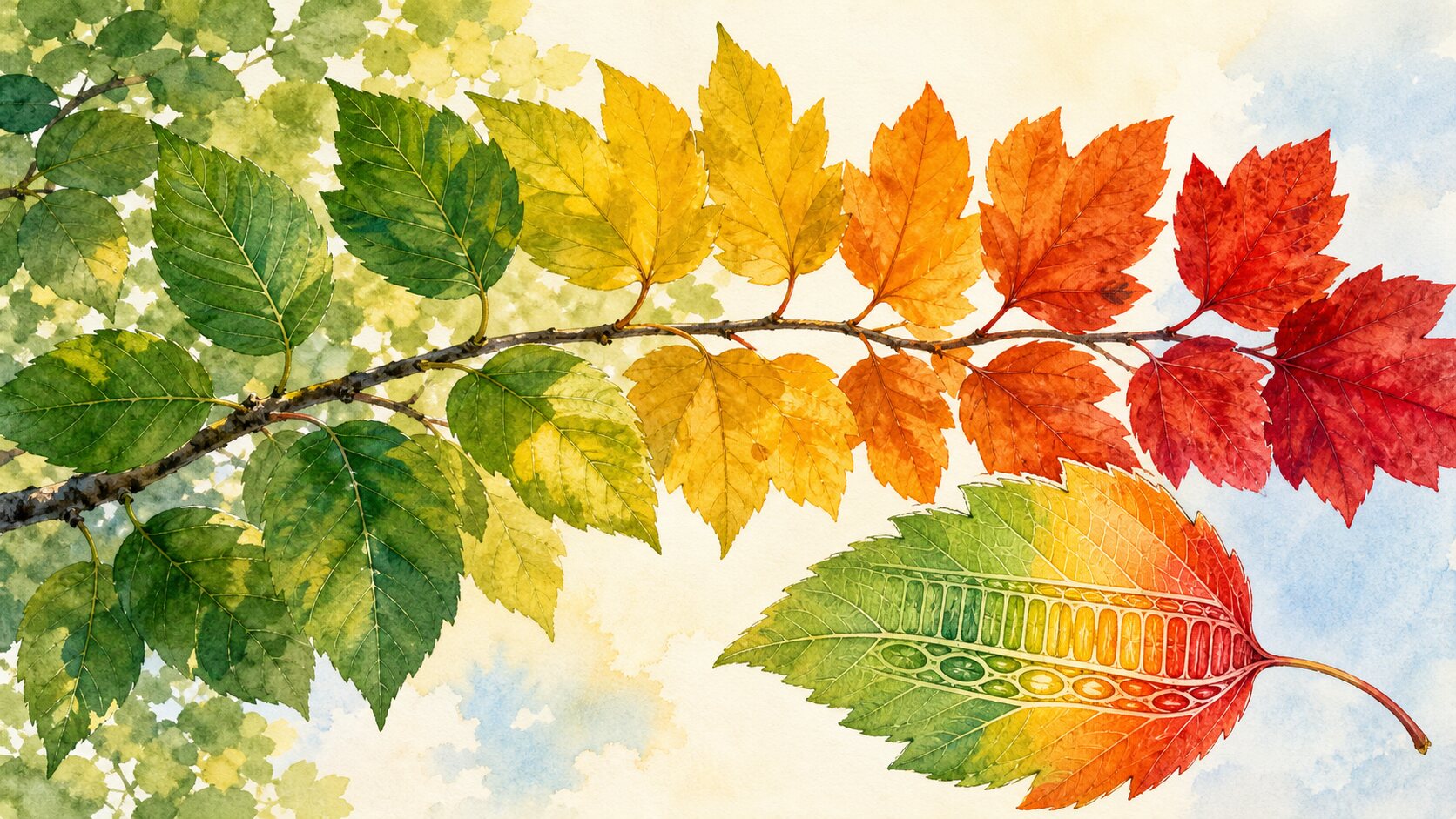
As days shorten, deciduous trees reduce chlorophyll production and recover nutrients. Green fades to reveal yellow and orange pigments, while some species newly make red anthocyanins, producing varied fall color.
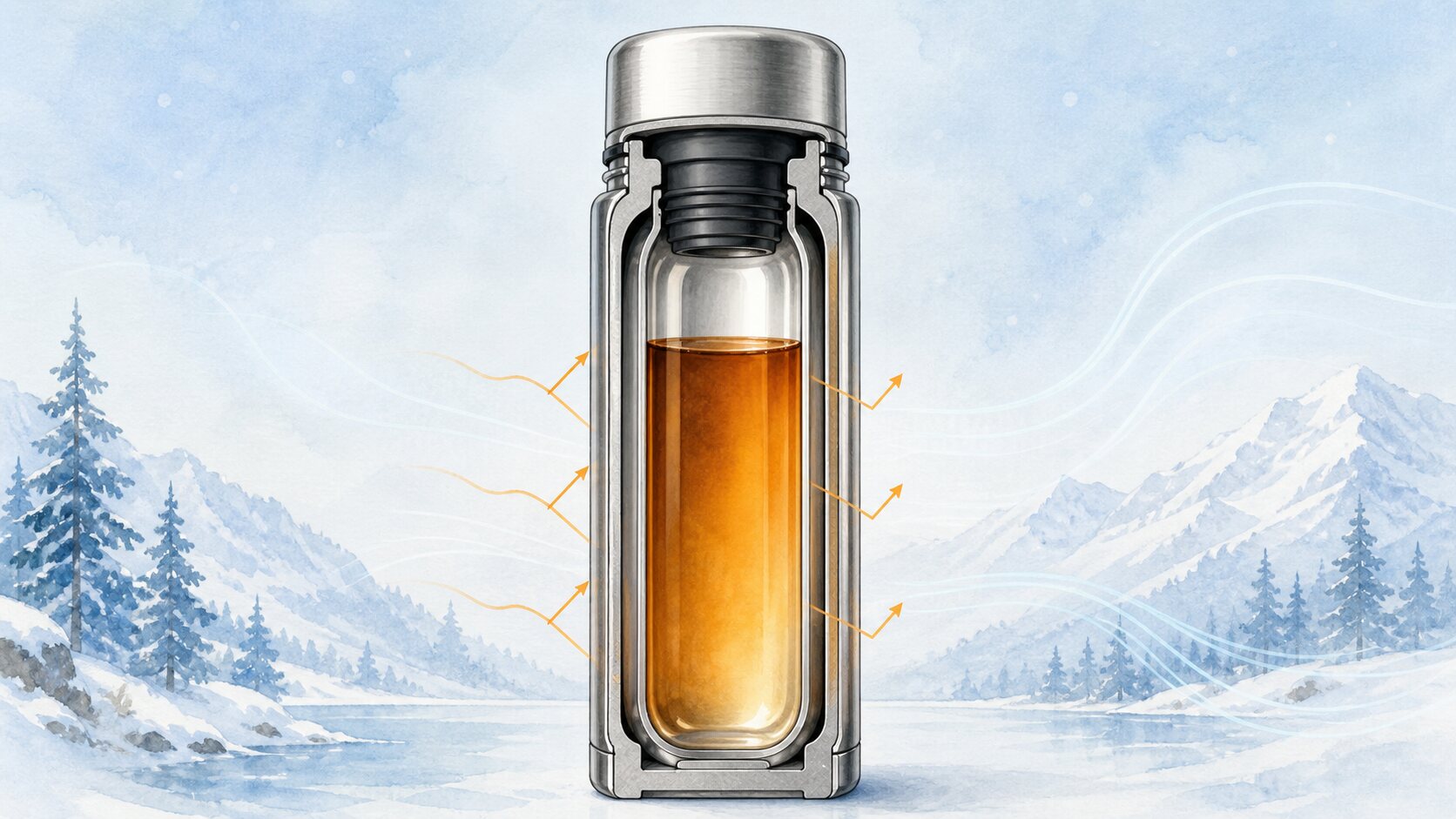
A thermos uses a double-wall vacuum to greatly reduce conduction and convection, while reflective surfaces and a lid slow radiation and remaining heat paths. It does not create temperature; it delays equilibrium with the surroundings.
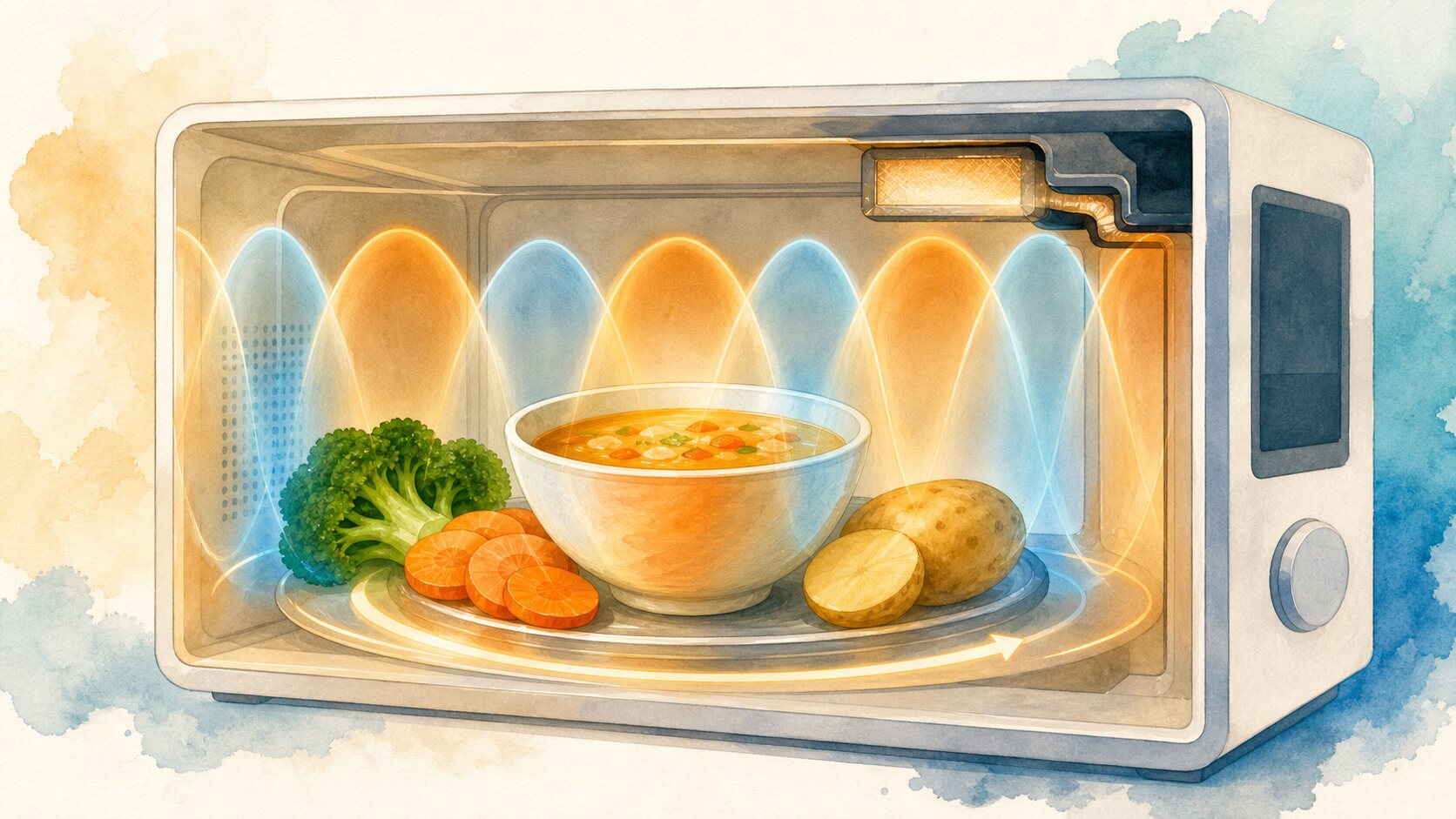
Reflected microwaves create stronger and weaker heating regions, while a food's moisture, thickness and frozen parts add more variation. Turntables, stirring and standing time help reduce the difference.
Warmed air expands and becomes less dense than cooler surrounding air, so the density difference creates buoyancy. As rising air cools, it can sink again and form a convection cycle.

Semiconductors in photovoltaic cells use light energy to set electrons moving, and an internal electric field guides that motion into direct current. An inverter changes it into the alternating current used by homes and grids.

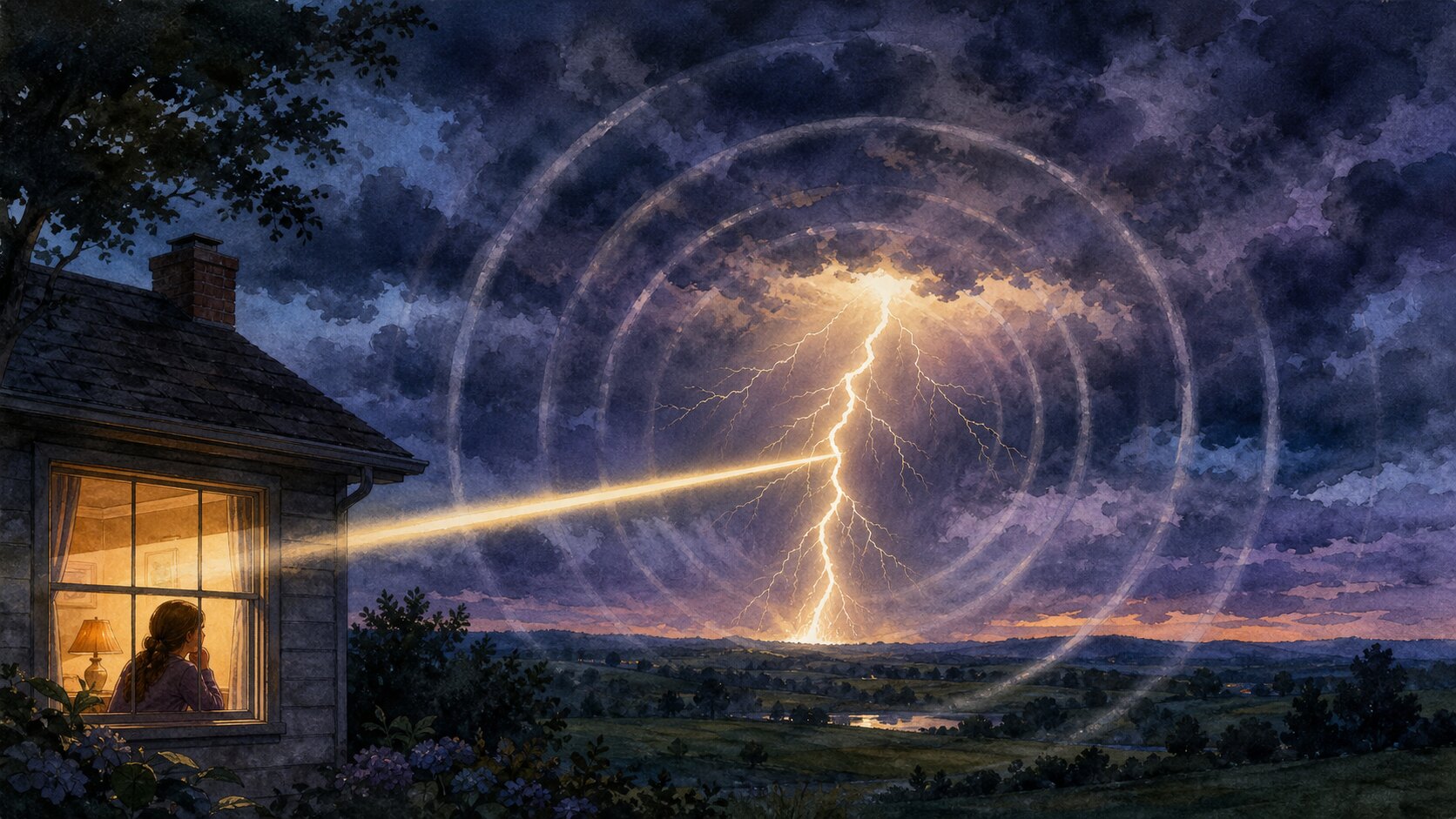
Lightning abruptly heats the air and creates thunder's pressure wave. Light from the same discharge travels vastly faster than sound, so the flash reaches us first.
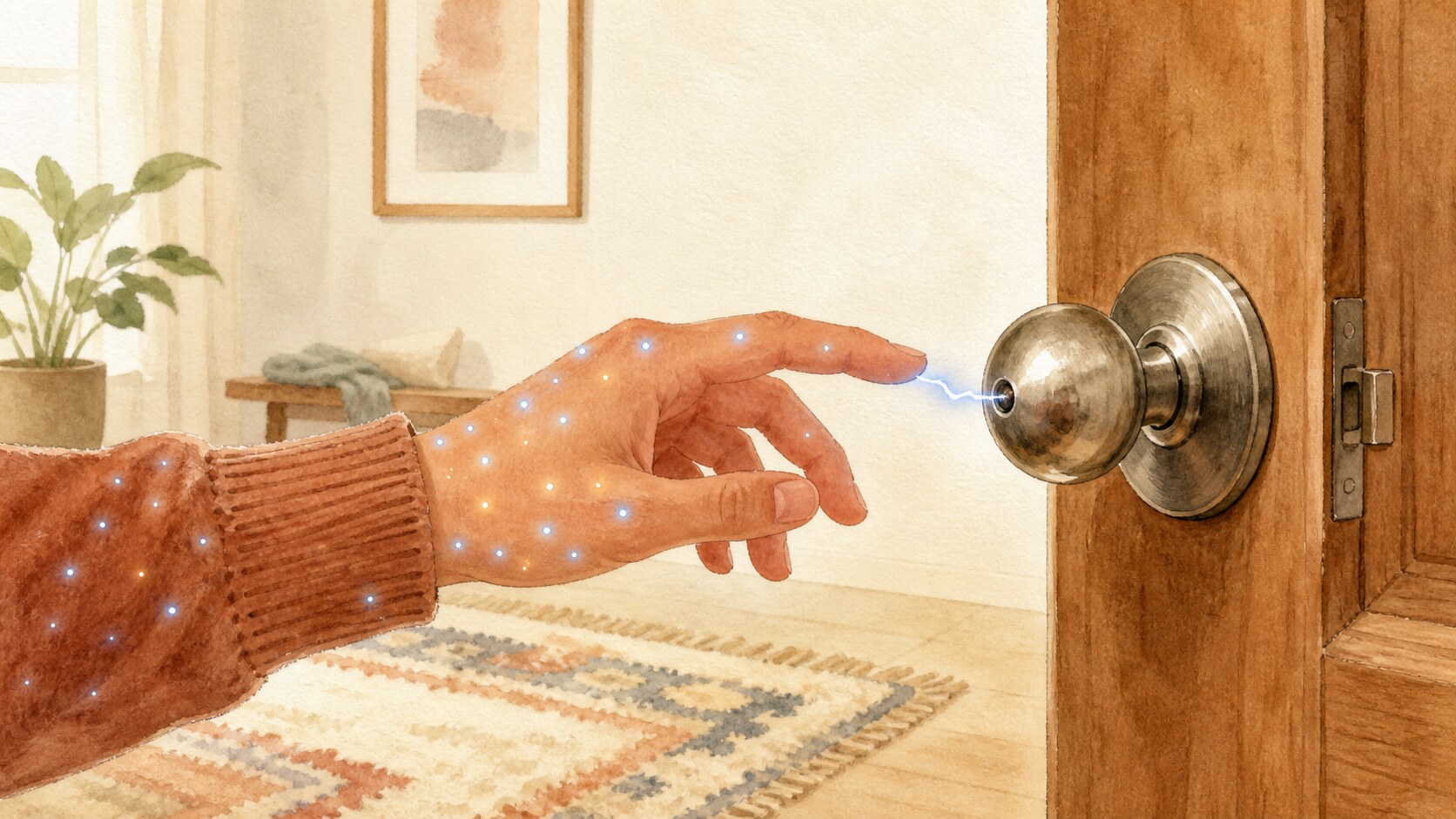
Contact and separation between materials can leave charge on your body. Near metal, a brief discharge crosses air and skin to reduce the potential difference, stimulating sensory nerves.
Salt dissolves in a thin water film and lowers its freezing point. Ice then melts when conditions are above the new freezing point, although the effect has low-temperature limits.
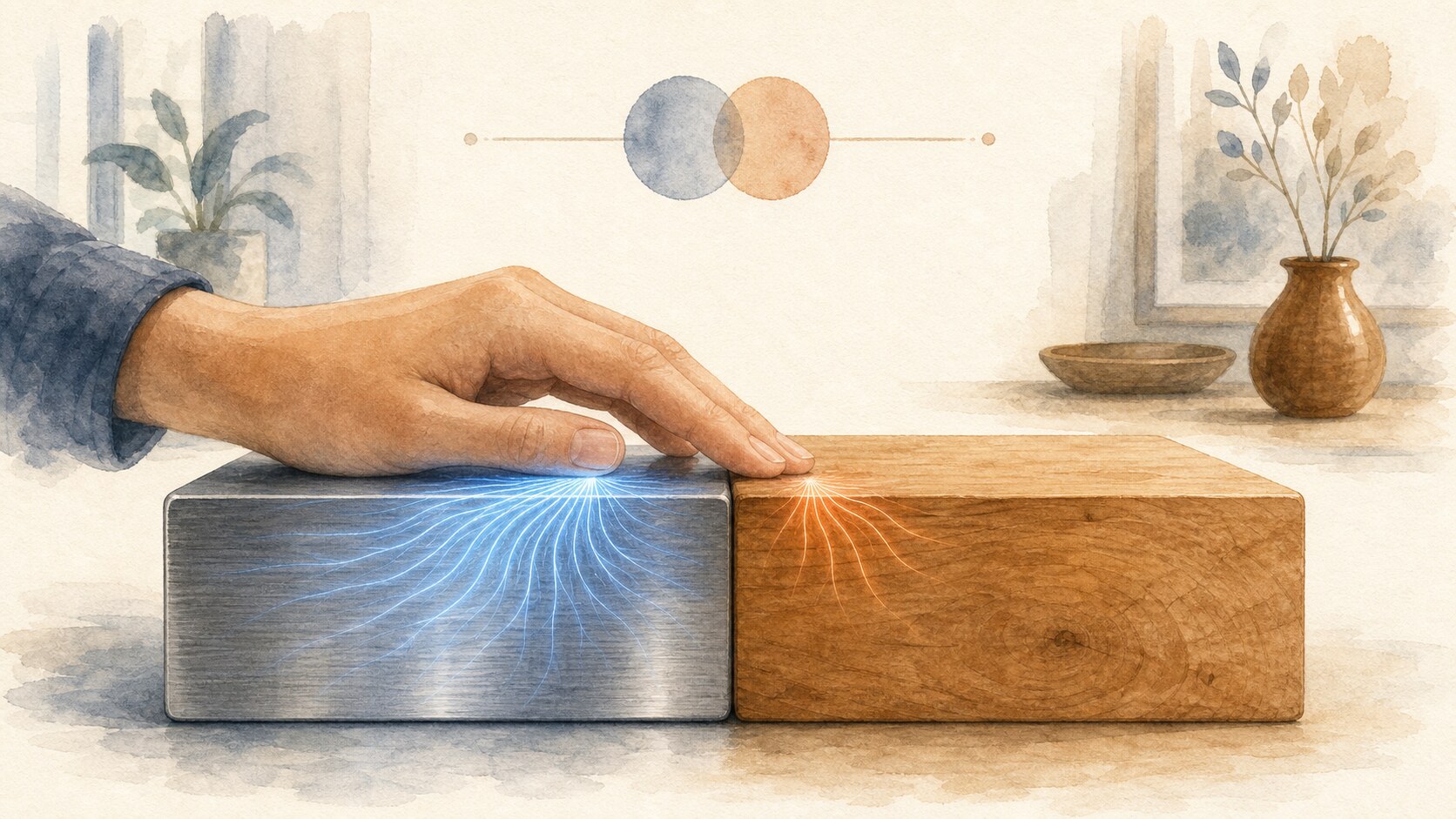
Metal and wood may share the same temperature, but metal carries heat away from your hand faster. Rapid skin cooling makes it feel colder.
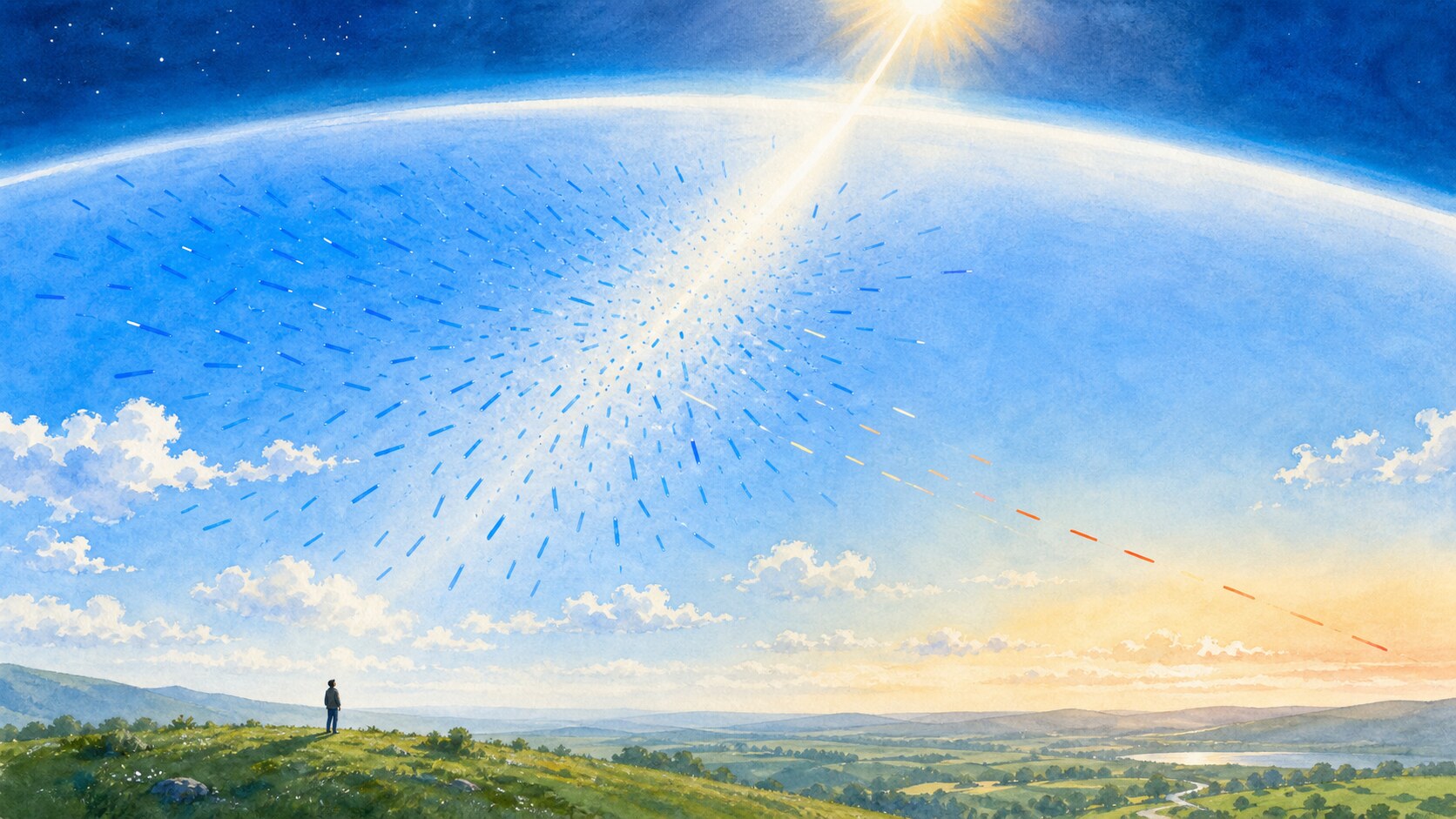
Rayleigh scattering by air molecules redirects shorter wavelengths most strongly. The Sun's spectrum and human visual sensitivity help make the result look blue rather than violet.
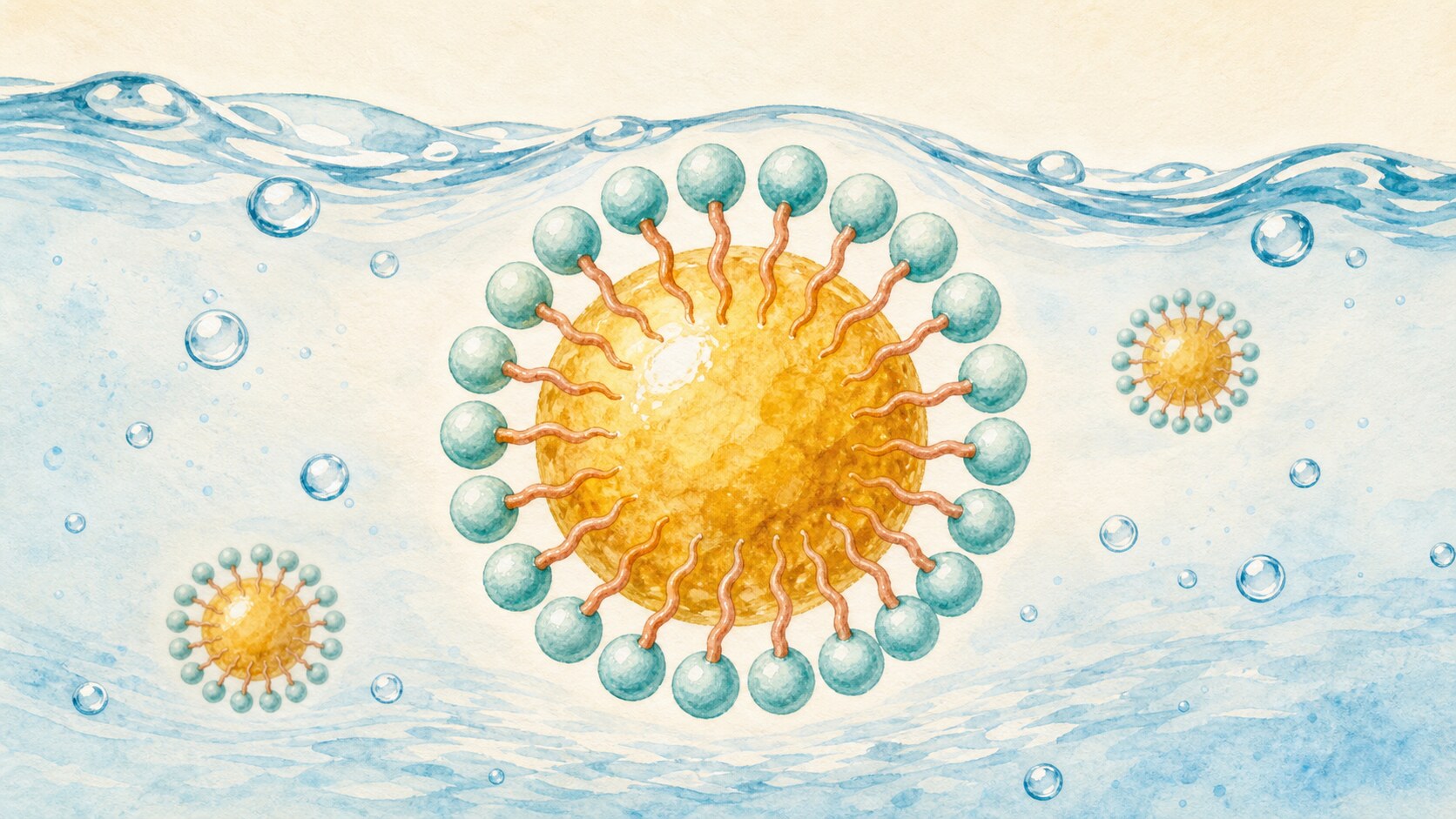
A soap molecule embeds its nonpolar tail in grease while its water-friendly head faces outward. Scrubbing and micelles disperse the oil so rinsing water can carry it away.
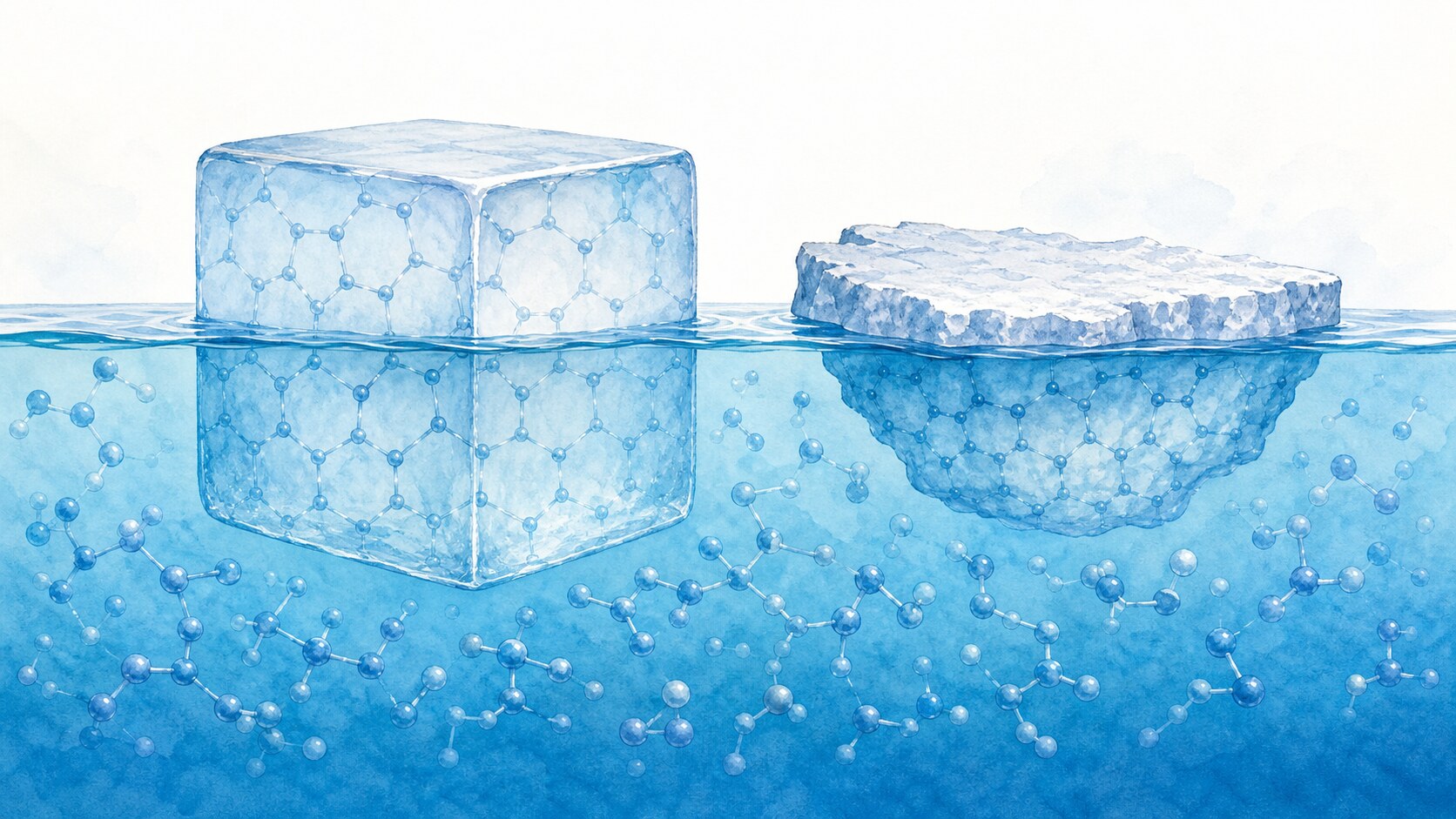
When water freezes, its molecules form an open crystal structure and expand by roughly 9 percent. The resulting lower density keeps ice afloat.
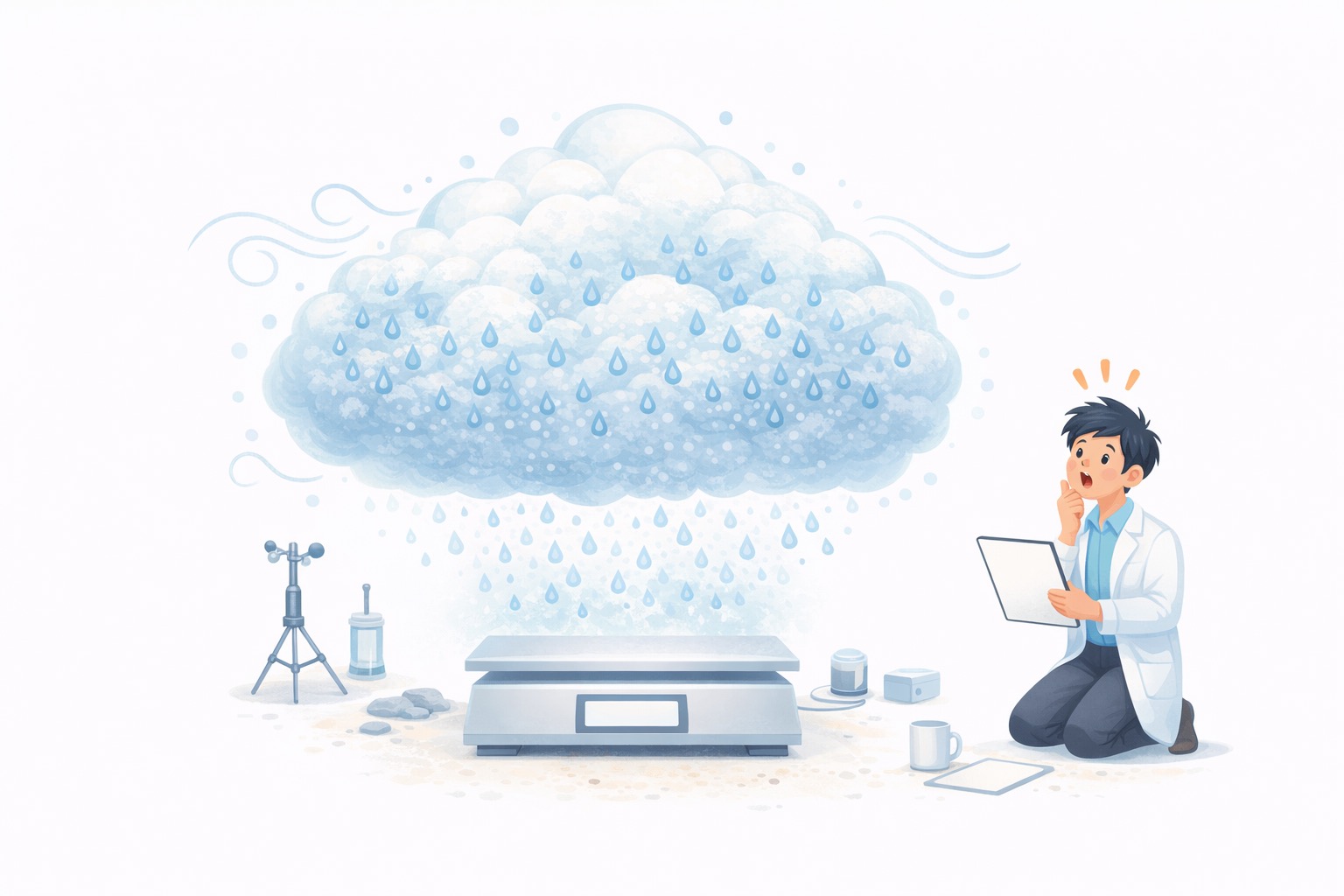
In a standard example, the tiny droplets spread through a cumulus cloud add up to about 500 tonnes of water. A simple calculation explains the estimate—and why the cloud still floats.
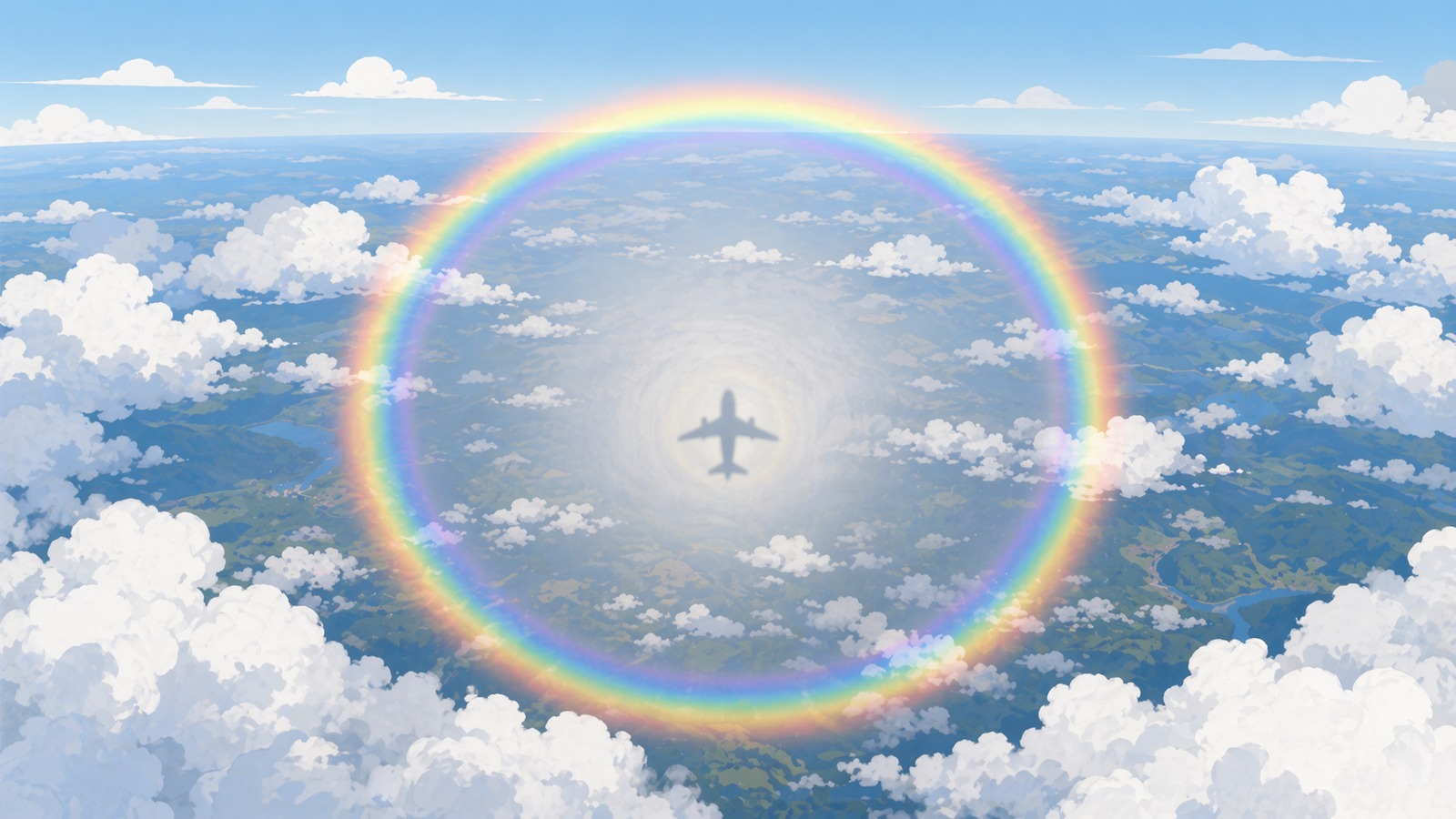
Rainbows are circular optical phenomena, but the horizon usually hides the lower half from observers on the ground.
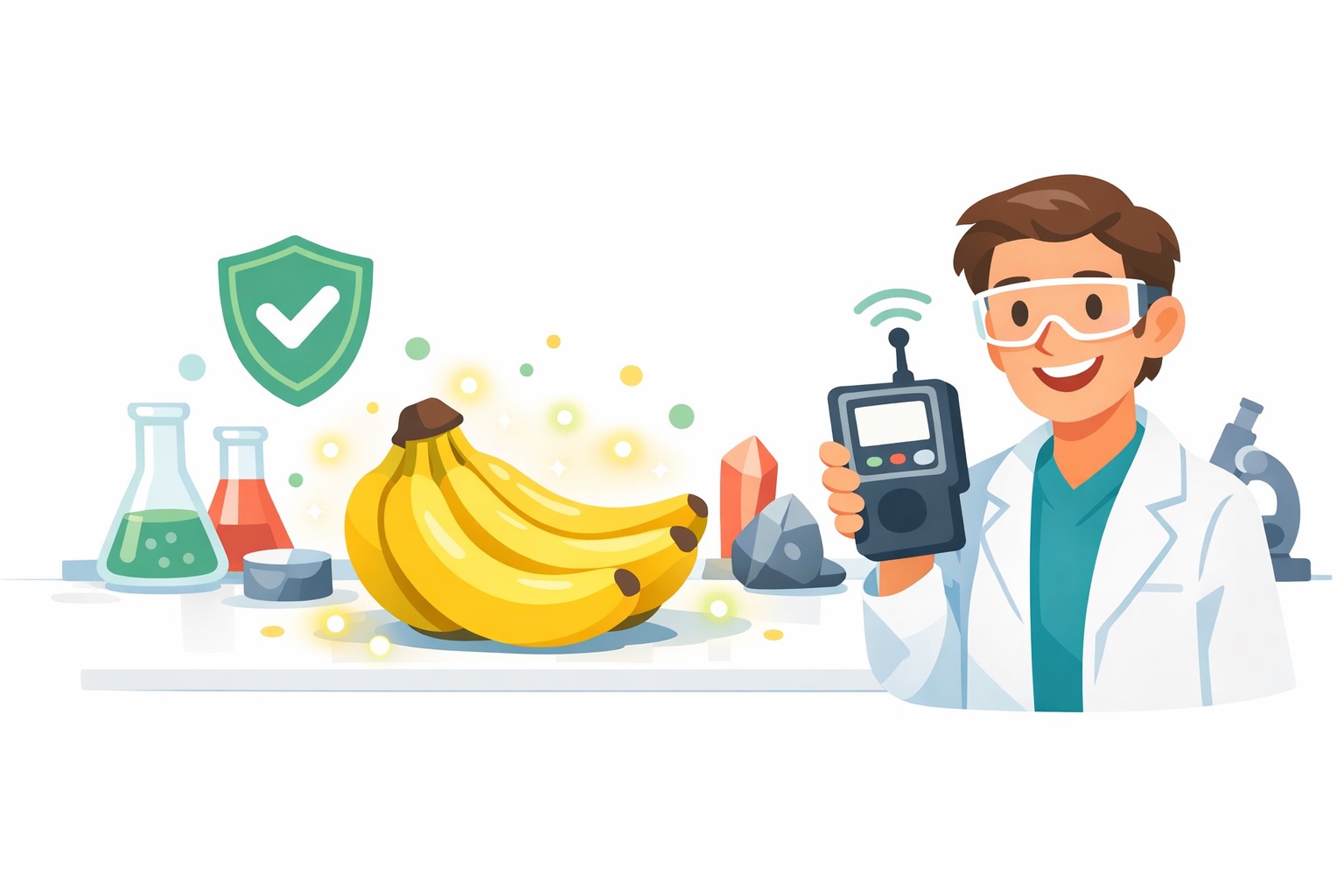
Bananas contain potassium, including a minute natural fraction of radioactive potassium-40, but the resulting dose is extremely small.
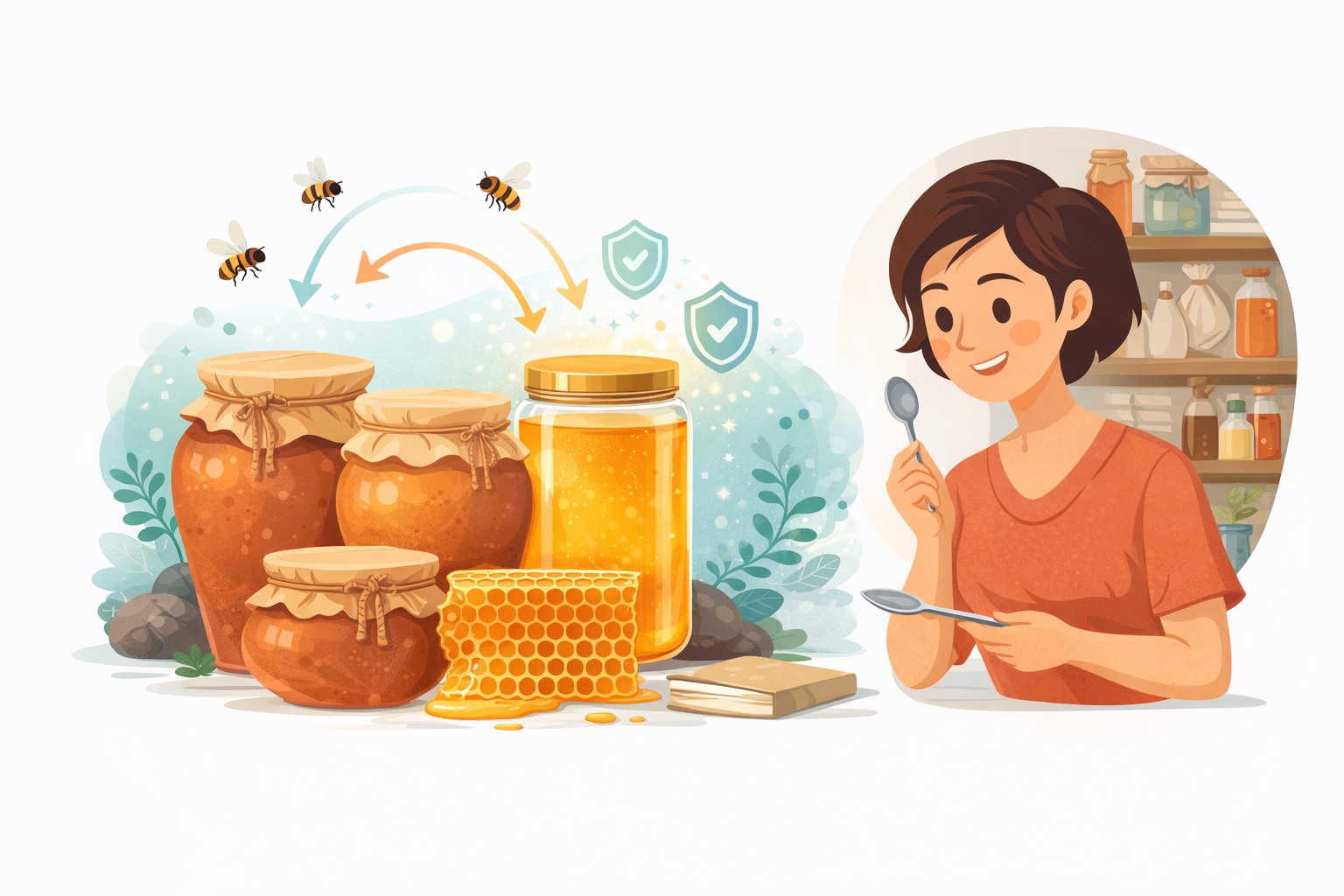
Mature honey is acidic and contains very little water available to microbes, so a clean, sealed jar can remain stable for an exceptionally long time.