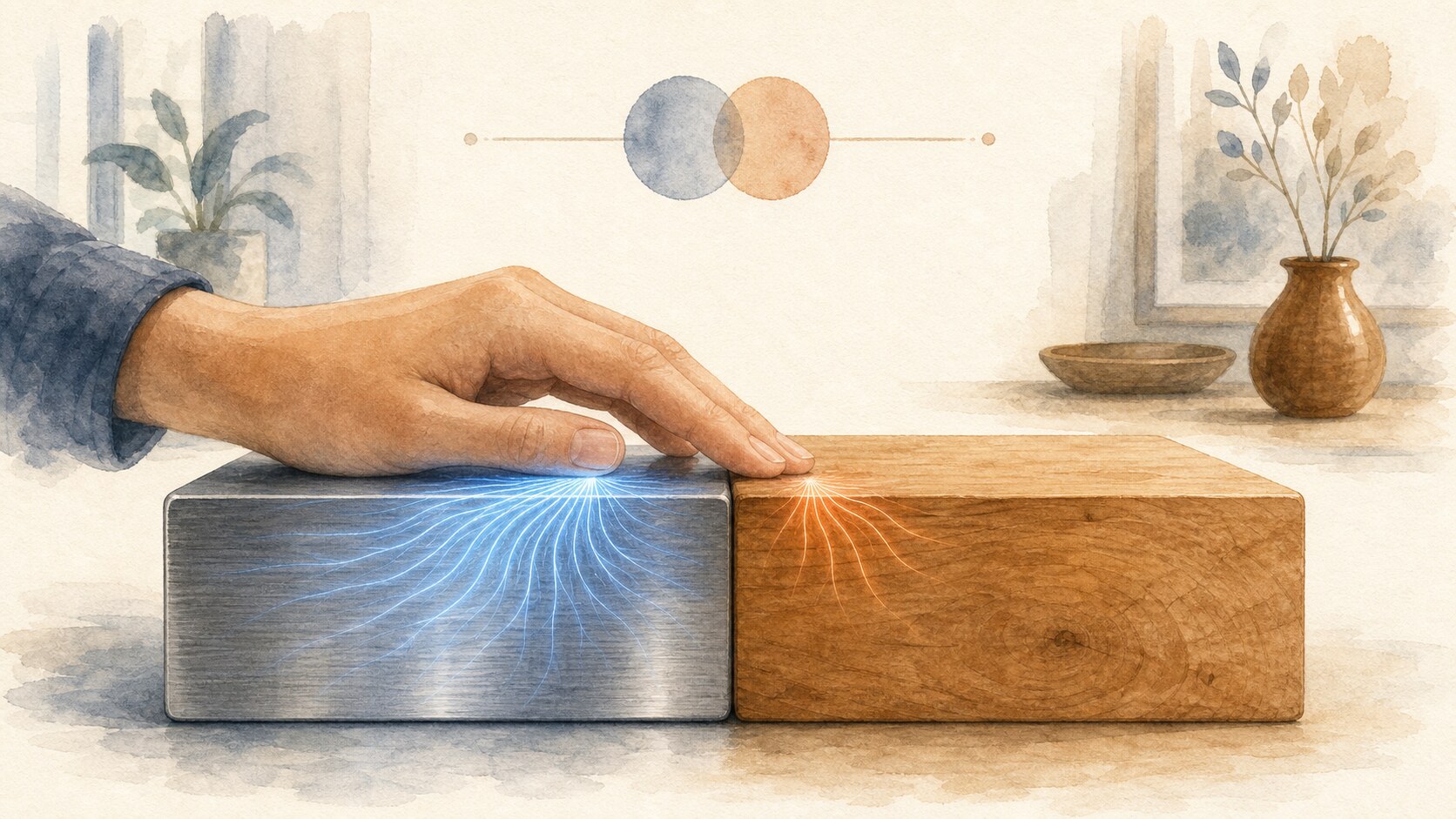
Metal and wood left in the same room can have almost identical thermometer readings, yet the metal feels much colder. Skin is not a thermometer that reports an object's temperature directly. Its thermal receptors respond strongly to how quickly heat enters or leaves the tissue after contact.
When a warm hand touches a cooler object, heat flows from the skin into the material. Metal has high thermal conductivity, so it spreads the received energy away from the contact point quickly. Its surface does not immediately warm to skin temperature, and the skin continues losing heat at a high rate. That sustained heat loss produces a stronger cold sensation.
Wood contains a porous cellular structure with much trapped air and has much lower thermal conductivity. The thin layer touching the hand warms relatively quickly, while heat travels into the rest of the wood slowly. As the contact surface approaches skin temperature, the temperature difference and heat flow both decrease, so the wood feels less cold.
A property called thermal effusivity describes the initial exchange more completely than conductivity alone. Effusivity combines conductivity with density and heat capacity to indicate how readily a material can exchange heat with something touching it. Many metals have high effusivity and pull heat from skin rapidly; wood, fabric and insulating foams generally change the contact temperature more slowly.
Reverse the temperature difference and the sensation reverses too. Metal heated by direct sunlight or an oven can deliver heat to skin faster than wood and may feel much hotter or cause injury sooner. If the objects began in different environments, their actual temperatures also matter; material is not the only variable.
Touch is therefore an unreliable way to compare exact temperatures. Contact area, pressure, moisture, blood flow and time all influence the sensation, and the contrast may diminish as the hand and material approach thermal equilibrium. Room-temperature metal feels colder not because metal possesses a special coldness, but because it removes heat from a warmer hand more rapidly than wood does.
EDITORIAL RESPONSIBILITY
FactosBrain Editorial Desk
The FactosBrain Editorial Desk researched and reviewed this article under our editorial policy. We assess error reports under our corrections policy.