Space
How Voyager's Golden Record Stores Pictures
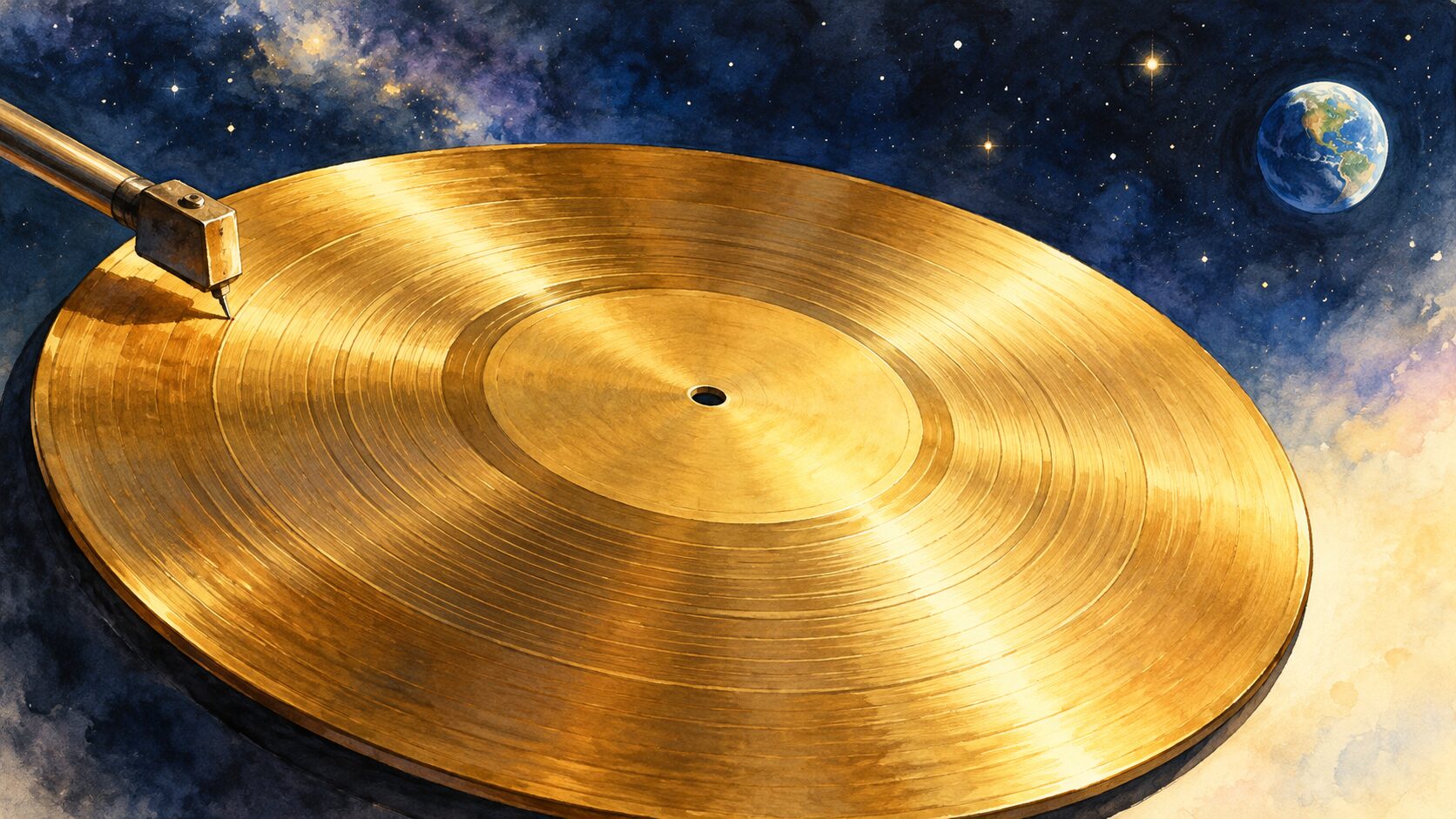
Voyager's pictures are encoded as analog signals. Instructions on the cover explain how to reconstruct 512 vertical lines, check the image proportions with a circle, and establish playback timing.
SPACE
Voyager's pictures are encoded as analog signals. Instructions on the cover explain how to reconstruct 512 vertical lines, check the image proportions with a circle, and establish playback timing.
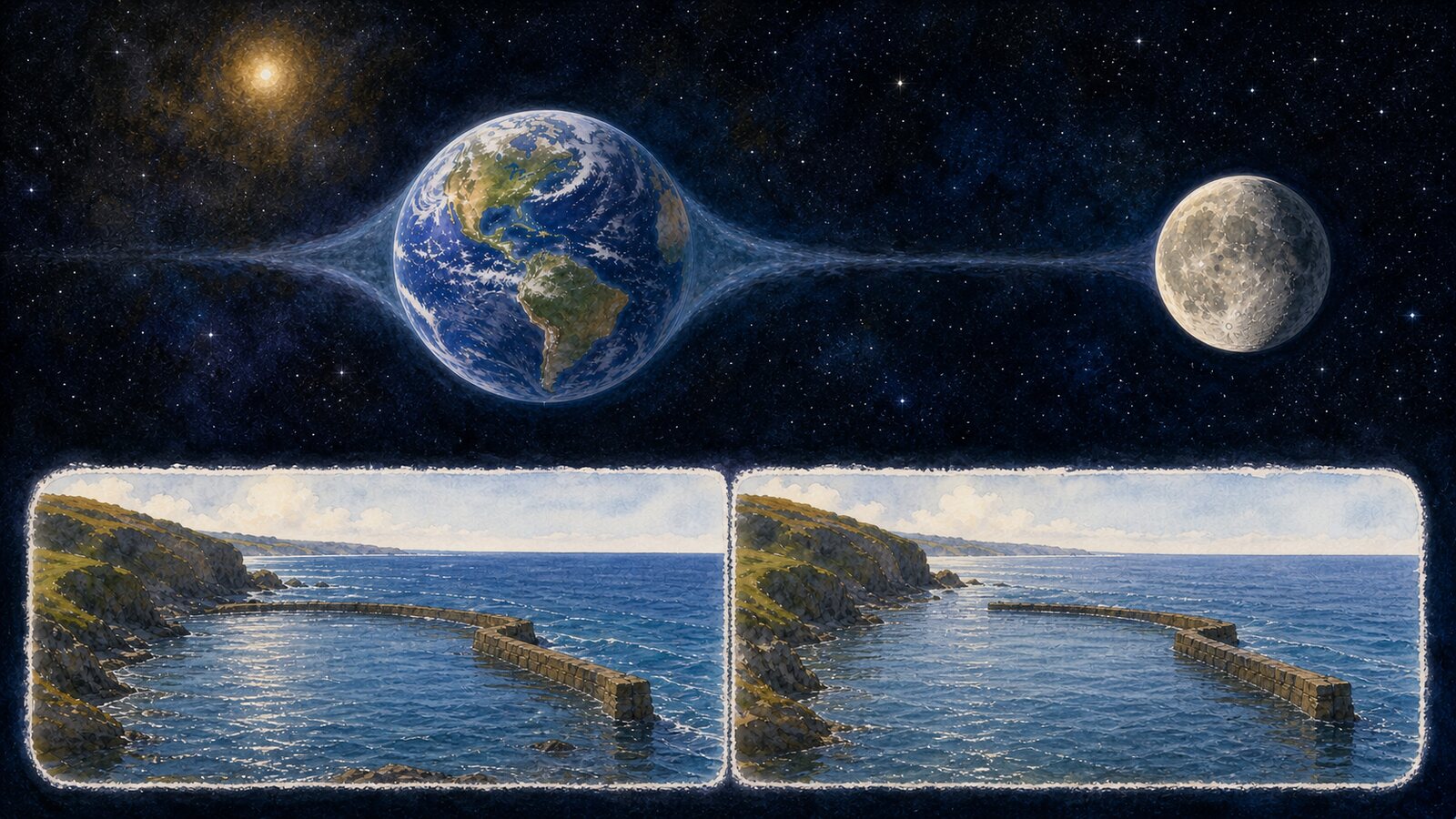
Differential lunar gravity produces tidal components on the near and far sides of Earth, and rotation carries coasts through both. Continents, seafloor shape, and basin resonance then reshape the local timing and height.
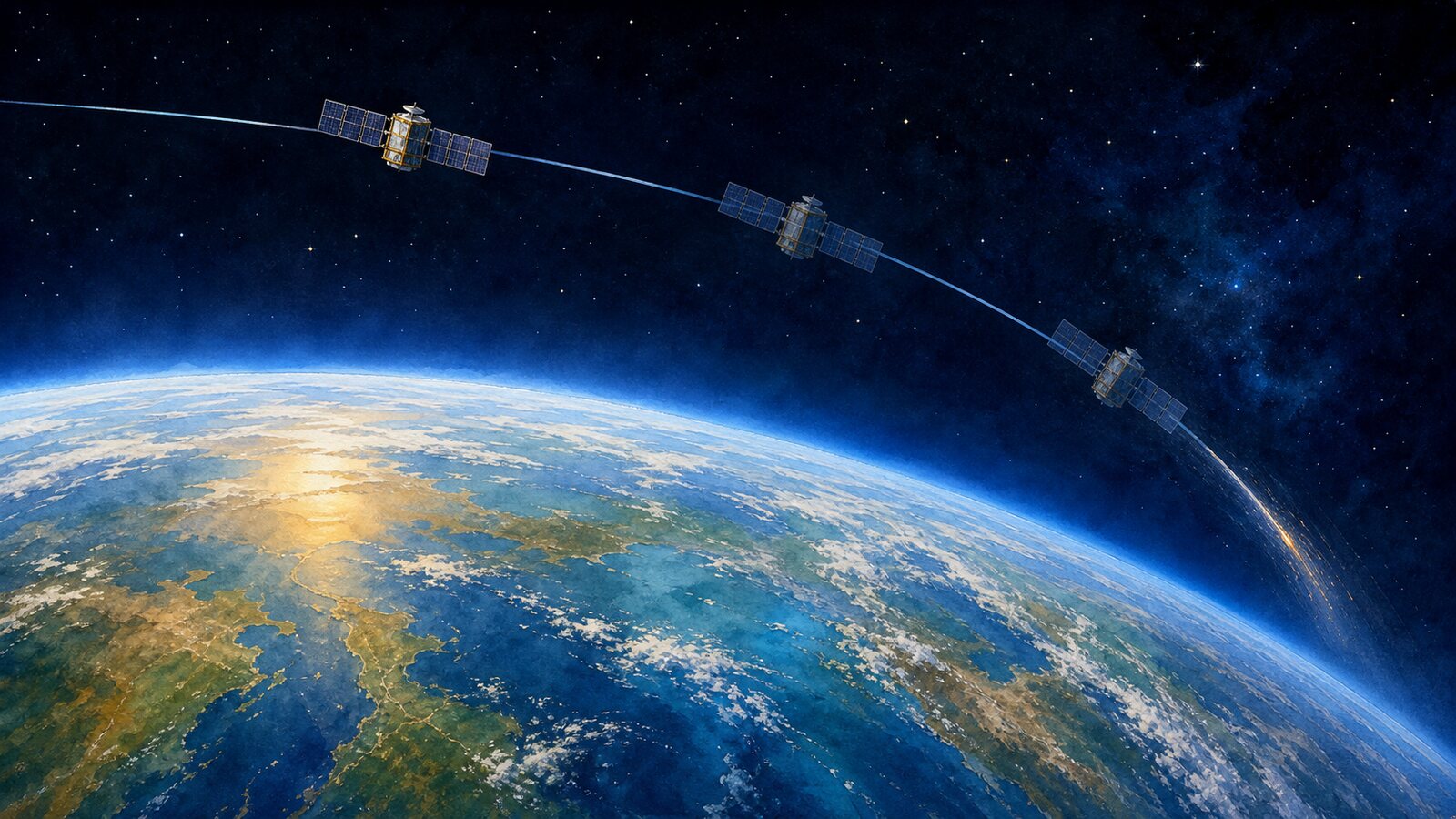
A satellite continually falls under gravity, but its sideways speed makes Earth's curved surface fall away beneath it. Orbit is a sustained free fall that keeps missing the planet.
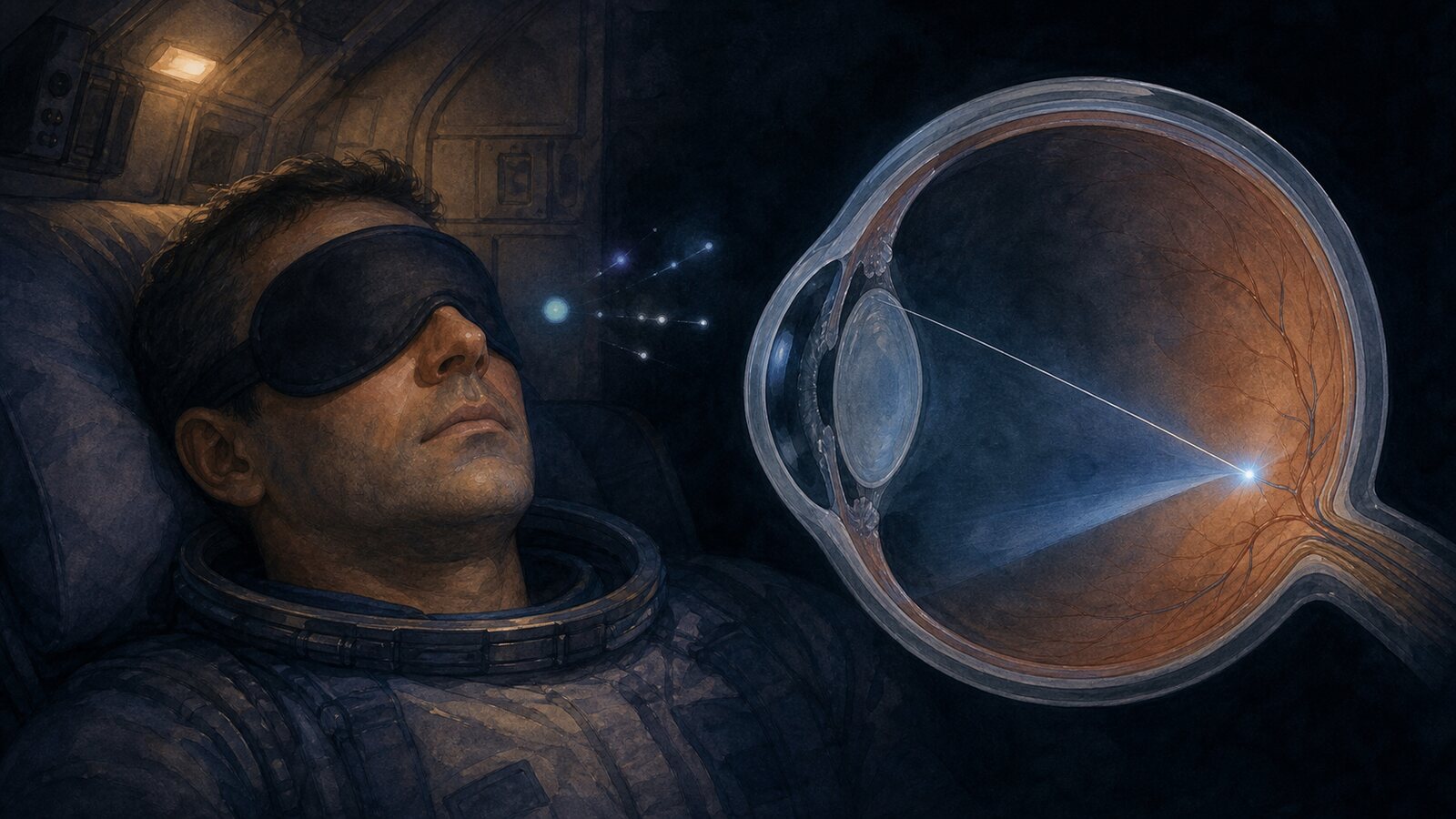
Energetic space-radiation particles can trigger phosphenes through direct retinal stimulation or Cherenkov light inside the eye. Astronauts perceive a neural response to particles, not external starlight.
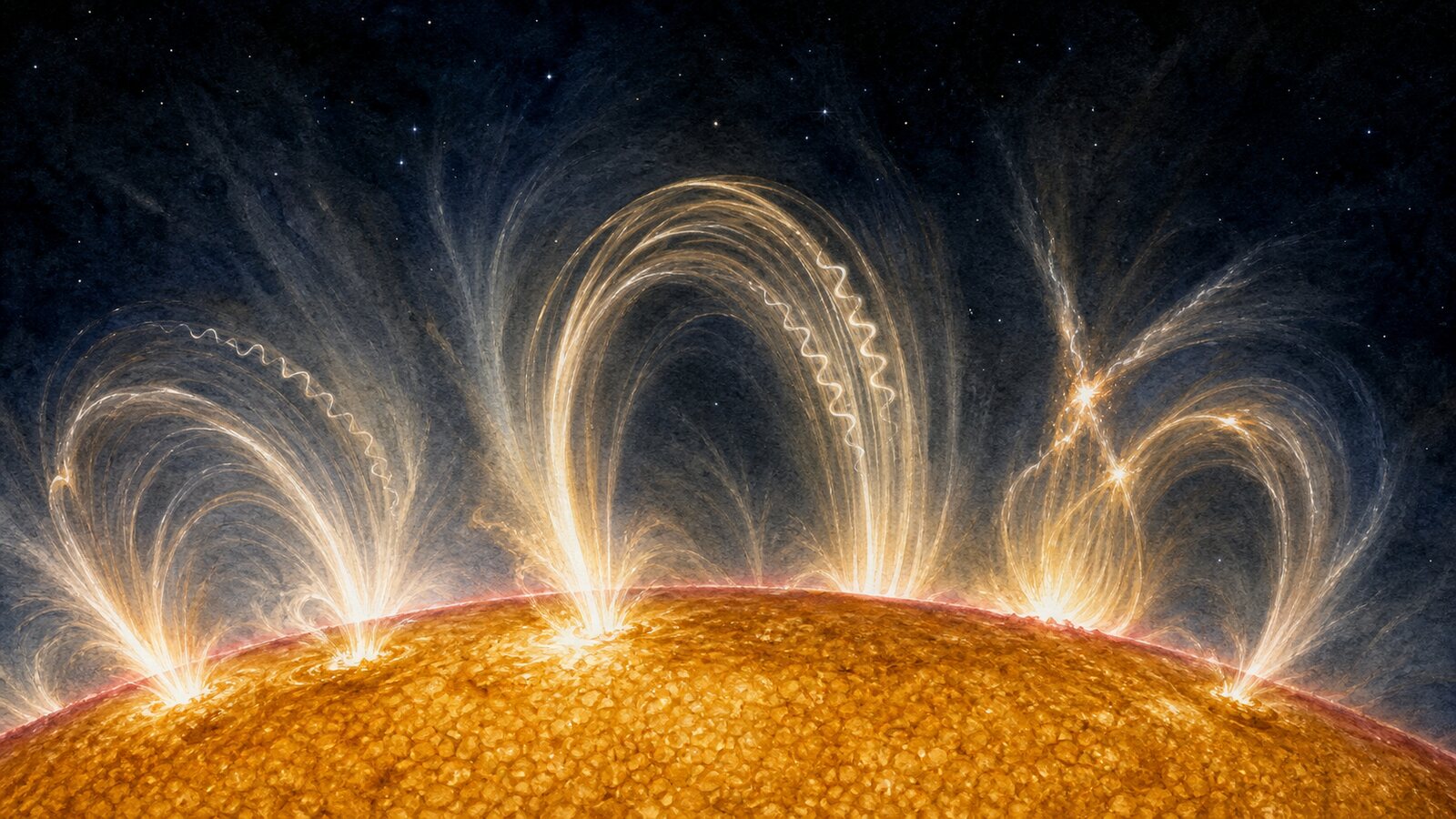
Magnetic fields driven by photospheric convection carry energy in waves or store it in stressed structures. Wave dissipation and small reconnection events heat the corona, although their shares remain unresolved.
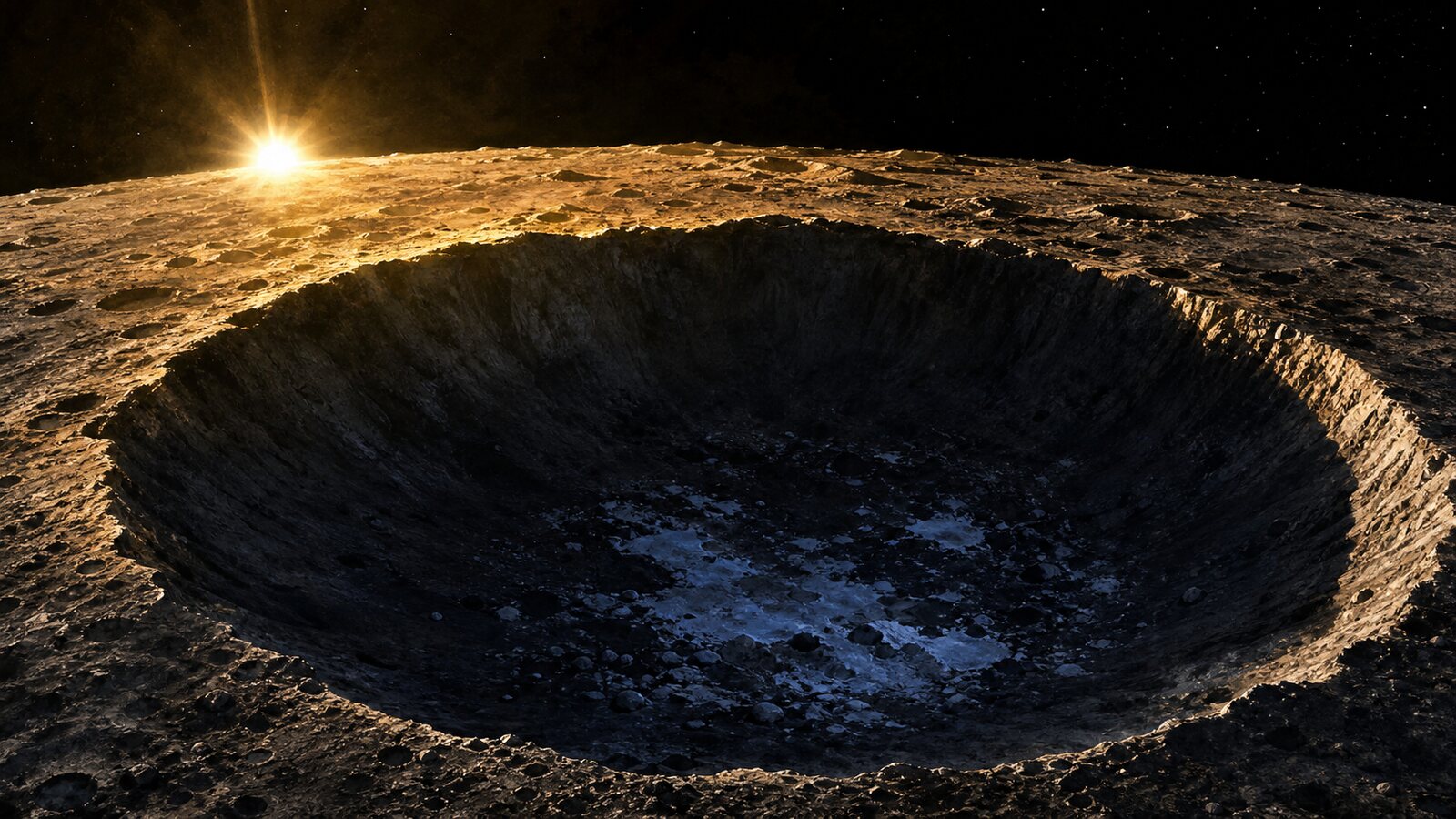
Mercury's nearly upright axis leaves parts of polar craters permanently beyond sunlight. These cold traps can preserve delivered water as exposed ice or deposits buried beneath a dark insulating layer.
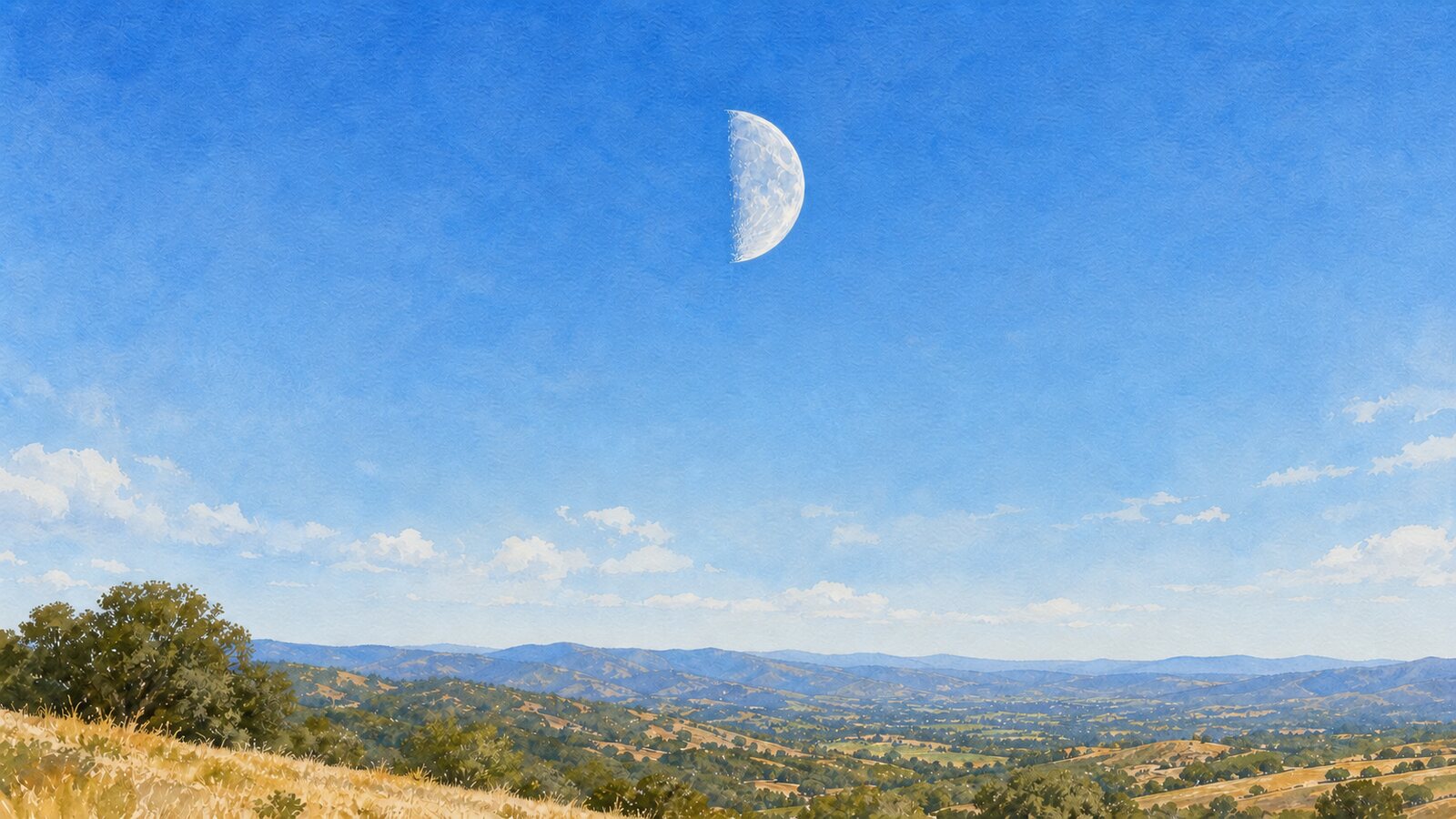
The Moon is often above the horizon in daylight, and reflected sunlight can keep its disk brighter than the scattered sky. Phase and angular distance from the Sun determine when it appears and how much contrast remains.
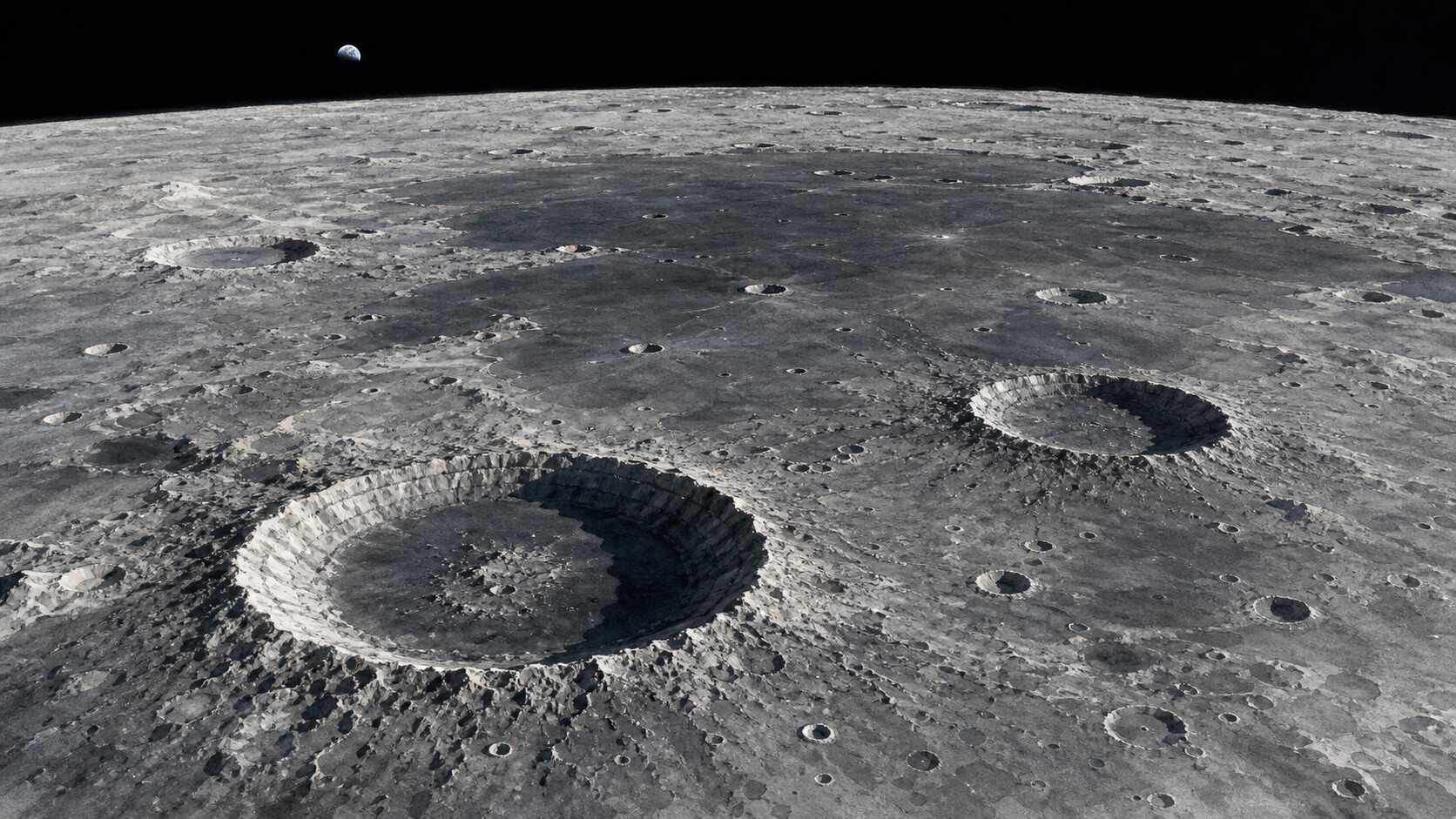
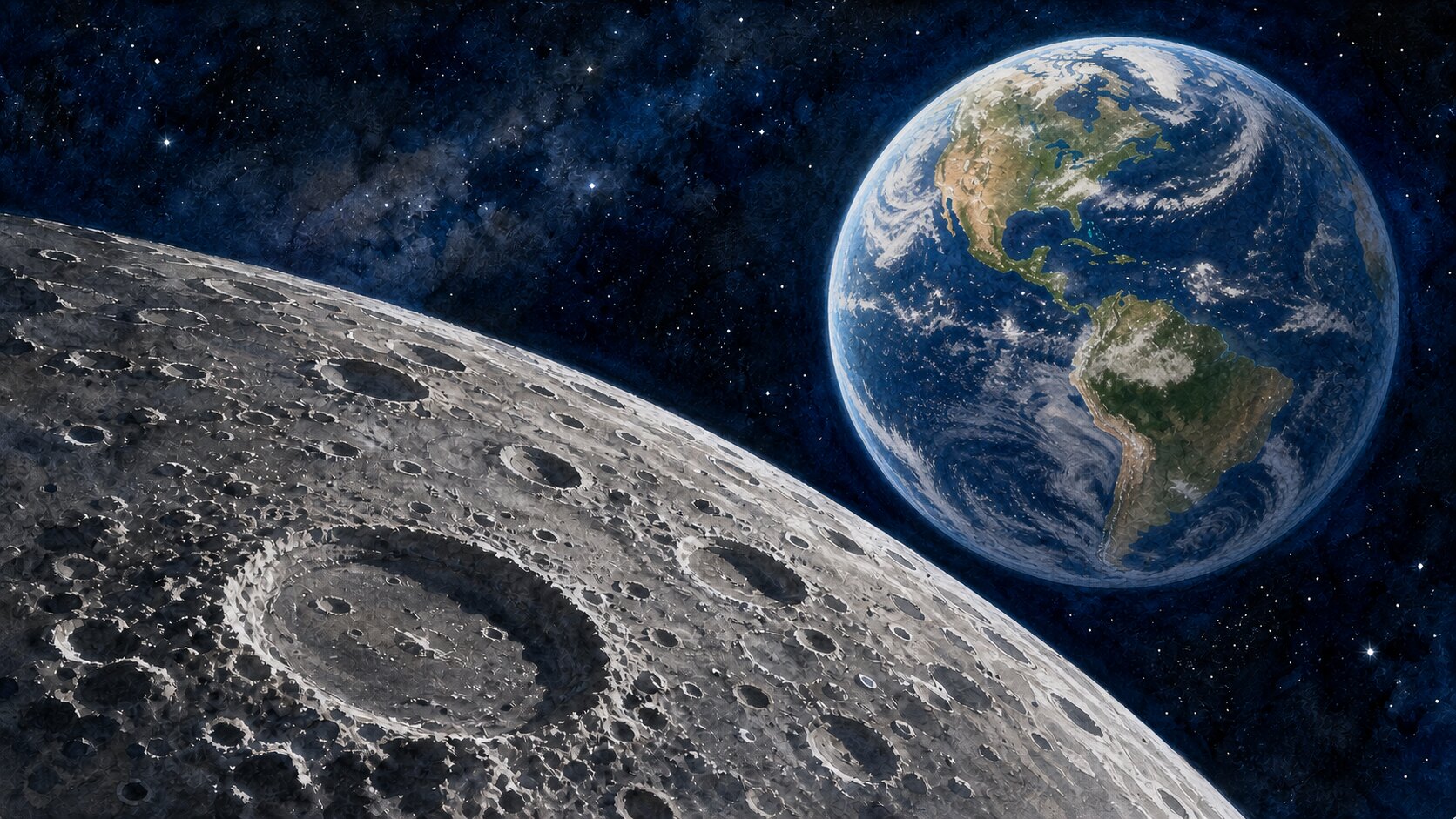
Most of the Moon's circular depressions are impact craters made by asteroids, meteoroids, and comet fragments. With almost no atmosphere, erosion, or crust recycling, ancient impacts remain preserved.
Saturn’s rings are a thin swarm of separate ice-rich particles, not a solid disk. Tidal forces, collisions, and interactions with moons shape and maintain their intricate structure.

A new moon happens monthly, but the Moon’s orbit is tilted by about five degrees, so its shadow usually passes above or below Earth. An eclipse needs a new moon near an orbital node.

Gas and dust released by a comet are pushed away from the Sun by the solar wind and sunlight. The ion tail is usually straight, while the dust tail curves with the comet’s motion.

The Moon has almost none of the rain, rivers or plate tectonics that erase impact scars on Earth. Ancient craters therefore survive as a record of the early solar system.
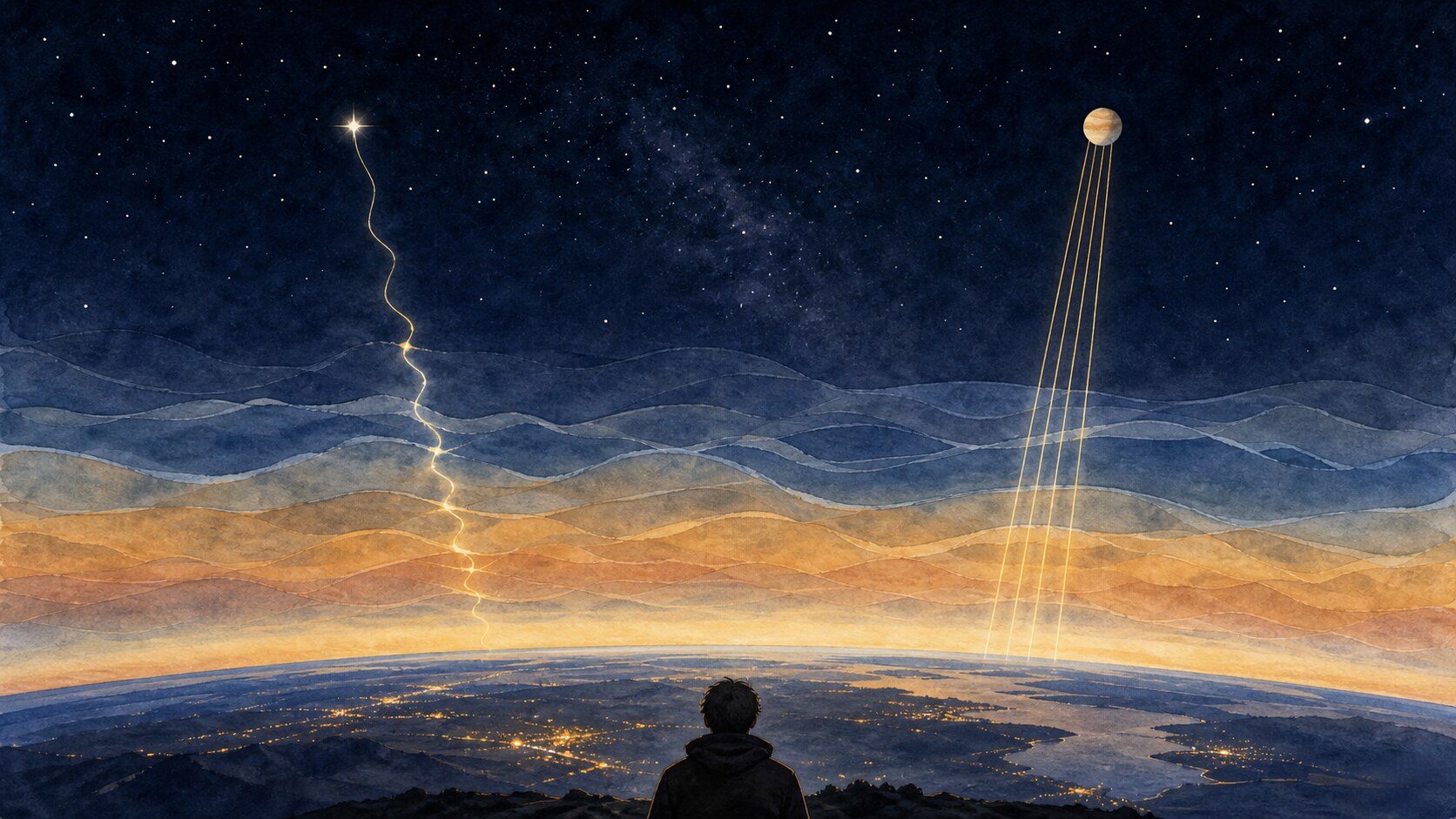
Moving air cells with different temperatures and densities continually bend a star's point-like light. Multiple paths from a planet's tiny disk average those fluctuations, making it look steadier.
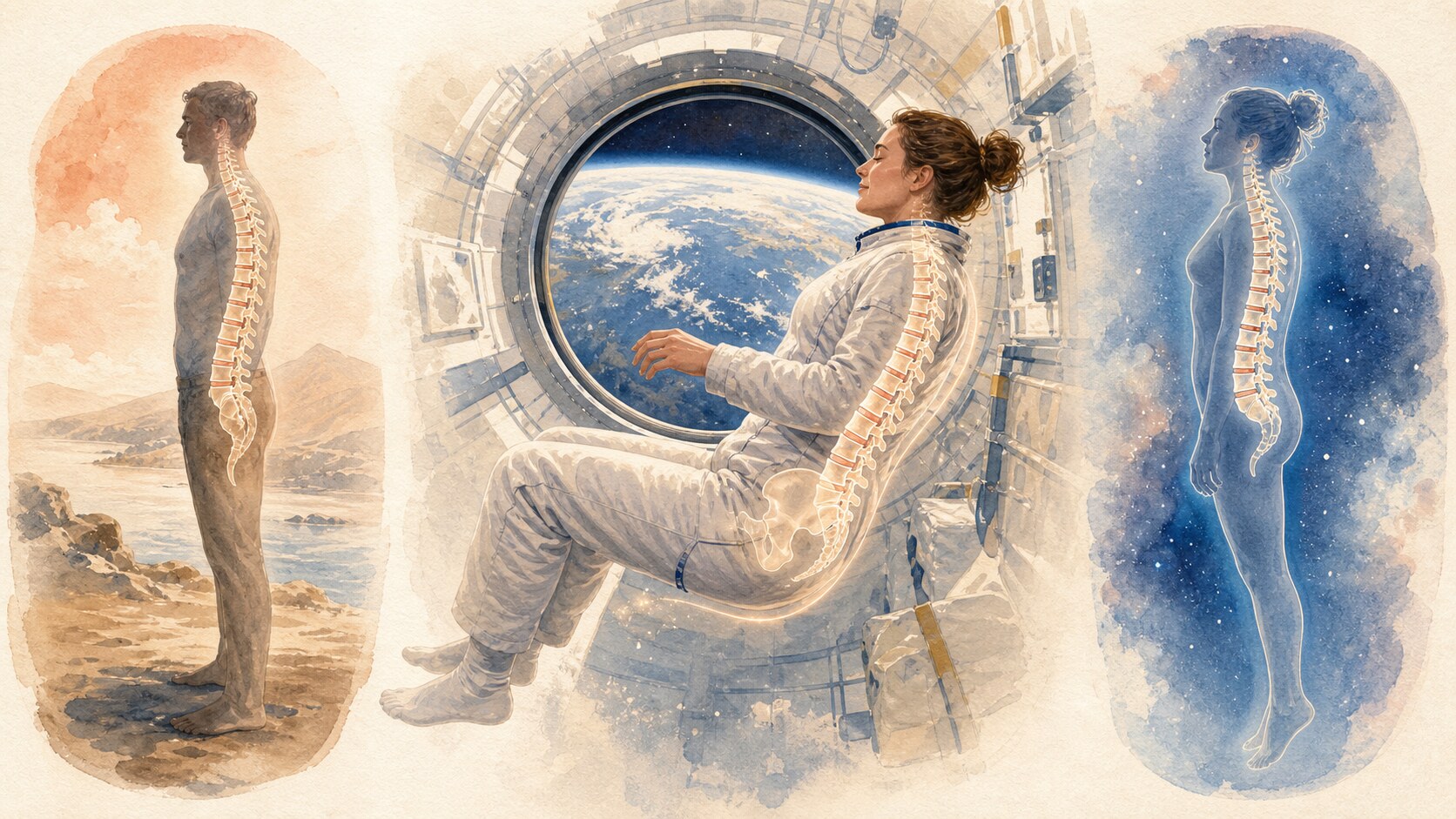
Microgravity removes much of the load compressing the spine, letting discs expand and curves straighten slightly. Height can rise by up to about three percent before returning on Earth.
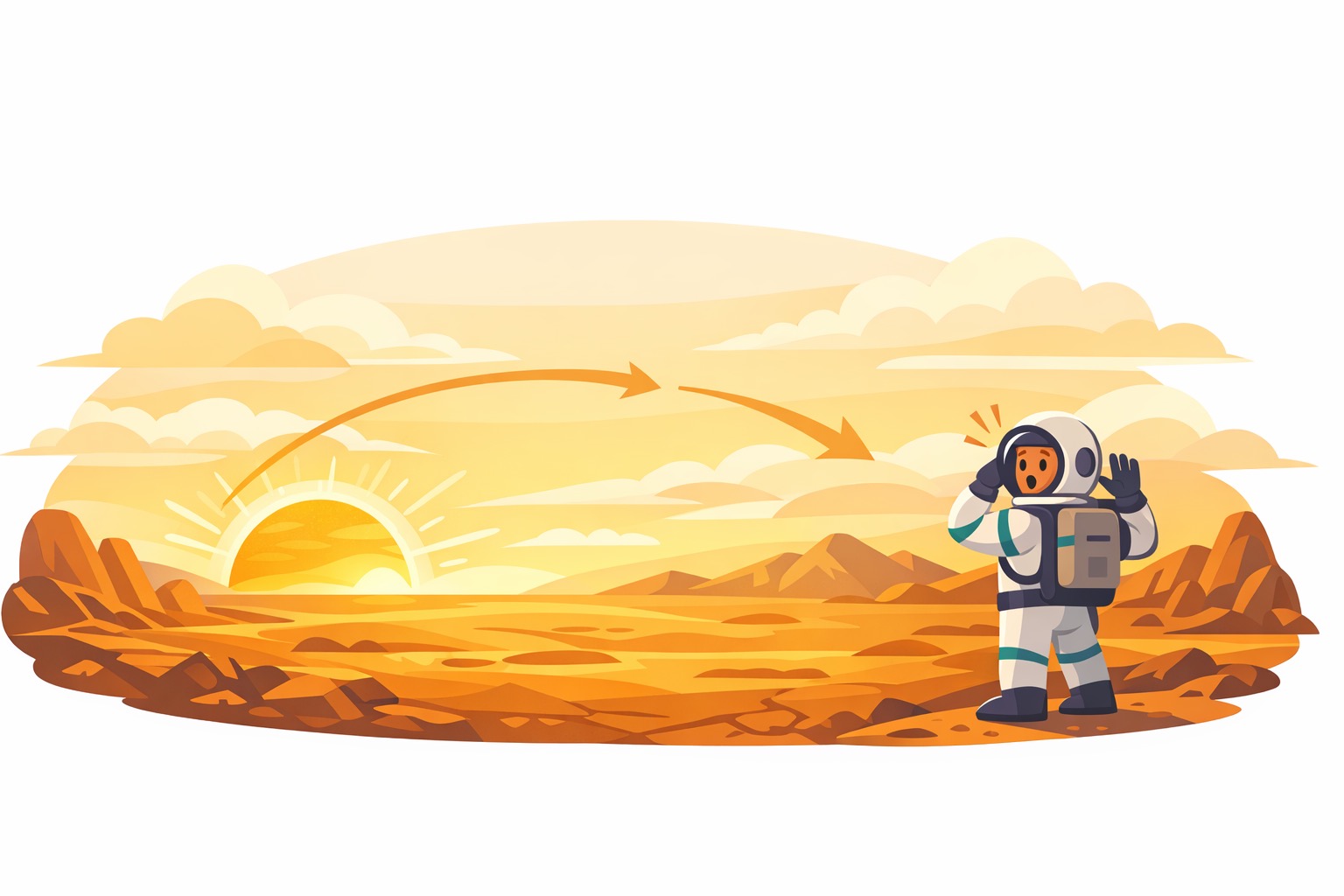
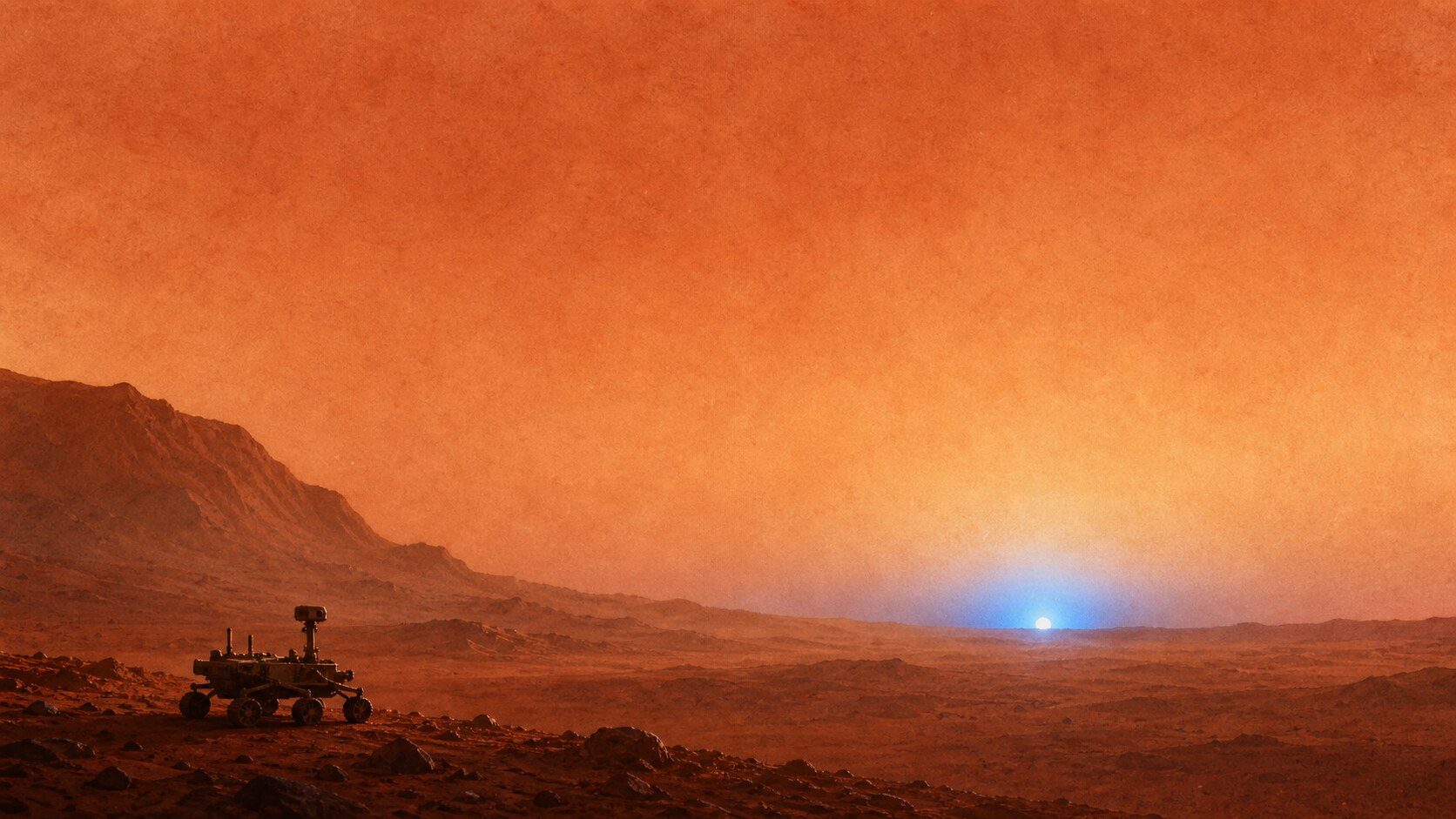
Fine Martian dust preferentially sends blue light toward an observer looking near the Sun. At sunset, the longer path makes that blue halo stand out against the broader reddish sky.
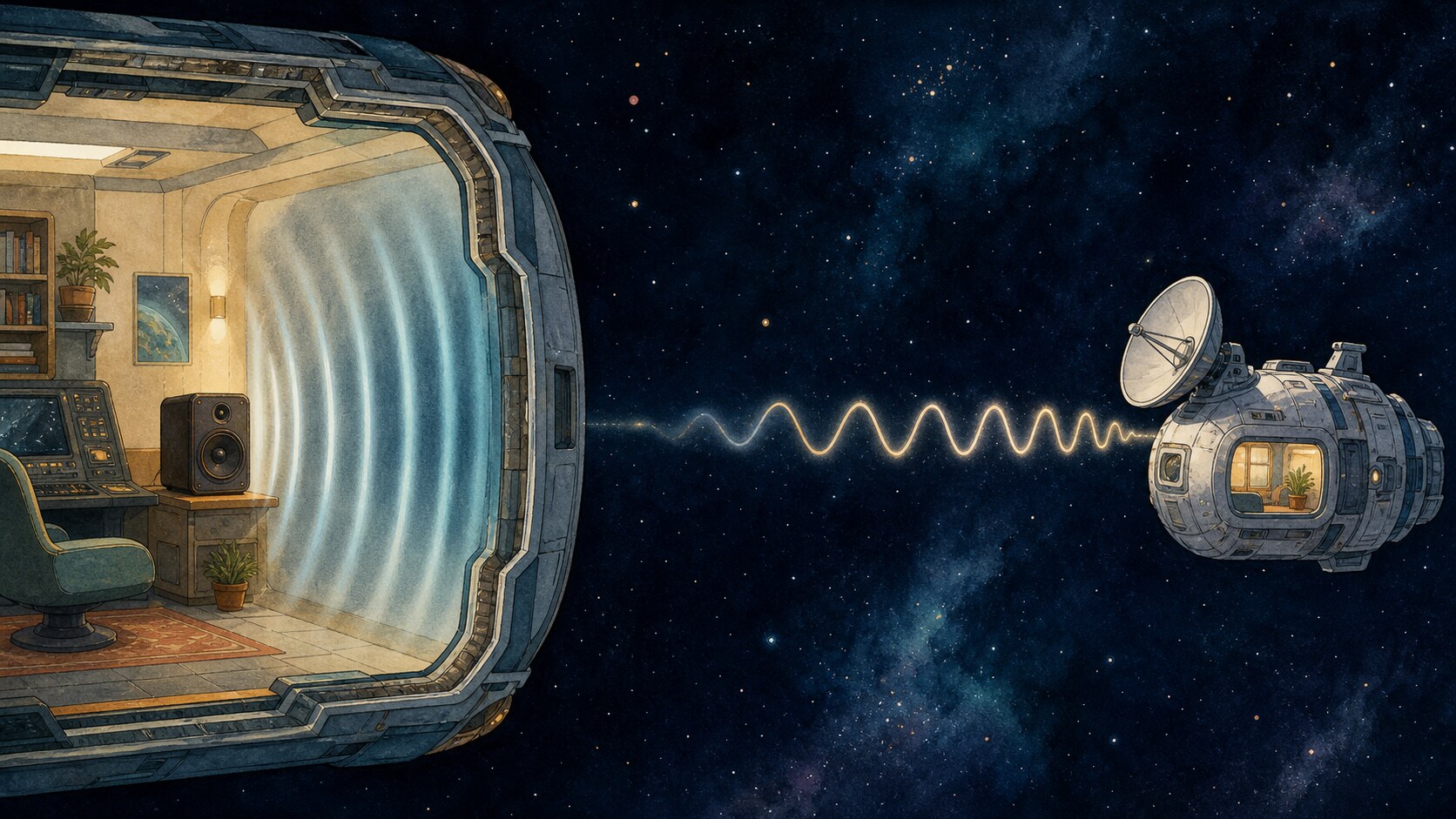
Sound is a mechanical wave passed between neighboring particles, so it cannot cross interplanetary vacuum as an ordinary pressure wave. Electromagnetic radio can, enabling communication.
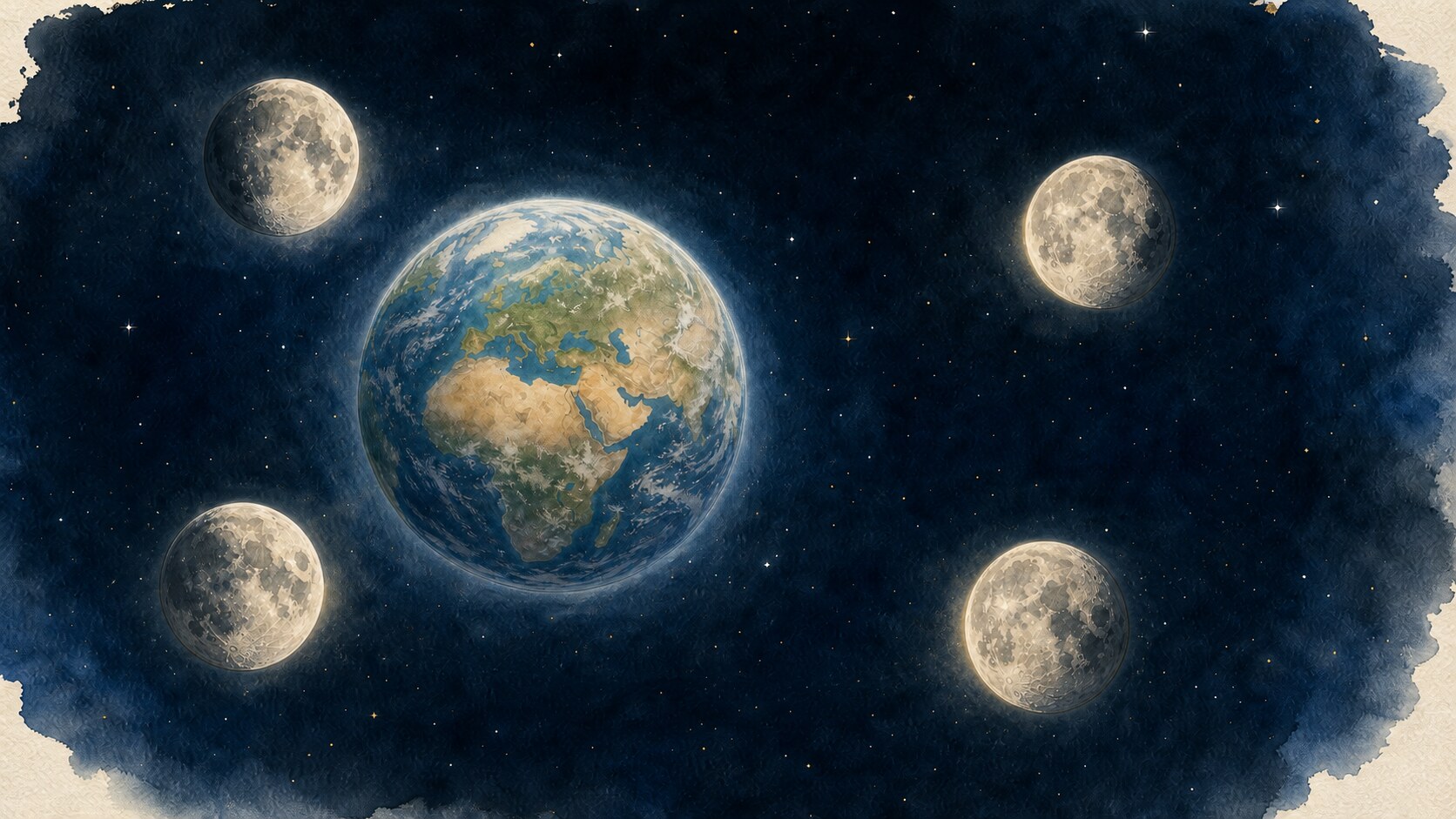
The Moon spins once during each 27.3-day orbit because tidal forces synchronized the motions. Libration shifts our viewpoint enough to reveal about 59 percent of its surface over time.
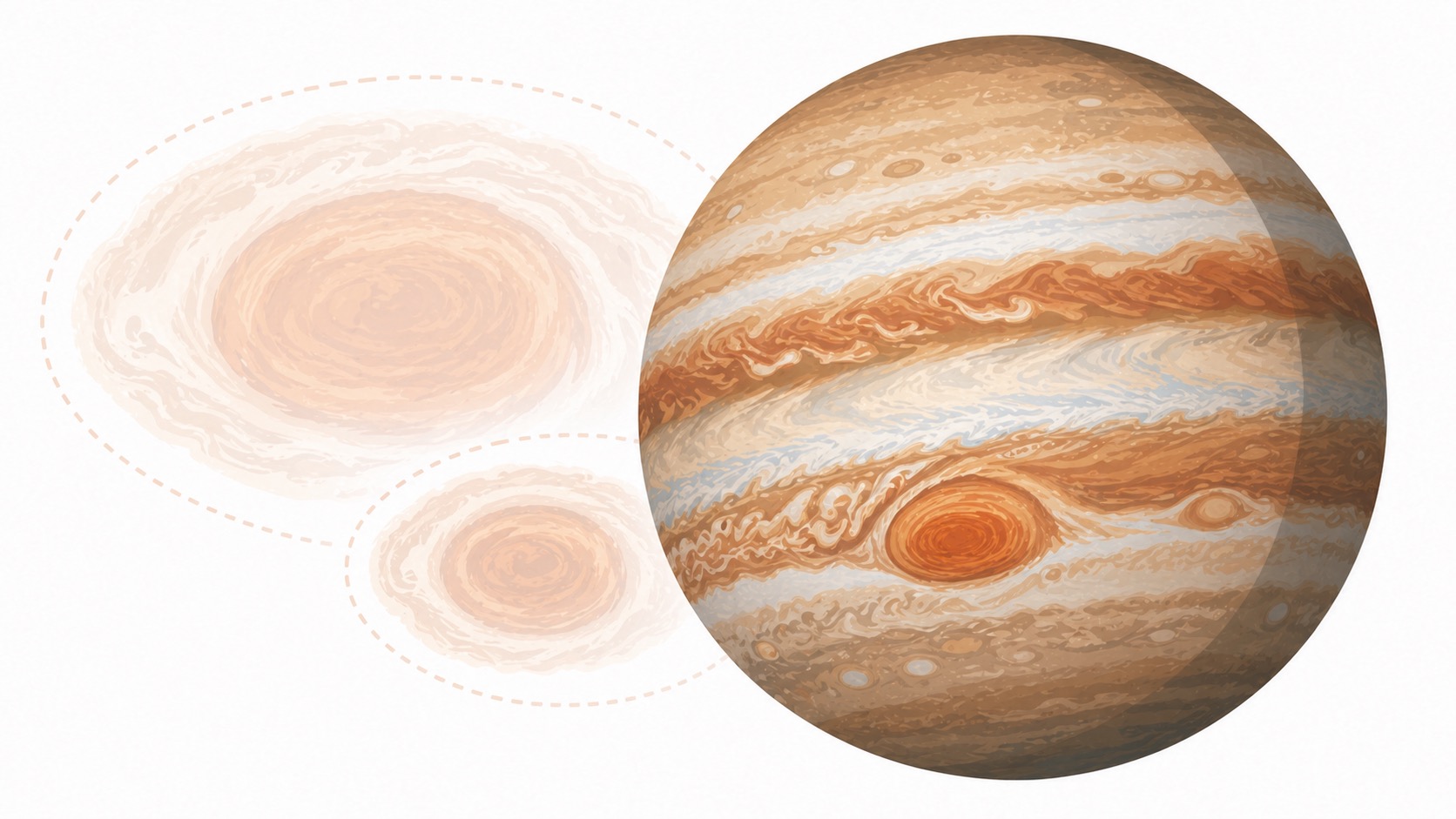
Jupiter's Great Red Spot is a vast anticyclonic storm sustained in a deep, rapidly rotating atmosphere, although it has been shrinking for more than a century.
Venus rotates in the opposite direction from most planets, so the Sun would appear to rise in the west and set in the east.