Look a little closer
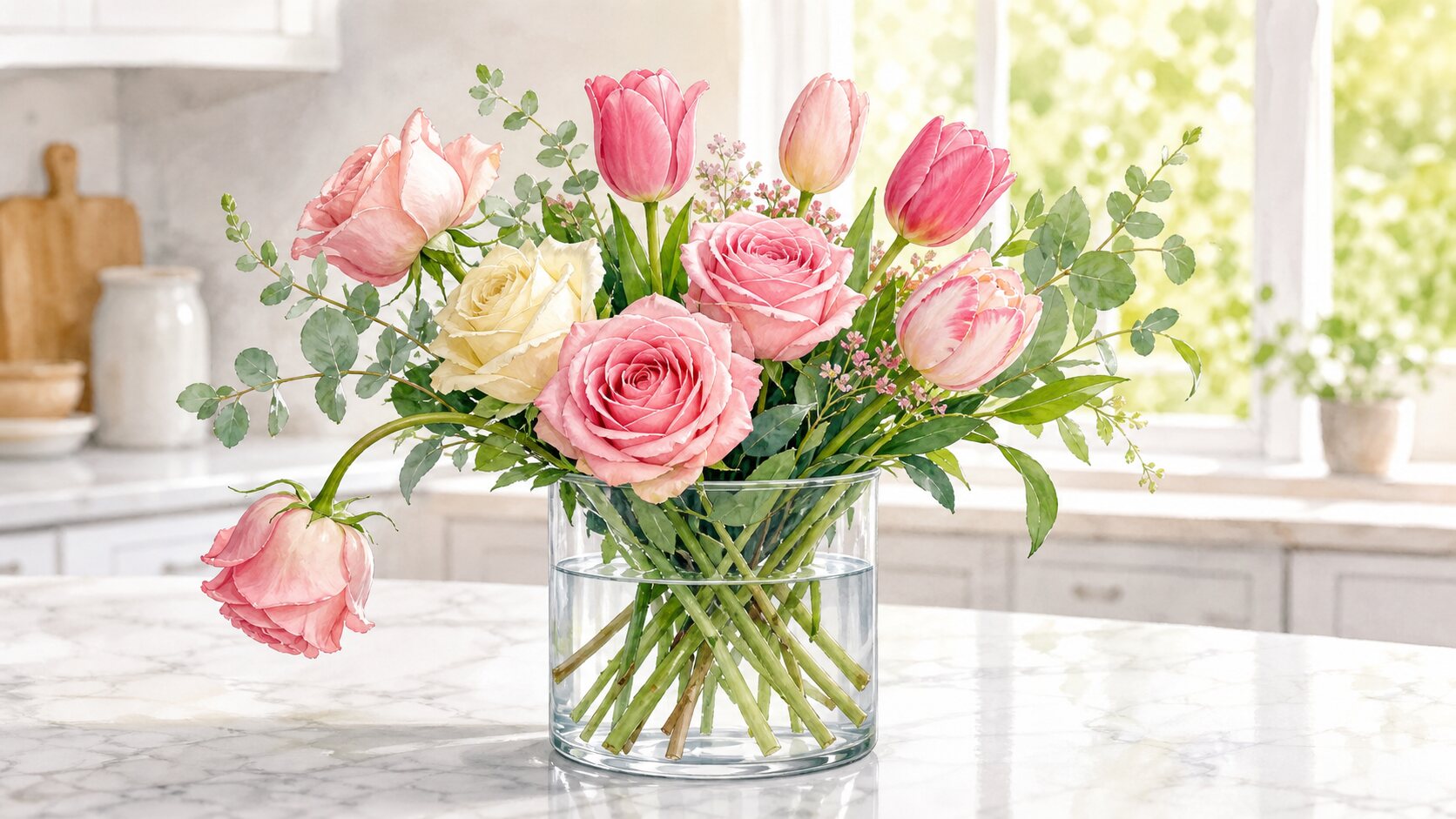
The most direct reason a vase flower droops is that it loses water from its leaves and petals faster than it can take water up through its stem. A flower growing in the ground has roots that supply water continuously. A cut flower has lost those roots and must rely on water entering at the cut stem end. When its cells lose enough water, the internal pressure that keeps tissues firm falls, and the stem or flower head begins to wilt.
Inside the stem are narrow water-conducting vessels called xylem. A fresh, clean cut end in clean water can let water move upward through them. But a dried cut surface, air drawn into the stem, crushed tissue, or damage from handling can restrict that route. Recutting the bottom of a stem with a clean, sharp tool removes damaged tissue and exposes a fresh water-absorbing surface. It is not a ritual; it is an attempt to restore an open path into the xylem.
Microbes in vase water are another major factor. Sugars and organic material released from stems and leaves can help bacteria multiply. Bacteria and their products can clog the cut end or water-conducting vessels, reducing uptake. Cloudy or unpleasant-smelling water is therefore more than an aesthetic problem. It can signal that the flower's water route is deteriorating. Washing the vase, replacing water, and removing leaves that would sit below the waterline reduce this burden.
Temperature and moving air change the water balance as well. Sun, a heater, and a draft can speed the loss of water from leaves and petals. A rootless stem may then be unable to replace what the flower is losing even while it stands in a vase. A cool, bright place away from harsh direct sun is usually kinder to cut flowers. Ripening fruit is also best kept at a distance because ethylene gas can speed aging in some flowers.
Wilting is not only a water problem. After harvest, a flower continues to respire, use stored sugars, mature, and age. Vase life depends on species, variety, harvest stage, handling, transport temperature, and how open the bloom was when it was bought. Commercial flower preservatives are designed to support hydration, limit microbial growth, and provide a controlled source of sugar. They are generally more predictable than mixing untested household ingredients into vase water.
Not every wilted flower can recover. Tissue that has been dry for too long may be damaged beyond easy rehydration, and severe blockage or petal aging cannot always be reversed by fresh water. A recently purchased flower that is only slightly drooping may recover after the water is changed and the stem is recut. The difference shows that wilting is not one event but the result of water balance, microbes, temperature, and elapsed time acting together.
A cut flower remains living plant tissue in a vase. Without roots, it survives on limited water transport and stored resources, which is why a clean container, fresh cut, suitable water, and cool conditions all matter. Wilting is not simply the moment life disappears. It is the visible sign that the system supplying water can no longer keep up with the system losing it.
EDITORIAL RESPONSIBILITY
FactosBrain Editorial Desk
The FactosBrain Editorial Desk researched and reviewed this article under our editorial policy. We assess error reports under our corrections policy.