Look a little closer
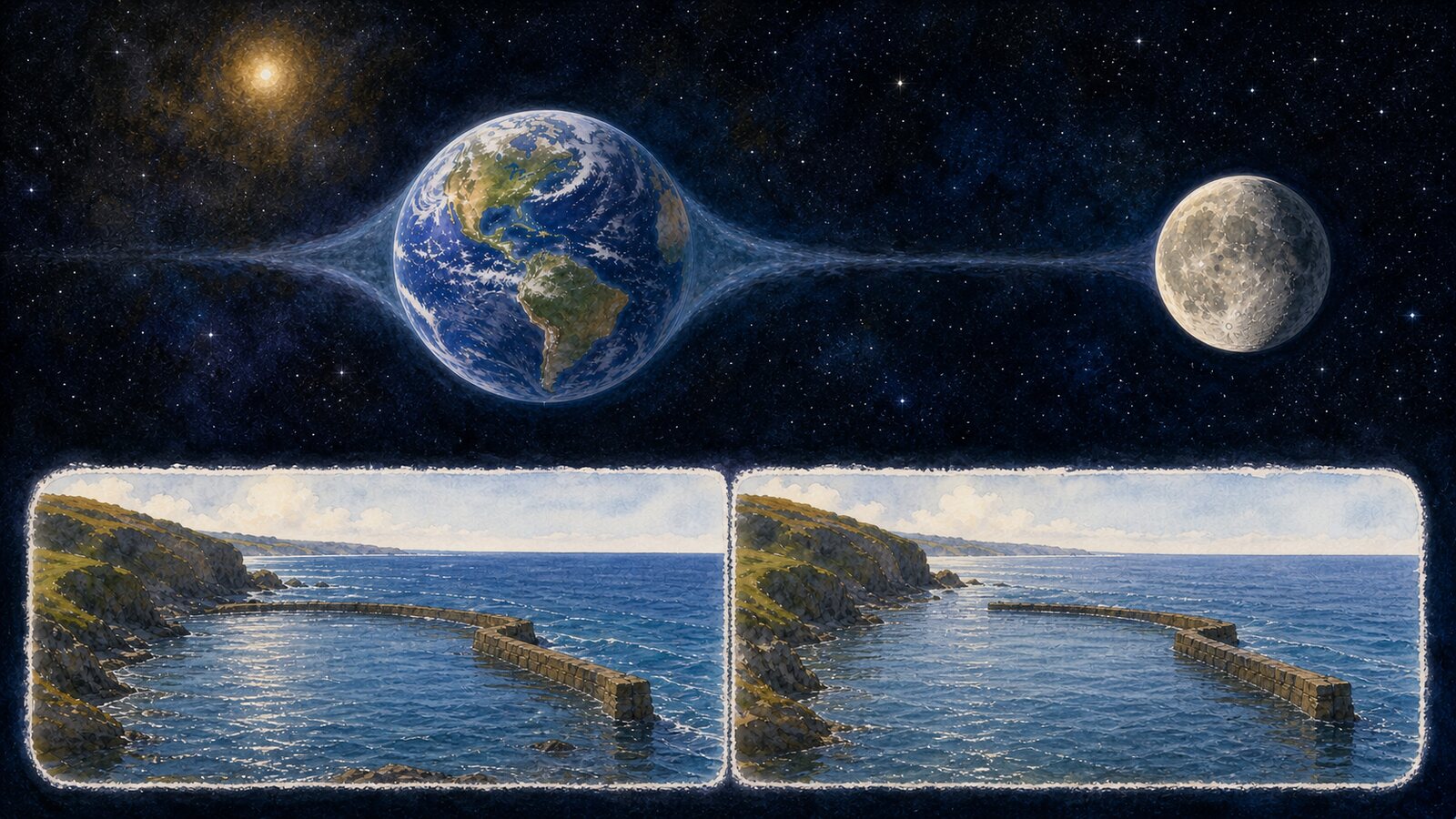
A new moon passes between Earth and the Sun roughly once a month, but it does not produce a solar eclipse every time. For an eclipse, it is not enough for the Moon to be on the Sun-facing side of Earth. The Sun, Moon, and Earth must line up closely enough that the Moon’s shadow actually reaches Earth.
The Moon’s orbit is not in exactly the same plane as Earth’s path around the Sun. It is tilted by about five degrees. At most new moons, the Moon passes a little above or below the Sun as seen from Earth, and the shadow it casts misses our planet above or below as well. A close-looking pairing in the sky can therefore still fail to have the needed three-dimensional alignment.
The two places where the Moon’s orbital path crosses Earth’s orbital plane are called nodes. A new moon has an opportunity to create a solar eclipse only when it occurs near a node. The Sun is near those nodes during two periods each year, known as eclipse seasons. Even during an eclipse season, the exact timing of the new moon determines whether an eclipse occurs.
A successful alignment does not give everyone the same view. In the narrow track reached by the Moon’s darkest central shadow, the umbra, observers can see a total solar eclipse. In the much broader penumbra, people see only part of the Sun covered. If the Moon is relatively far from Earth and looks slightly too small to cover the Sun, the result can be an annular eclipse instead.
A monthly new moon is therefore necessary but not sufficient for a solar eclipse. The tilt of the lunar orbit, the timing near a node, and the changing distances among the bodies all matter. That modest orbital tilt is why eclipses remain rare geometric events rather than a monthly feature of the lunar cycle.
EDITORIAL RESPONSIBILITY
FactosBrain Editorial Desk
The FactosBrain Editorial Desk researched and reviewed this article under our editorial policy. We assess error reports under our corrections policy.