In January 1884, a funeral on a hillside at Llantrisant in Wales was interrupted. William Price had lit a fire to cremate his dead infant son. People gathered, the child’s remains were removed from the flames, and police arrested the father. The funeral of a five-month-old boy became a criminal case.
Price was a physician in his eighties. He had studied medicine in London and returned to practice in Wales. He also proclaimed himself a Druidic leader, conducting ceremonies associated with his revival of an ancient Celtic religion. His religious choices repeatedly set him apart from the Christian customs around him.
The funeral exposed that difference. Price objected to placing a body in the ground to decay and chose cremation as a religious practice for his son. The people who intervened did not accept the fire as an alternative funeral. Their hostility escalated to a situation requiring police intervention.
Cremation was also a question of evidence. Burning a body could make the cause of death harder to investigate, including evidence of poisoning or violence. Such concerns had already led the government to oppose attempts by cremation advocates to put their method into practice.
The child’s remains were examined after the interrupted funeral. The case involved the question of whether the attempt to burn the body had been intended to prevent an inquest, as well as the act of cremation itself. Choosing a funeral method and obstructing an investigation into a death were distinct issues.
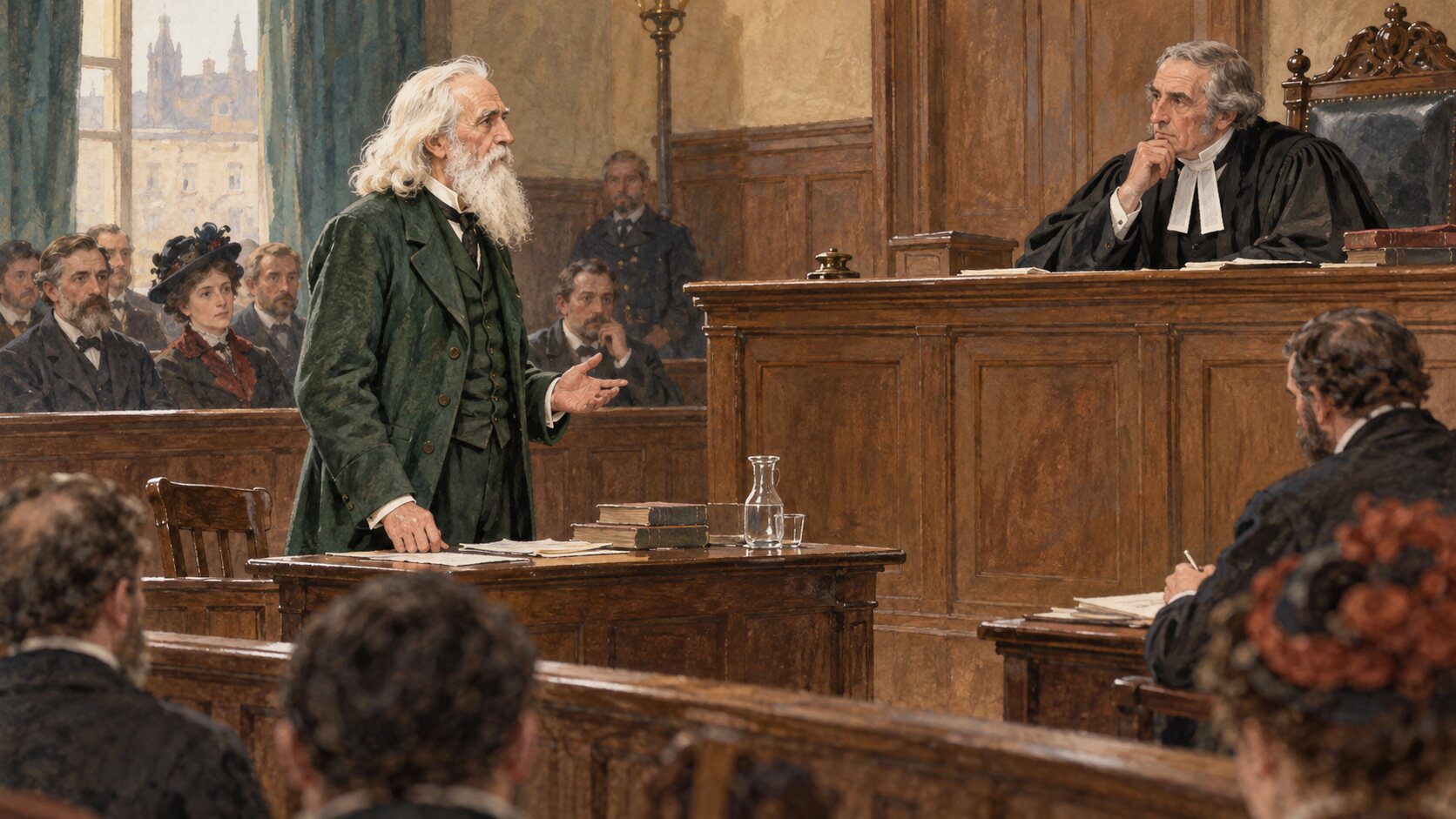
Price represented himself at the Cardiff assizes in February 1884 before Justice James Fitzjames Stephen. Strong local opposition did not settle the question the judge had to address: on what legal grounds could cremation itself be punished as a crime?
Stephen found no authority making the act of cremation, by itself, criminal. There were limits to that conclusion. Burning a body in a way that amounted to a public nuisance, or preventing a necessary inquest, could still be unlawful. Price was acquitted.
Price recovered his son’s remains and completed the cremation in March. Only after the interruption and the court proceedings was the funeral finished.
Other people had been waiting for a clearer position too. The Cremation Society had existed since 1874 and had prepared a facility at Woking. Legal uncertainty and government opposition had kept it from proceeding with human cremations. The Llantrisant case supplied a decision on which it could act.
After the judgment, the Society announced that it was prepared to receive bodies for cremation. It also required documentation and medical checks intended to prevent destruction of evidence of an unlawful death. In 1885, Jeannette Pickersgill was cremated at Woking. Accepting the method meant developing procedures for using it.
The acquittal did not end the argument. Parliament debated a bill in 1884 that proposed limiting cremations to licensed places. That measure did not pass. The legislation regulating crematoria and their operation came in 1902.
Price had died in 1893 and was himself cremated as he wished, with a large crowd watching. An account of the ceremony records a clergyman reading the burial service in Welsh. At the passage consigning the body to the earth, the words were altered. This time it was committed to the fire.
EDITORIAL RESPONSIBILITY
FactosBrain Editorial Desk
The FactosBrain Editorial Desk researched and reviewed this article under our editorial policy. We assess error reports under our corrections policy.