Look a little closer
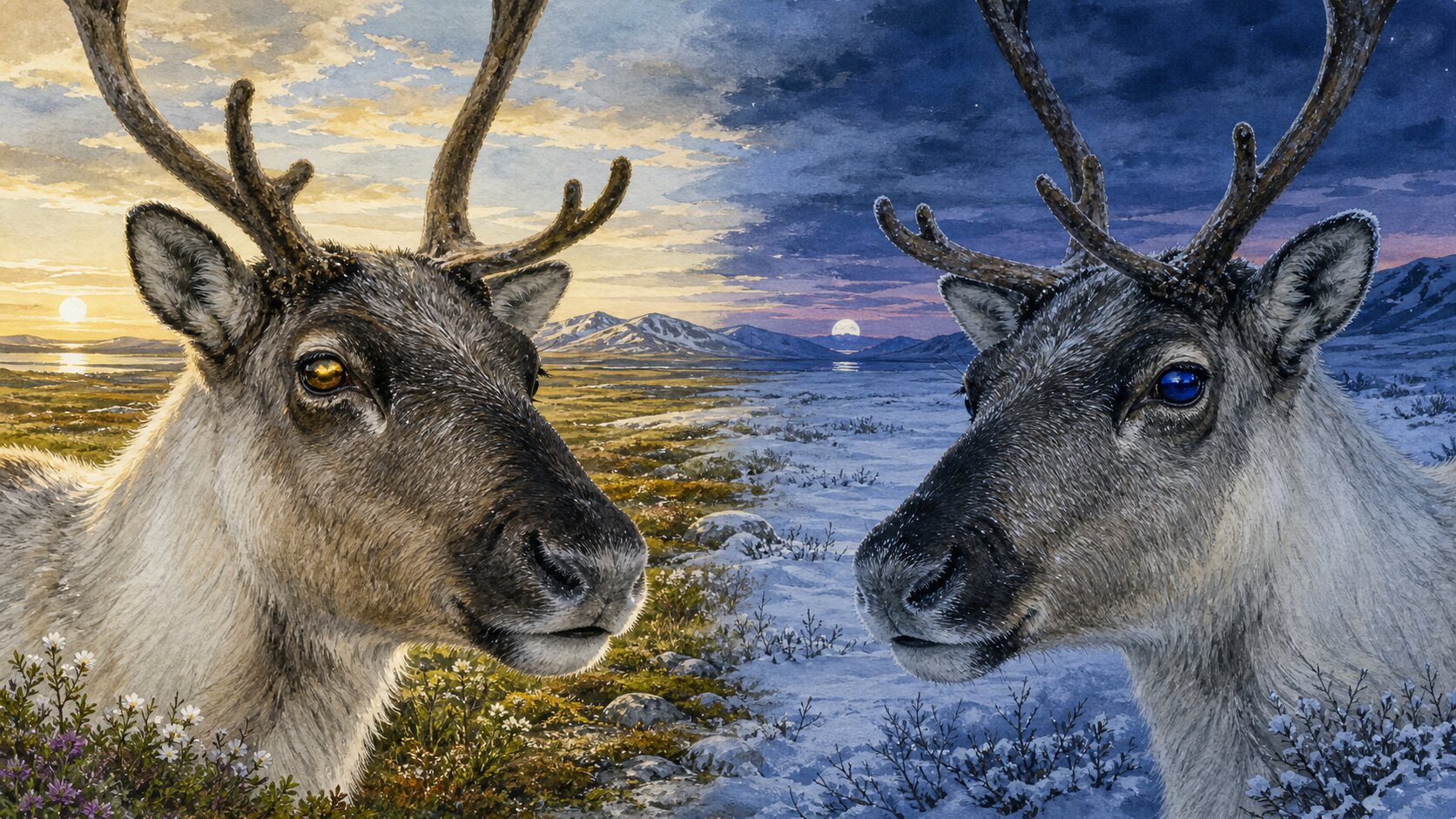
Arctic reindeer do not reflect light from their eyes in quite the same way throughout the year. A reflective layer behind the retina, the tapetum lucidum, appears pale gold or turquoise in summer but deep blue in winter. The popular phrase “their eyes change color” can therefore mislead: the iris is not seasonally acquiring new pigment. Instead, a microscopic collagen mirror that sends light back through the retina is being reconfigured for a radically darker environment.
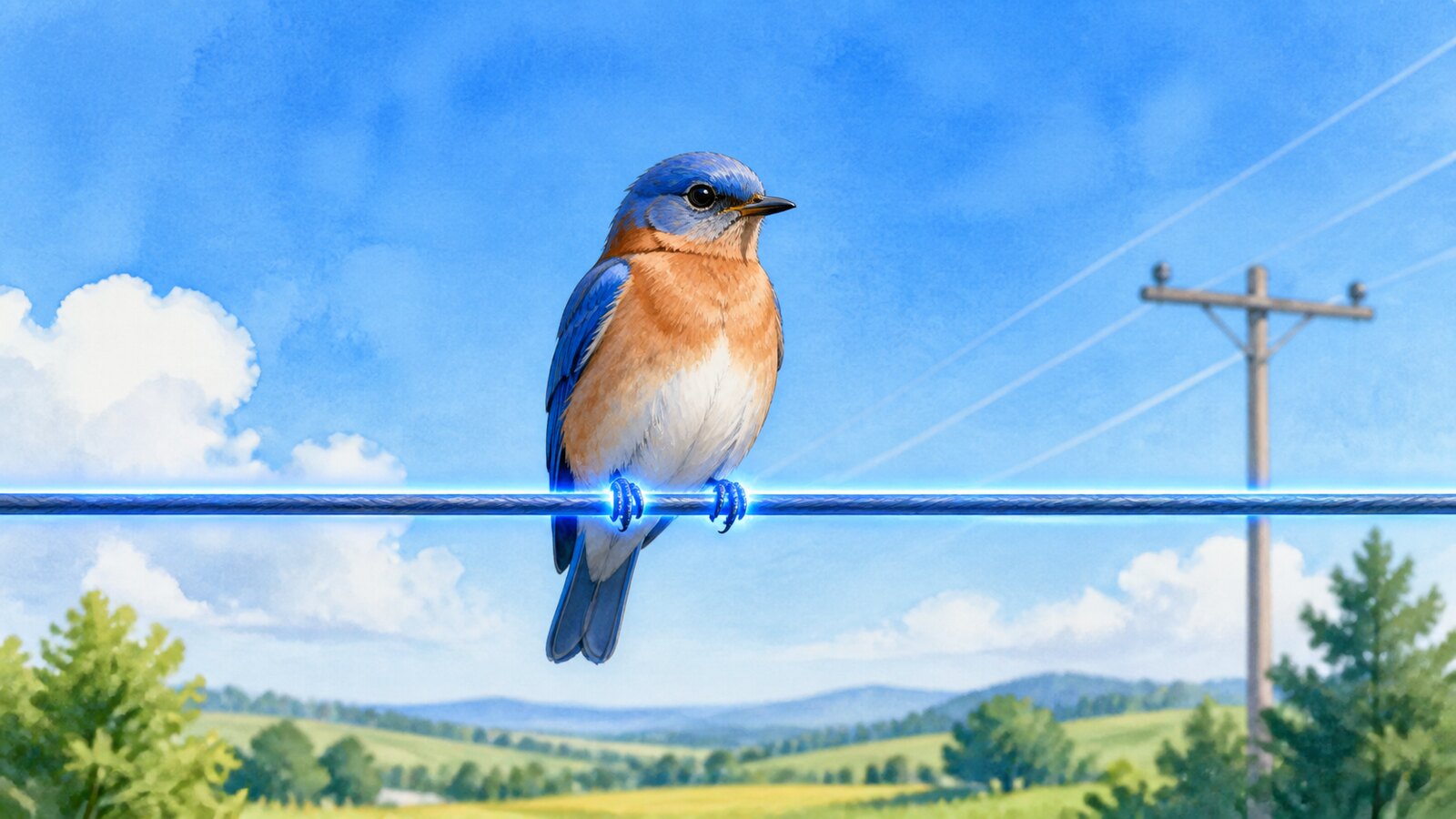
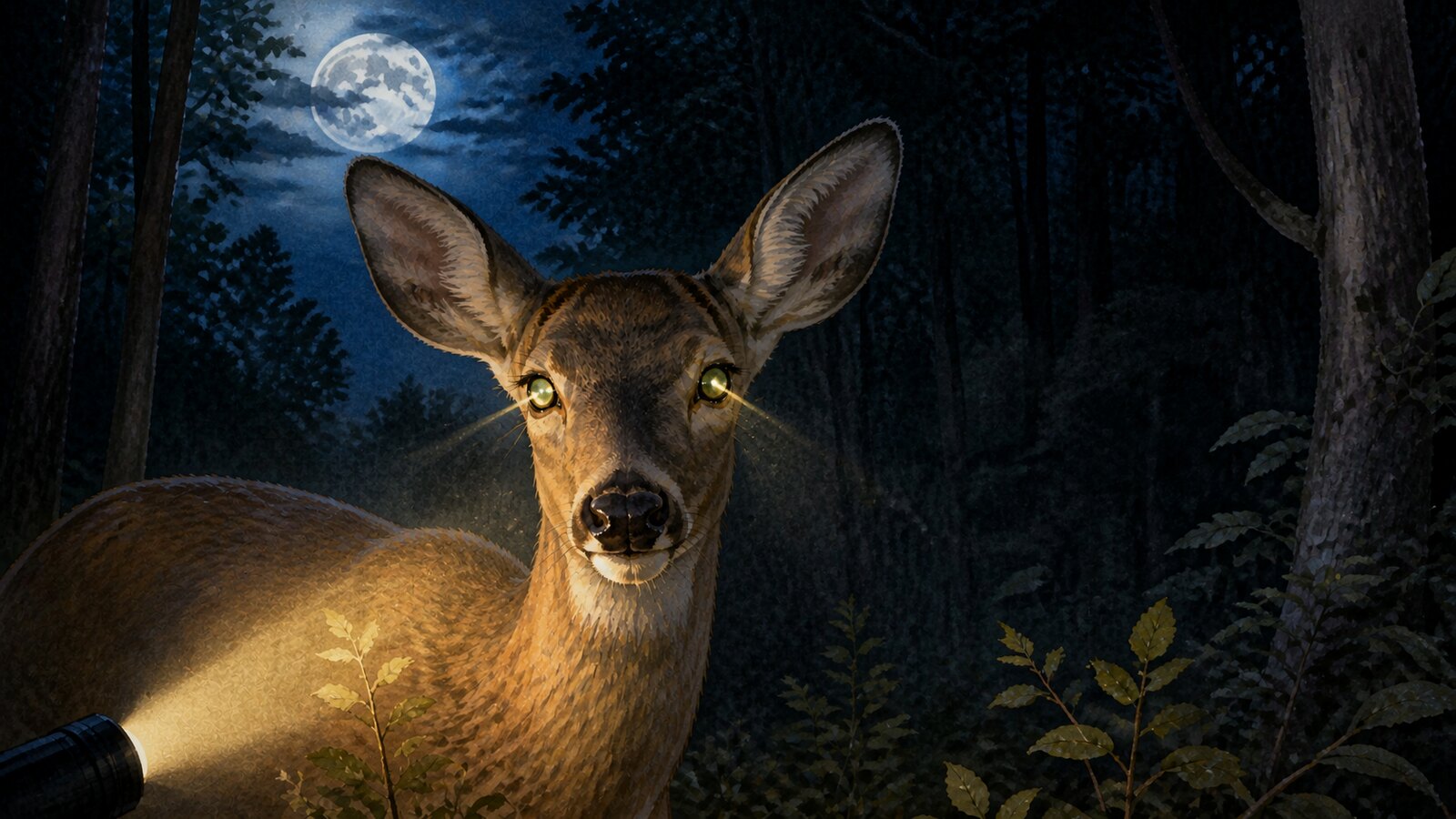
The tapetum is the same general kind of structure that makes a cat's eyes shine when illuminated at night. Some photons pass through the retina without being captured by photoreceptors. Reflecting them back provides a second opportunity for detection. Humans lack this layer, but it is common in mammals adapted to dim light. Reindeer above the Arctic Circle face an unusually large annual swing, from almost continuous summer daylight to long winter darkness and twilight, so a single fixed optical setting would be a compromise in both seasons.
A reindeer's tapetum is not painted with blue or gold pigment. It is a structural-color reflector made from thin, roughly parallel collagen fibrils separated by fluid. The wavelengths it reflects depend on the spacing, order, and optical properties of that array. In summer, more interstitial fluid and wider, less orderly spacing produce a broad pale-gold-to-turquoise reflection. During winter, reduced fluid volume lets the fibrils pack more closely and regularly. The peak reflection then shifts toward shorter wavelengths, and the tissue looks deep blue.
A 2013 study quantified the difference using six summer eyes and fourteen winter eyes. Collagen spacing was smaller in the winter tapeta, while intraocular pressure was higher. The researchers proposed that prolonged pupil dilation may obstruct normal fluid drainage, raising pressure and compressing the reflective tissue. When they placed pressure on excised summer tapetum, its golden appearance shifted toward blue. That result shows that compression can produce the optical change, although it does not by itself prove every step of the seasonal transition inside a living animal.
The winter mirror is not simply reflecting a larger amount of light straight back. Its distant reflectance was actually lower, but short-wavelength light scattered more within the tissue and could pass through the photoreceptor region along more paths. Electrical recordings from the retina showed substantially greater sensitivity in winter specimens. In Arctic gloom, detecting a scarce photon, a moving predator, or contrast against snow can matter more than preserving the finest visual detail.
That gain carries a cost. Greater scattering makes it harder to keep light from one point confined to a precise retinal location, reducing spatial resolution. The summer tapetum behaves more like a direct broad-spectrum mirror, favoring a sharper image in abundant light. The winter version trades some acuity for sensitivity. A camera raising its sensitivity in darkness offers a loose functional analogy, but the reindeer is not electronically amplifying a signal; it is changing the physical spacing of a living optical material.
A 2022 follow-up connected this reflector to the distinctive spectrum of Arctic twilight. When the Sun remains below the horizon, the long atmospheric path and ozone absorption leave a particularly blue illumination. Reflectance measurements and drying experiments supported a photonic-crystal model in which fluid volume and fibril order can transform a gold-turquoise summer tapetum into a deep-blue winter one. Reindeer corneas and lenses also transmit near-ultraviolet light, and their retinas respond to it, so an optical system tuned toward shorter wavelengths may help exploit contrast in snow-covered surroundings.
None of this means that reindeer literally experience a gold-tinted world in July and a blue-tinted world in January. The color visible to us is the spectrum returning from the tapetum, not a direct report of the animal's perception. Suggestions that ultraviolet contrast makes lichen or wolf fur easier to find are plausible ecological interpretations, but they are not the same as behavioral tests comparing detection by wild reindeer. The work also relies heavily on eyes collected after animals died, and its seasonal sample sizes were modest.
The seasonal eye shows how adaptation can tune an existing organ without building a new one. Altering the fluid and nanometer-scale spacing inside the same collagen layer moves it between a bright-summer mirror and a dim-winter mirror. As the Arctic light changes, structural color inside the eye changes with it, resetting the balance between acuity and sensitivity. The winter blue is not decorative coloration; it is the visible signature of a variable optical device designed to keep scarce photons in play.
EDITORIAL RESPONSIBILITY
FactosBrain Editorial Desk
The FactosBrain Editorial Desk researched and reviewed this article under our editorial policy. We assess error reports under our corrections policy.