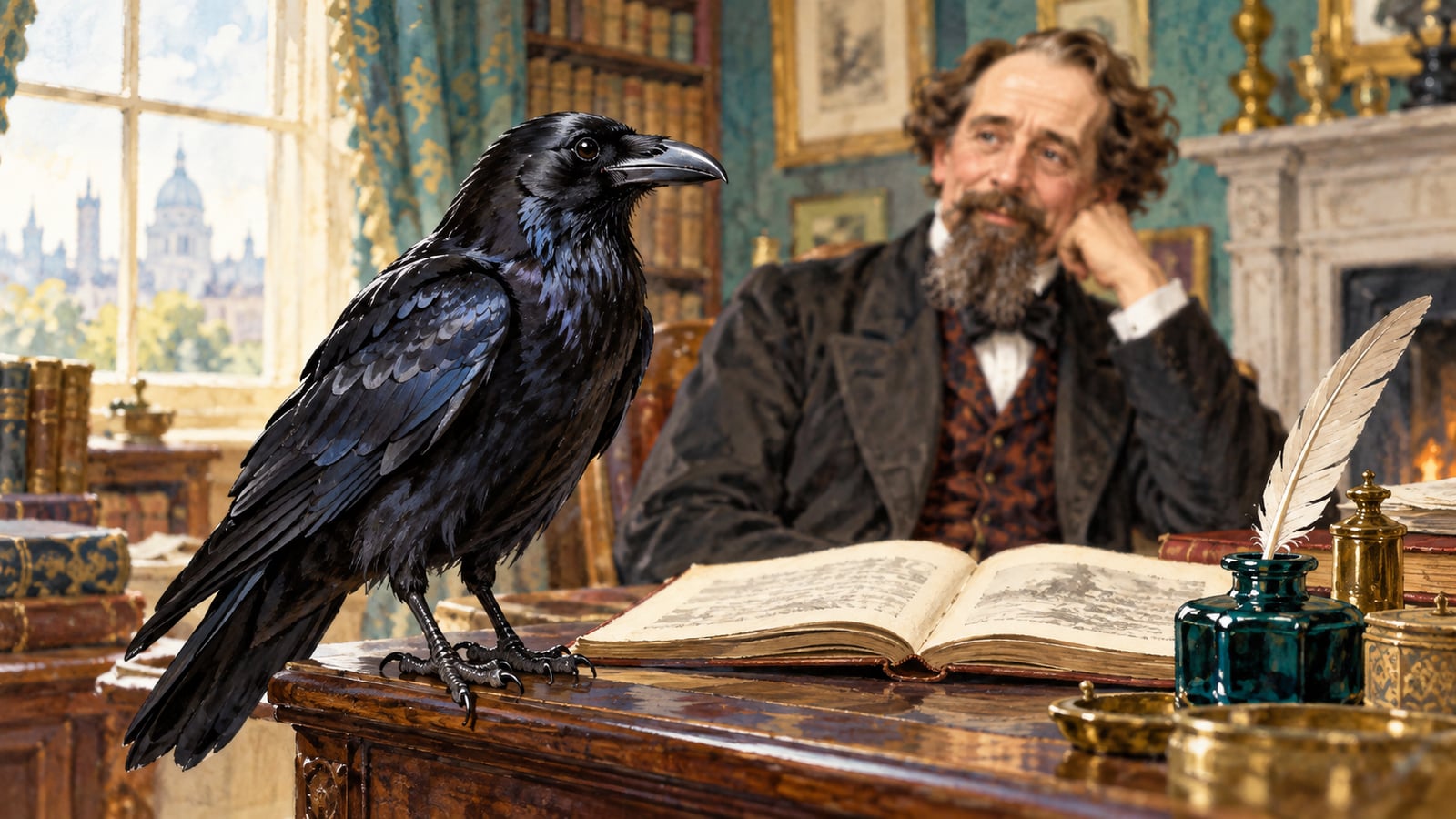
Among the literary treasures associated with Charles Dickens in Philadelphia is something that never began as a manuscript: his preserved pet raven, Grip. The bird passed through private collections before reaching the Free Library. It had entered literature much earlier.
In Barnaby Rudge, Grip is the talkative raven accompanying Barnaby. Dickens explained in a preface that the character combined two real ravens he had owned at different times. Rather than transferring one animal unchanged to the page, he brought together habits and personalities observed at home.
His description of the first bird reads like a miniature character sketch. It lived in the stable, sometimes slept on a horse, and could take a large dog's dinner. Dickens jokingly attributed such success to superior intelligence. The animal was already being given the self-importance and social standing of a person before entering the novel.
That life ended after the bird ate paint containing lead. Dickens had Grip preserved by a taxidermist and kept the bird with him. The fictional raven continued talking, while the real one remained a silent presence in the house.
A second raven supplied further material. According to Dickens's preface, the newcomer began by digging up cheese and coins its predecessor had buried in the garden. He described this as though the bird were administering an inheritance. It also learned the sounds of the stable and would perch outside his window apparently directing imaginary horses. Household noise had become part of the animal's repertoire.
Dickens recalled encountering this later bird in a public street some distance from home, attracting a crowd. When he tried to take it back, it resisted from behind a pump until several people overcame it. The teller of this story was a comic novelist rather than a dispassionate observer. Even a pet refusing to return home received the treatment of a formidable little personality.
The literary Grip attracted another writer's attention. Reviewing Barnaby Rudge, Edgar Allan Poe argued that Dickens could have made more effective use of the raven. This is part of the reason Grip is often linked to Poe's later poem The Raven. The exact extent of the influence can be debated, but Poe's interest in Dickens's bird is recorded in the review.
After Dickens died, the preserved Grip was sold. Collector Richard Gimbel eventually acquired it and bequeathed it to the Free Library in 1971. The pet had become a literary relic. Yet the most lively account of its place in Dickens's world remains on the page, where a raven could steal a dog's dinner with the dignity of a much more important creature.
EDITORIAL RESPONSIBILITY
FactosBrain Editorial Desk
The FactosBrain Editorial Desk researched and reviewed this article under our editorial policy. We assess error reports under our corrections policy.