A Western Union messenger carrying a paper bag had an unusual assignment outside the New York Public Library in 1937. He was delivering food to pigeons on Nikola Tesla's behalf. The birds had learned to recognize him.
Asked about the arrangement by The New York Times, Tesla confirmed that he regularly cared for them. The messenger attended flocks at the library, Bryant Park and St. Patrick's Cathedral. He watched out for sick birds and maintained water through the winter, sometimes breaking the ice. This was a continuing responsibility, with someone paid to make sure it happened.
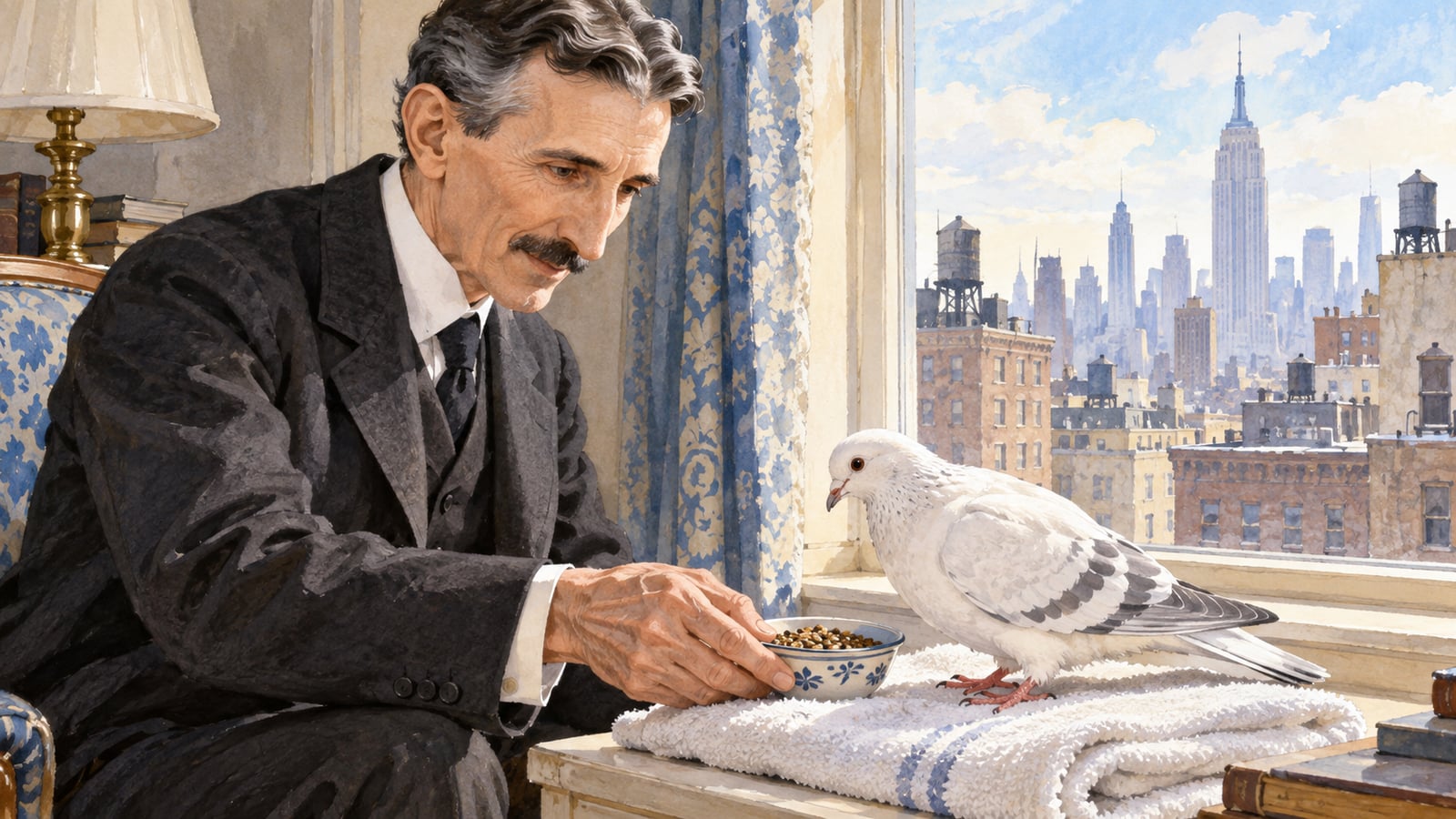
The care extended into Tesla's hotel rooms. Two years earlier, a lost homing pigeon had entered an unoccupied room at the Hotel New Yorker. When Tesla heard, he offered to take it. He already had a convalescent pigeon and suggested they might provide company for each other.
After examining the newcomer, he judged it hungry rather than ill, but kept it anyway. The newspaper described towels on his window ledge and food for the birds. Hotel staff said he had remained in his apartment attending to them that day. Small patients occupied part of a life better known for electrical inventions.
One white pigeon became particularly prominent in accounts of that life. Science writer John O'Neill, who knew Tesla, described it in his 1944 biography. According to O'Neill, Tesla spoke of a white female with gray markings as a source of profound affection and purpose, and recalled staying beside her when she was ill.
The intimate account comes through O'Neill's recollection of a conversation, rather than a confession Tesla published himself. The wider practice of feeding and nursing pigeons, however, also appears in contemporary reporting. The celebrated white bird belonged to a much larger commitment to caring for them.
PBS's account adds another practical detail: Tesla had a hotel chef prepare a special seed mixture. Alongside the motors, currents and ambitious machines associated with his name were the ordinary arrangements required by dependent animals.
When making the rounds himself became less convenient, Tesla hired someone to continue. Outside the library in 1937, the flock did not have to wait for the famous inventor. His messenger's paper bag would do.
EDITORIAL RESPONSIBILITY
FactosBrain Editorial Desk
The FactosBrain Editorial Desk researched and reviewed this article under our editorial policy. We assess error reports under our corrections policy.