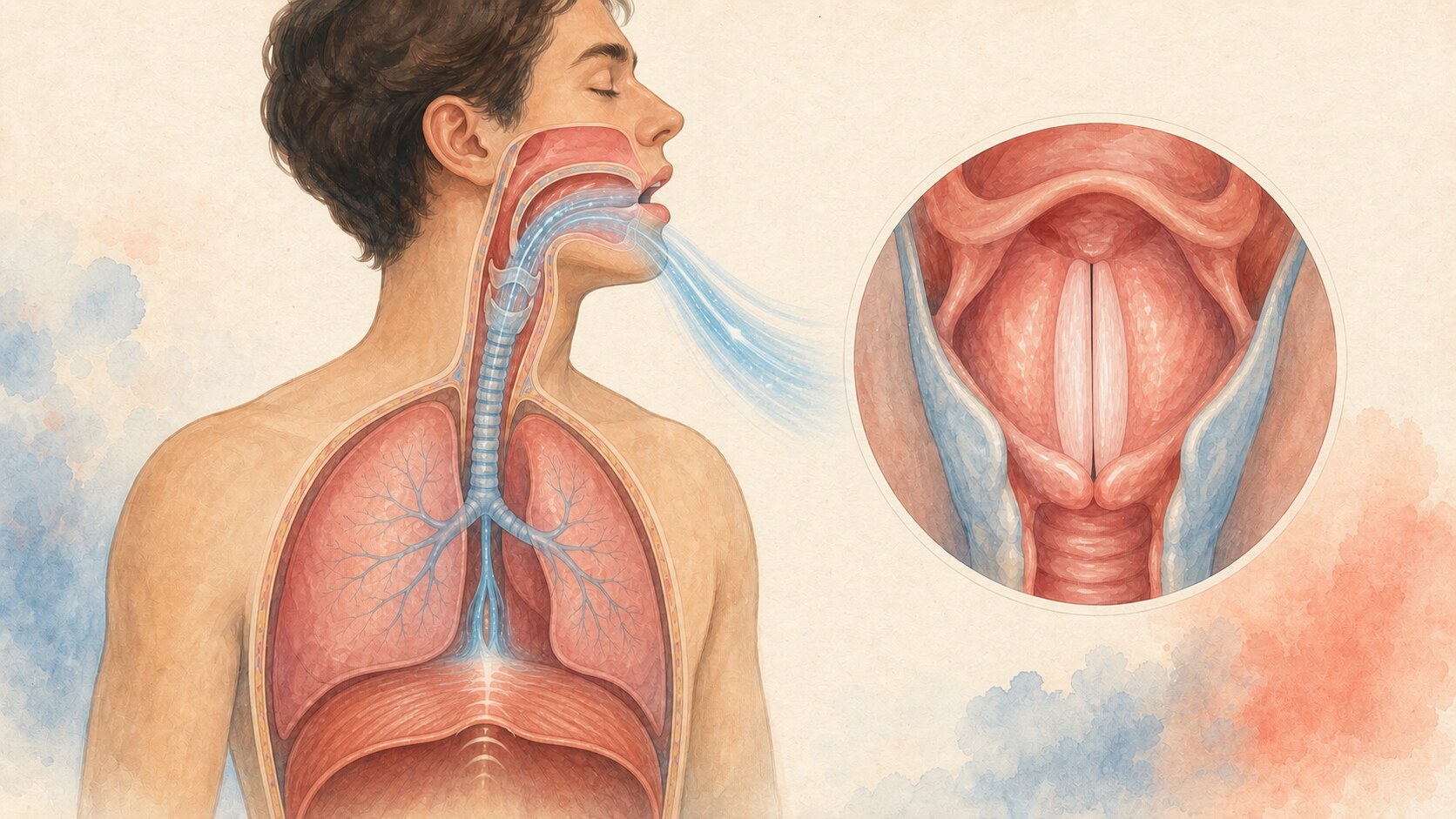
The “hic” is not the sound of the diaphragm itself contracting. It is produced when a sudden involuntary inhalation is cut short by closure of the glottis, the opening between the vocal folds. First, the diaphragm and often the muscles between the ribs contract abruptly, lowering pressure in the chest and pulling air inward.
The glottis then closes almost immediately. Airflow is stopped at the larynx, creating the characteristic clipped sound. A hiccup is therefore a two-part event: a spasm of inspiratory muscles followed by a laryngeal closure. Without that closure, there could still be a sudden breath, but not the familiar audible “hic.”
The sequence is organized through a reflex arc. Sensory signals can travel through the vagus and phrenic nerves and sympathetic pathways from the chest and abdomen. Processing involves a network that probably includes parts of the brainstem. Output then reaches the diaphragm and other breathing muscles, while the recurrent laryngeal nerve helps complete the reflex by closing the glottis.
Brief episodes often begin when the stomach expands or some part of this circuit is temporarily irritated. Eating a large meal quickly, carbonated drinks, alcohol, sudden temperature changes, or swallowing air while laughing or feeling excited can be triggers. Many episodes still have no clearly identifiable cause, and the same trigger does not affect everyone in the same way.
Common remedies such as holding the breath or drinking cold water are also aimed, in different ways, at interrupting the reflex. Some change carbon-dioxide levels; others stimulate the throat or vagus nerve. Yet acute hiccups usually stop on their own, and strong comparative evidence for many home techniques is limited, making it difficult to separate a remedy’s effect from spontaneous resolution.
Most hiccups are transient and end within 48 hours. When they continue beyond two days, they can interfere with sleep, eating and speaking and may warrant evaluation for a reversible cause. Reflux, medicines, metabolic disturbances, and disorders affecting the chest or central nervous system can all irritate parts of the circuit. Episodes lasting more than a month are classified as intractable.
A single hiccup is therefore a precisely timed but unintended collaboration between the breathing muscles and the larynx. The muscles draw air in, and the glottis shuts like a quick valve to make the sound. A short bout is usually harmless, but persistent hiccups or hiccups accompanied by other concerning symptoms should be assessed rather than treated only as an annoying noise.
EDITORIAL RESPONSIBILITY
FactosBrain Editorial Desk
The FactosBrain Editorial Desk researched and reviewed this article under our editorial policy. We assess error reports under our corrections policy.