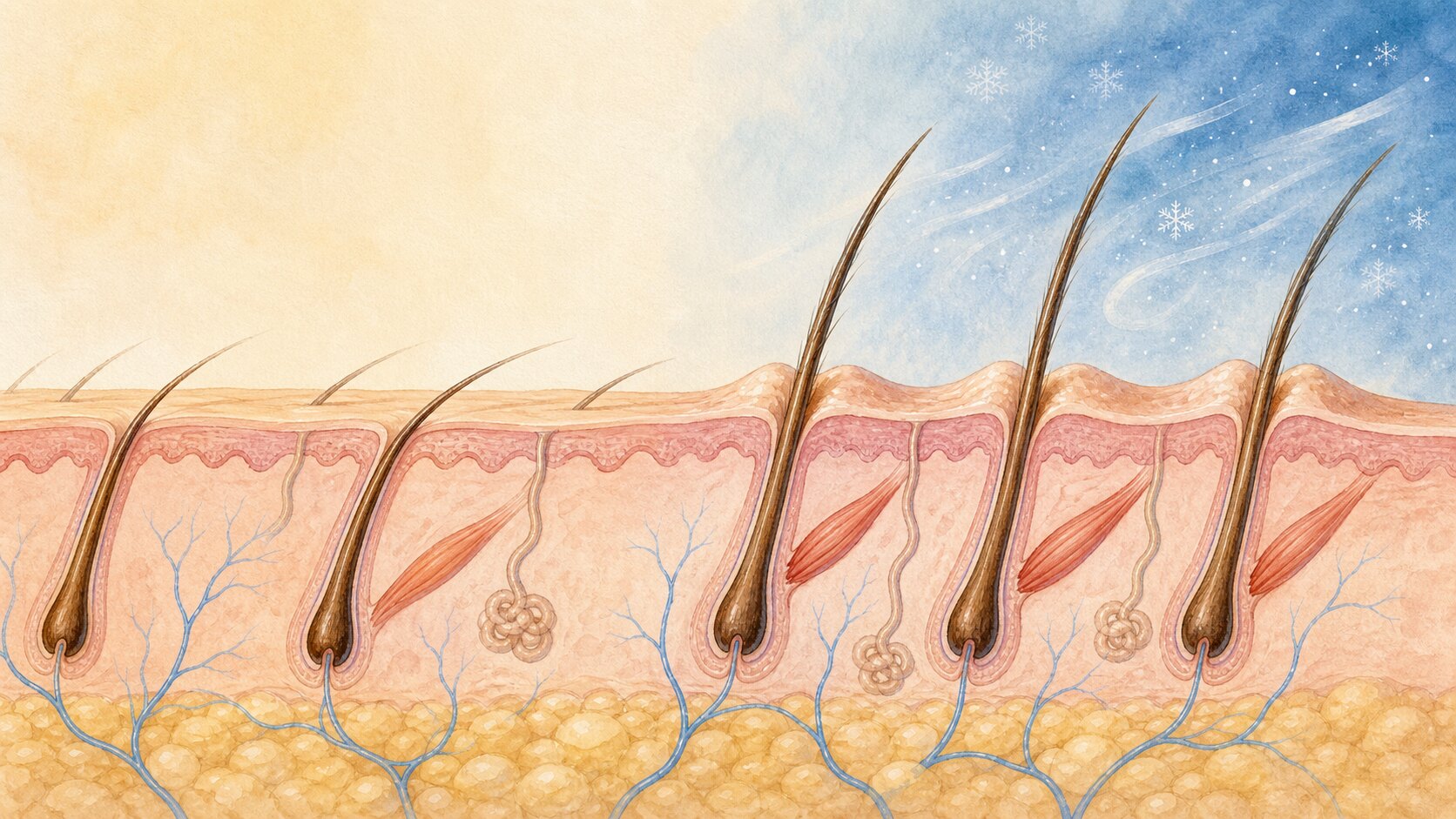
Goosebumps appear when tiny muscles attached to individual hair follicles contract. Each arrector pili muscle pulls a hair more upright and tugs slightly on the surrounding skin. The raised area around the hair root becomes one of the small bumps we see on the surface.
These are smooth muscles controlled by the autonomic nervous system, not muscles we normally command at will. Cold or intense emotion can activate the sympathetic nervous system, prompting nerve endings in the skin to signal the muscles to contract. The response can therefore arrive quickly without a conscious decision to produce it.
Piloerection has clear uses in mammals with dense coats. Lifting the hairs can thicken the layer of trapped air and reduce heat loss. During threat displays, an expanded coat can also make an animal appear larger. A startled cat raising the fur along its back and tail is using the same broad kind of response.
Human body hair is too sparse and short for goosebumps to build much insulation. The visible bumps are therefore largely a consequence of a hair-raising system that was more effective in furrier ancestors. Calling the system entirely useless, however, risks overlooking other roles played by its muscles and nerves within living skin.
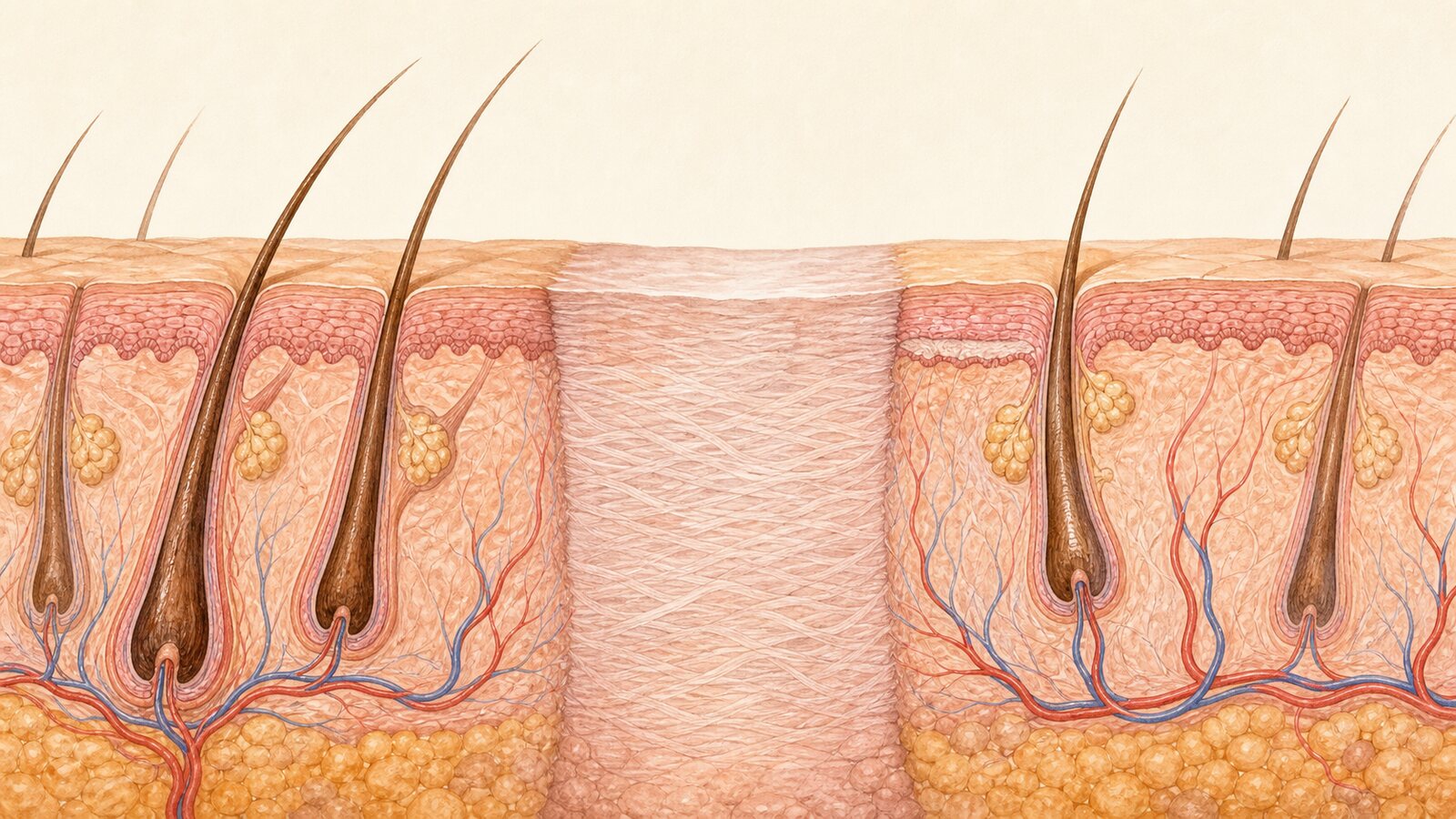
Researchers have found that arrector pili muscles, sympathetic nerves and hair-follicle stem cells form a closely linked structure. In mice, brief cold triggers piloerection, while prolonged cold signaling through sympathetic nerves can influence stem-cell activation and new hair growth. That does not mean a moment of human goosebumps grows hair; it shows that the same cellular machinery may connect a rapid response with a longer-term adaptation.
Goosebumps are also different from shivering. Shivering rapidly activates much larger skeletal muscles to generate heat, while piloerection uses tiny follicle muscles to change the angle of hairs. Cold can trigger both responses at once, but their movements and their contribution to keeping a sparsely haired human warm are not the same.
Cold, fear and a powerful piece of music can all produce goosebumps because the skin does not need a separate bump-making mechanism for every experience. Different situations can converge on the body's sympathetic arousal system and flip the same tiny muscular switch. The pattern on the surface is small, but beneath it lies an old mammalian partnership among nerves, muscles and hair follicles.
EDITORIAL RESPONSIBILITY
FactosBrain Editorial Desk
The FactosBrain Editorial Desk researched and reviewed this article under our editorial policy. We assess error reports under our corrections policy.