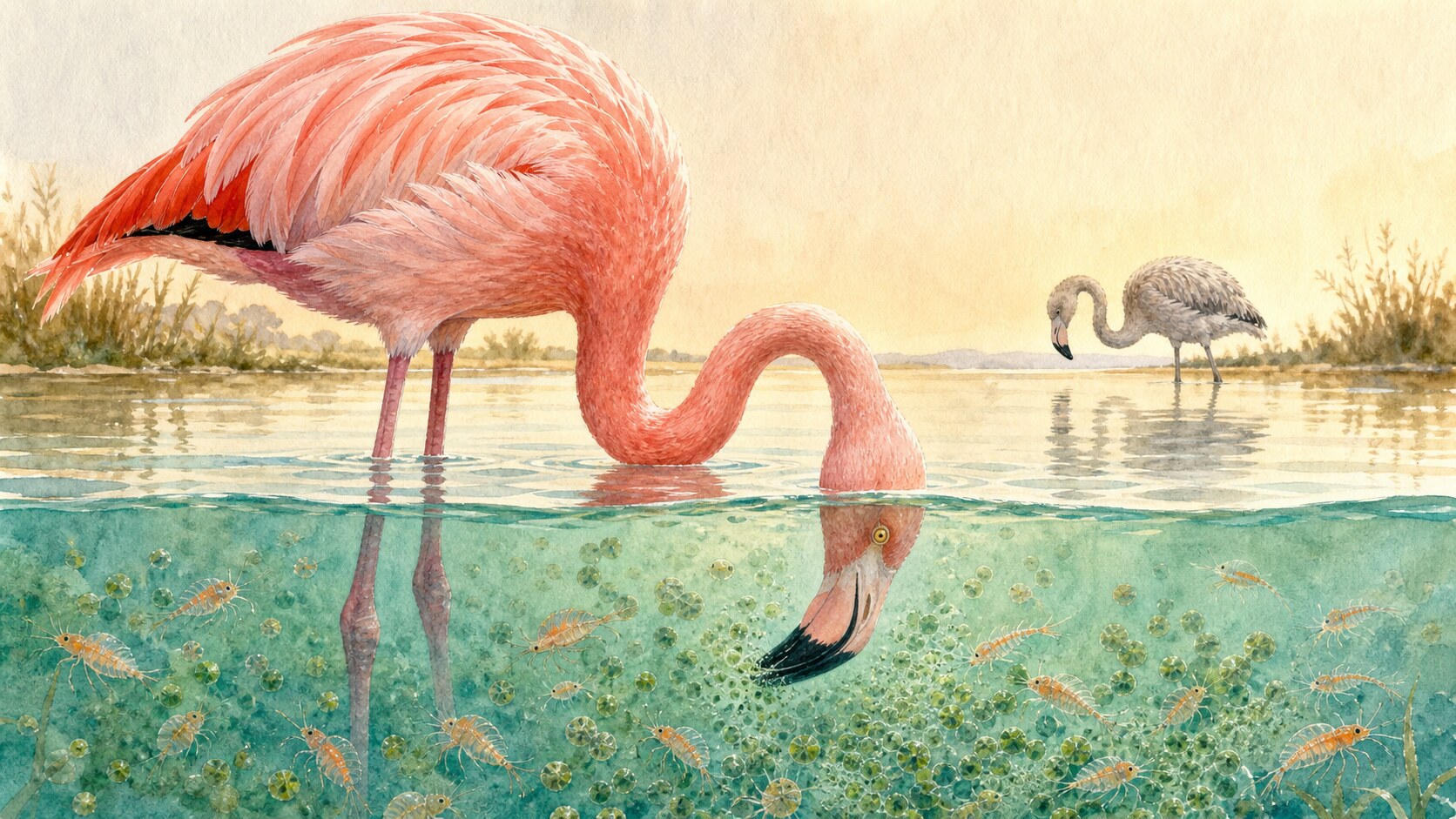
A flamingo's pink color comes from its food. The bird eats carotenoid pigments contained in algae and small crustaceans, processes them in its body, and deposits the resulting pigments in its skin and growing feathers. Bright plumage is therefore not permanent paint supplied at birth; it develops over time.
Newly hatched chicks have white or gray down and straight bills. As they mature, adult feathers replace the down and their color becomes more obvious when enough dietary pigment is available. A gray-brown young flamingo is not necessarily a different kind of bird. Its plumage, feeding equipment and coloration are still developing, a process that can take several years.
Carotenoids are yellow, orange and red molecules produced by plants and algae. Flamingos filter microscopic algae directly from shallow water and also eat small crustaceans, such as brine shrimp, that accumulated pigments from their own algal diet. Comb-like plates in the bent bill trap food while the tongue pumps water in and out.
The pigment does not simply smear from a meal onto a feather. After digestion, carotenoids are absorbed and metabolized, and some pigment compounds are transported to the skin and to tissues building new feathers. A feather receives its internal color while it grows; the bird is not continuously recoloring a finished feather from the inside.
Not every flamingo reaches the same shade. The six living species use different habitats and foods, and age and nutritional condition also affect intensity. American flamingos can appear deep pink or red, while greater flamingos are generally paler. Color alone therefore cannot identify every species or provide a simple diagnosis of an individual bird's health.
Zoos do not need to dye flamingos. Instead, keepers provide a balanced diet with suitable carotenoid sources because captive food differs from what the birds would filter in the wild. Without enough pigment, replacement feathers may grow paler. Simply maximizing carotenoids is not the goal, however; protein, fat and other nutrients still have to meet the bird's overall needs.
Feathers wear out, are shed and grow again, so diet and molt keep influencing the visible result. Flamingo pink is ultimately a record of molecules traveling through a food web: made by algae, sometimes concentrated in tiny prey, and finally incorporated into a bird. One of nature's most recognizable colors begins with what the animal eats.
EDITORIAL RESPONSIBILITY
FactosBrain Editorial Desk
The FactosBrain Editorial Desk researched and reviewed this article under our editorial policy. We assess error reports under our corrections policy.