Look a little closer
The best-documented origin of OK is a joking abbreviation printed in the Boston Morning Post on March 23, 1839. Following a newspaper fad, all correct was deliberately misspelled as something like oll korrect and reduced to the initials O.K.; the item also glossed the joke as 'all correct.' In the following year, Martin Van Buren's nickname Old Kinderhook gave an existing expression a powerful national publicity campaign.
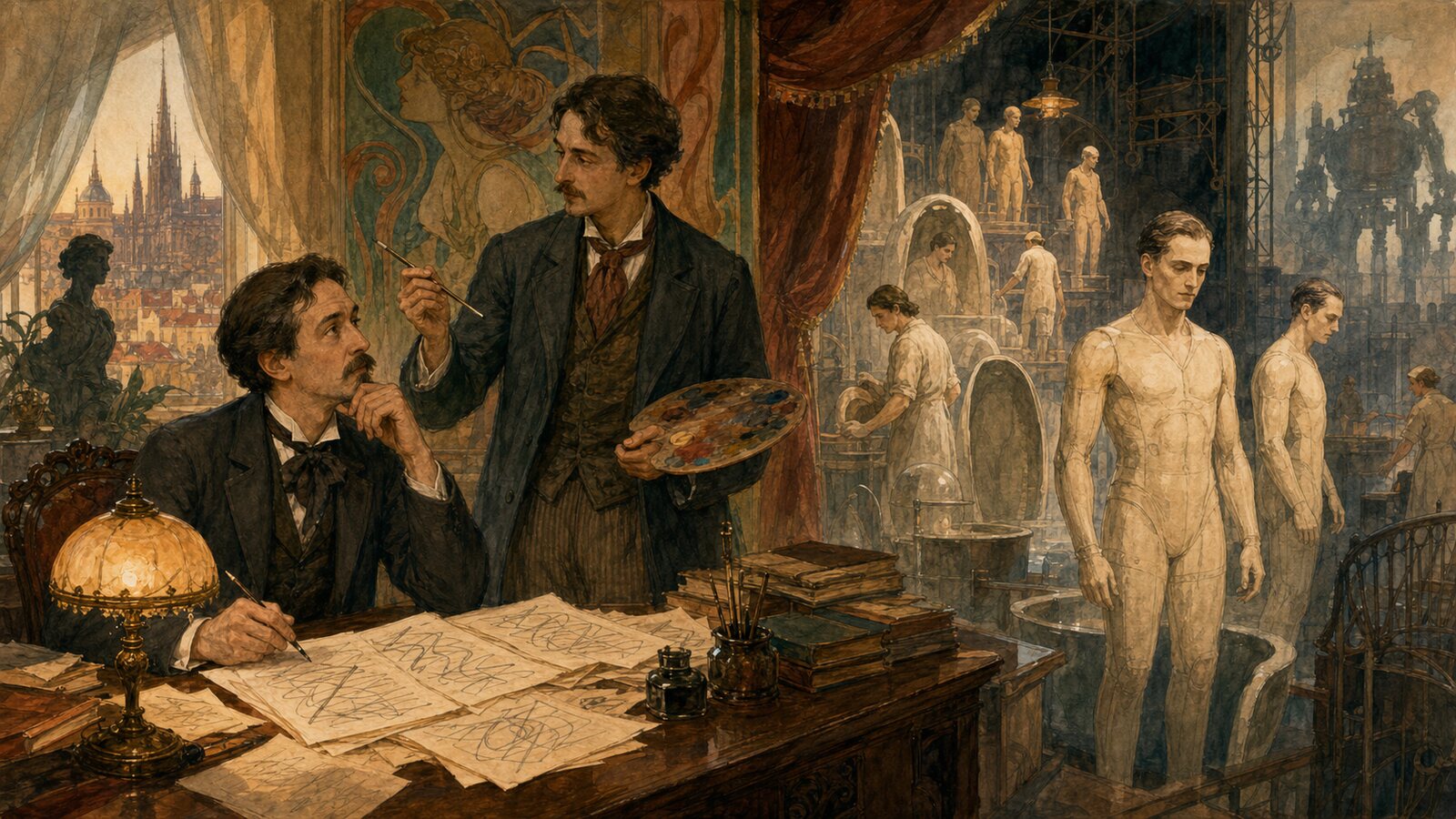
Late-1830s newspapers in Boston and New York enjoyed initialisms for longer expressions. The fashion resembled modern message abbreviations, but writers added another layer by intentionally distorting spelling. All right could become oll wright and then O.W.; no go could become know go and then K.G. OK belonged to this playful system. It was not an accidental error made by an editor who did not know how to spell correct.
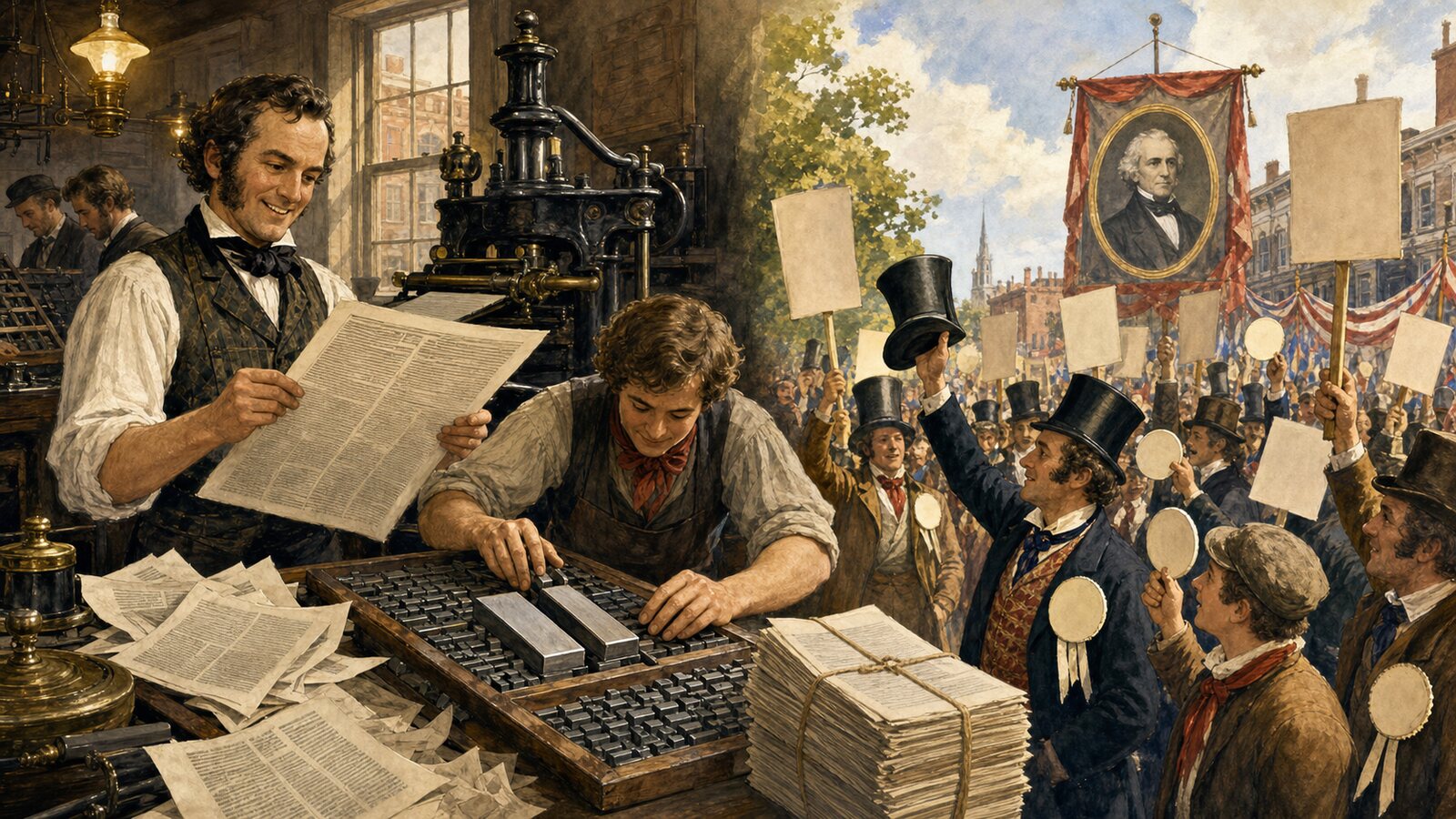
The earliest known printed instance appears in light newspaper sparring involving a Boston society and a Providence editor. Boston Morning Post editor Charles Gordon Greene wrote that preparations would be made 'o.k.—all correct.' Because the abbreviation and explanation occur together, historians do not have to infer its intended meaning from the letters alone. Additional appearances in newspapers soon afterward let researchers trace the joke as it moved beyond that first local context.
This account became authoritative through the archival work of linguist Allen Walker Read. In six American Speech articles published in 1963 and 1964, he separated the oll korrect stage, the Old Kinderhook stage, later developments, and competing folklore. Historical etymology depends on more than finding a similar-sounding word. It asks for dated evidence connecting form and meaning through a plausible sequence, and Read's newspaper trail supplied that sequence.
The presidential election of 1840 provided the second stage. Incumbent president Martin Van Buren came from Kinderhook, New York, and supporters called him Old Kinderhook. They exploited the matching initials by forming OK Clubs and turning the already positive abbreviation into a campaign emblem. The overlap between a candidate's nickname and a new expression meaning that things were in order made unusually effective wordplay. Rallies and partisan newspapers repeated it before a national audience.
Old Kinderhook therefore helped OK survive and spread, but it did not originate the expression. The campaign pun worked precisely because readers could already interpret O.K. as approval or correctness. The 1839 newspaper evidence predates the election and follows the same rule as other comic misspelling abbreviations of the period. Describing the campaign as the birthplace reverses a chronology that the surviving records make visible.
Other stories have attributed OK to Andrew Jackson's supposedly poor spelling, the Choctaw expression okeh, Greek, French, and several other languages. Similar-sounding affirmative words can genuinely exist in different languages, but resemblance alone does not demonstrate a borrowing route. The Boston account combines a date, an explicit gloss, a contemporary wordplay pattern, and a chain of later use. That convergence is why modern dictionaries favor it over the many ingenious alternatives.
No single fact proves why OK outlived its forgotten siblings. The repeated exposure of the 1840 campaign, a short and easily pronounced form, and meanings that range from enthusiastic agreement to reluctant adequacy all plausibly helped. Its compactness also suited later rapid communication, and American cultural contact carried it into many languages. These are reinforcing routes of diffusion, not evidence that one technology or event single-handedly made the word global.
Its grammar expanded along with its reach. What began as a judgment that matters were correct now works as an adjective or adverb meaning acceptable, a noun meaning permission, and a verb meaning approve. In conversation it can acknowledge that a message was heard, open a new stage, or judge something merely satisfactory. Merriam-Webster dates the first known adverb or adjective use to 1839, the noun to 1841, and the verb to 1882, showing how rapidly a joke acquired ordinary jobs.
The spelling okay is not an older full word from which the initials were cut. It is a later respelling of the spoken initials as an ordinary-looking word. O.K. with periods, uppercase OK, lowercase ok, and okay now coexist because an abbreviation became lexicalized: speakers learned it as an independent item and no longer needed to recover the original phrase each time. That independence made further grammatical and tonal flexibility possible.
OK grew through a sequence of reuse rather than a master plan. An 1839 newspaper joke linked form and meaning; an 1840 campaign attached the same initials to Old Kinderhook; later speakers widened the expression into approval, acceptance, acknowledgment, and adequacy. The accurate history does not force a choice between oll korrect and Old Kinderhook. It puts them in order: the first is the documented launch, and the second is the publicity stage that helped two playful letters endure.
EDITORIAL RESPONSIBILITY
FactosBrain Editorial Desk
The FactosBrain Editorial Desk researched and reviewed this article under our editorial policy. We assess error reports under our corrections policy.