Look a little closer
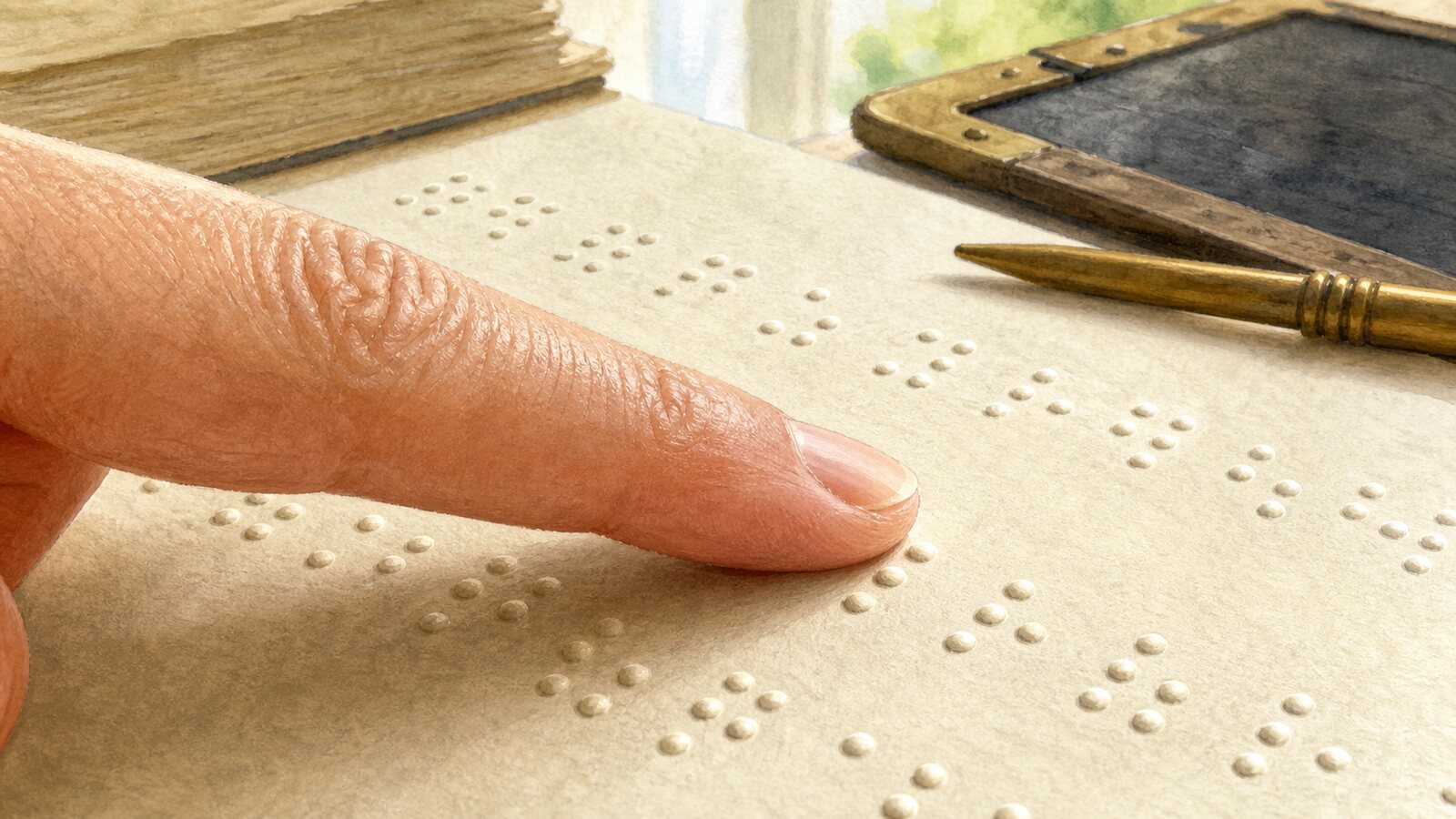
Braille uses a six-dot cell because a compact pattern of two columns by three rows can fit under a fingertip while still providing a useful number of combinations. Each position can be raised or absent, producing 2 to the sixth power, or 64 states, including the completely blank one. Readers do not normally count the dots one by one; they scan these compact shapes laterally. Six dots balance tactile size against symbolic capacity.
The three positions down the left and three down the right have fixed identities within a cell. With all positions absent, the result is a blank state; the remaining combinations provide 63 nonblank patterns. That inventory cannot assign a unique single cell to every letter, number, punctuation mark, and specialist symbol in every language. Braille codes extend it with context, multi-cell sequences, contractions, and indicators that announce functions such as numbers or capitalization.
The physical spacing matters as much as the count. Standard paper braille places neighboring dot centers within a cell roughly 2.3 millimeters apart, with each dot forming a small rounded rise. The separation is wide enough for a fingertip to distinguish adjacent stimulation yet close enough for the whole cell to lie within the finger pad. Shrink it too far and dots blur together; enlarge it too much and a reader must make extra vertical movements to determine one pattern.
A skilled reader does not usually stop and press on each cell as though taking a tactile photograph. Fingers sweep along the line while skin receptors receive both the spatial arrangement of bumps and the timing with which they pass. The brain groups that stream into familiar characters and words. A cell small enough to be encompassed by the fingertip supports a smooth transition to the next. Braille is therefore optimized for continuous active touch, not merely for recognizing isolated stationary bumps.
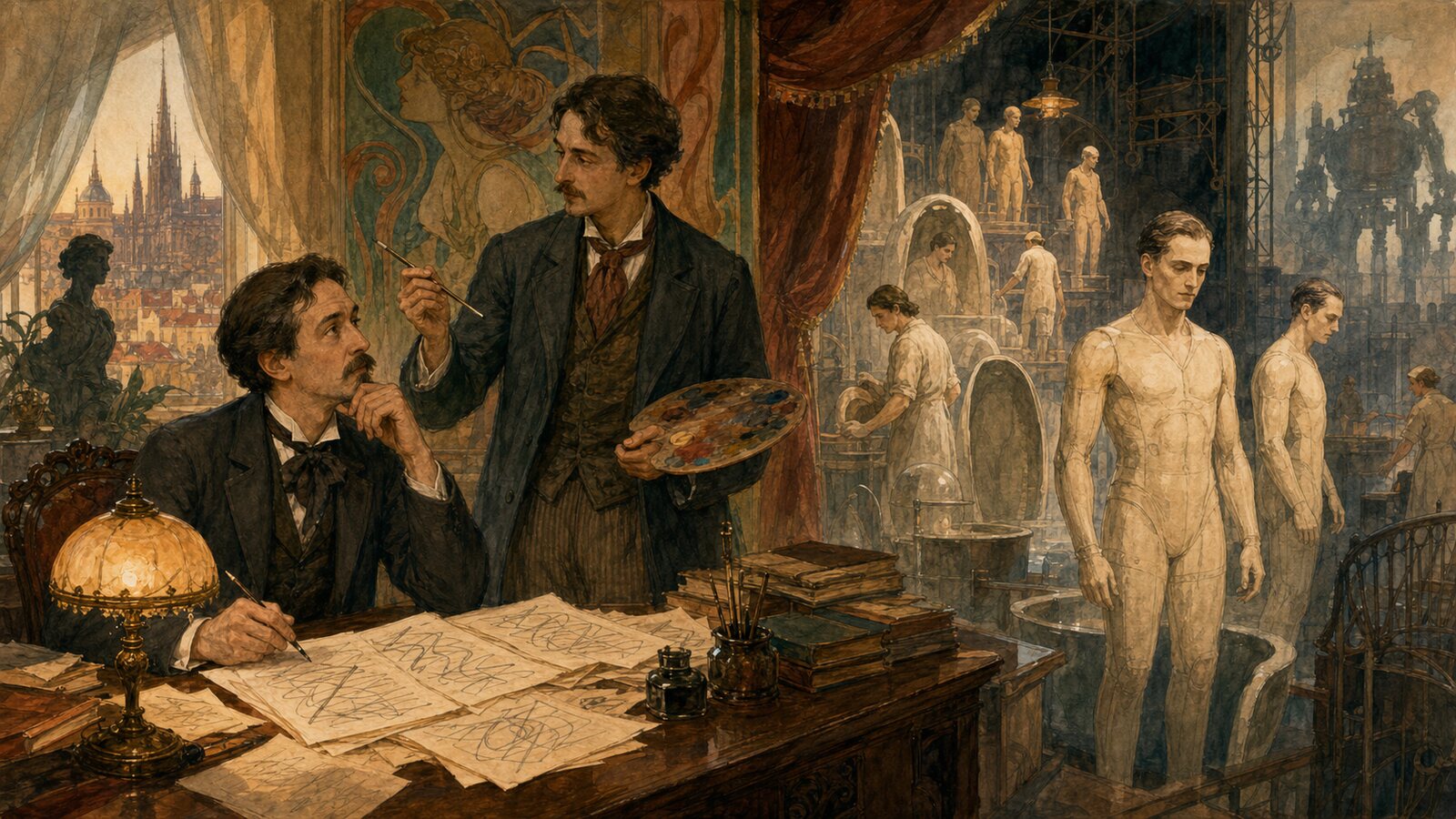
The six-dot design had an important predecessor. Early in the nineteenth century, Charles Barbier proposed a raised-point system using cells two dots wide and as many as six high. A version was tried at the Paris school for blind students, where it demonstrated that pupils could make their own point writing, take notes, and read the marks again. The twelve-position cell was too tall to fit comfortably under one fingertip, however, and its sound-based code was poorly matched to ordinary spelling.
Louis Braille, a student at that school, reduced the cell to two columns by three rows and connected its patterns to letters and other signs. He formed an early version while still a teenager, refined it, and in 1829 published a method for writing words and music with points. The compact cell could be read efficiently and produced with a slate and stylus by embossing paper from the reverse. Users gained a practical way to write as well as read, unlike systems based chiefly on feeling enlarged embossed print letters.
One familiar origin story needs a caution. Barbier's system is often described as a secret military night code personally demonstrated to the young Braille in 1821. A recent Library of Congress history, summarizing a review of primary documents, says evidence does not support several parts of that dramatic narrative: Barbier's aims were broader than covert military use, and the two men may not have met until much later. The twelve-dot system influenced the school and Braille's work, but influence should not be confused with every detail of the later legend.
Braille is neither a language nor a single substitution table for the Roman alphabet. Korean, English, Arabic, Japanese, and other communities adapt the same tactile cell to their own writing structures and conventions. Mathematics and music have specialized codes. Some digital applications use eight-dot braille, adding a fourth row and expanding the number of patterns. That extra capacity does not simply replace traditional six-dot literary braille, because it changes the cell and belongs to different technical and reading conventions.
The achievement of six dots is not that they directly picture everything a writing system must express. It is that they define a repeatable unit suited to the moving fingertip, then scale through indicators, context, and sequences of cells. Dot height, within-cell spacing, and the larger gap between cells all help readers preserve boundaries. Braille is not visual print made bumpy. It is writing redesigned from the beginning around tactile resolution, hand movement, and the reader's ability to produce marks independently.
EDITORIAL RESPONSIBILITY
FactosBrain Editorial Desk
The FactosBrain Editorial Desk researched and reviewed this article under our editorial policy. We assess error reports under our corrections policy.