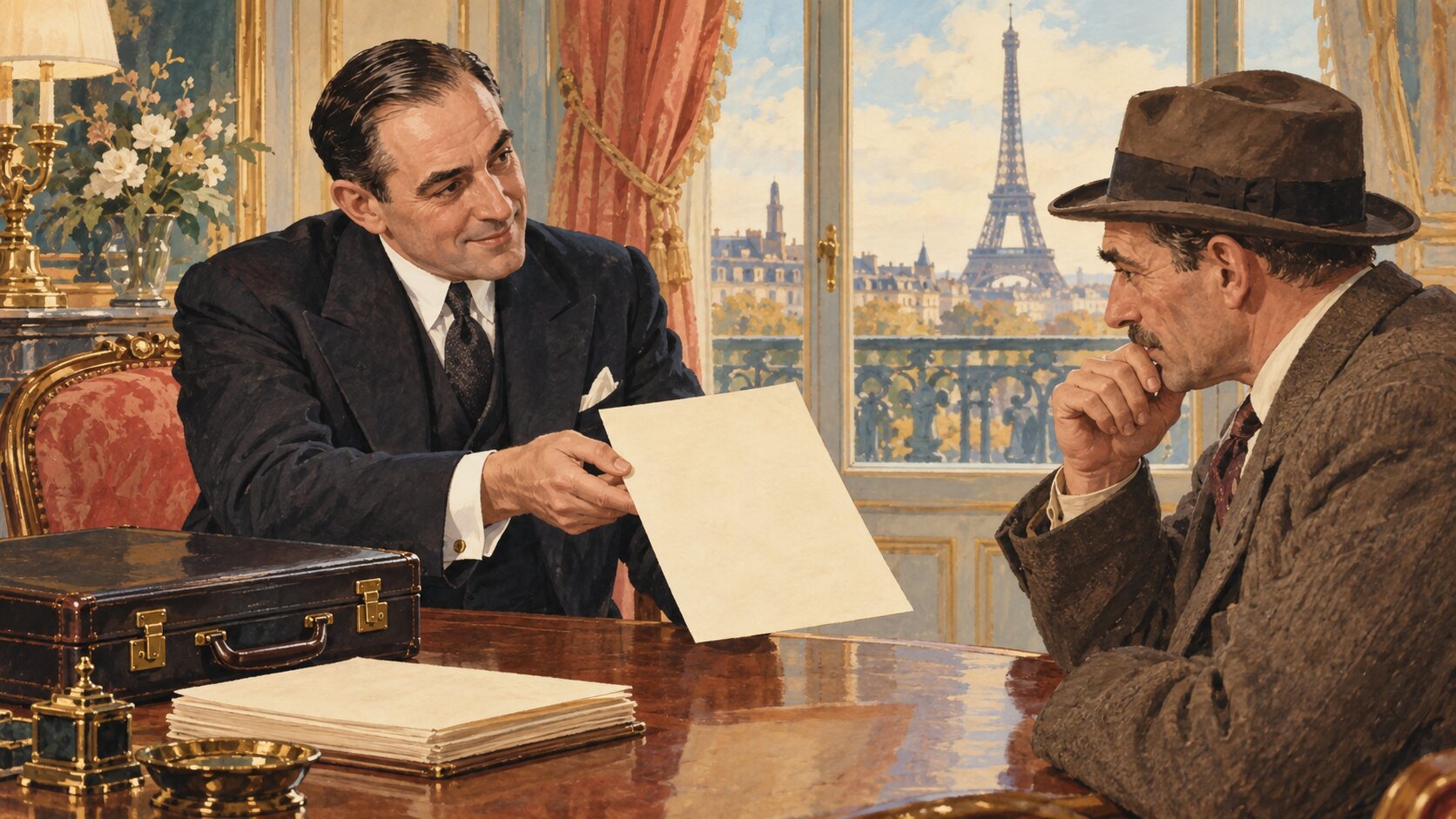
André Poisson paid for a deal involving the Eiffel Tower in 1925. The Paris scrap dealer was not buying a viewing platform or a restaurant concession. He was buying the right to dismantle the structure and take away its iron. The man arranging the sale, Victor Lustig, had no authority to dispose of it.
Lustig presented himself as a French government official. He had official-looking stationery made, sent invitations to scrap dealers and arranged a meeting at the luxurious Hôtel de Crillon. His proposal made a monumental decision sound like an administrative job already under way: the tower was to come down, and someone needed to buy the metal.
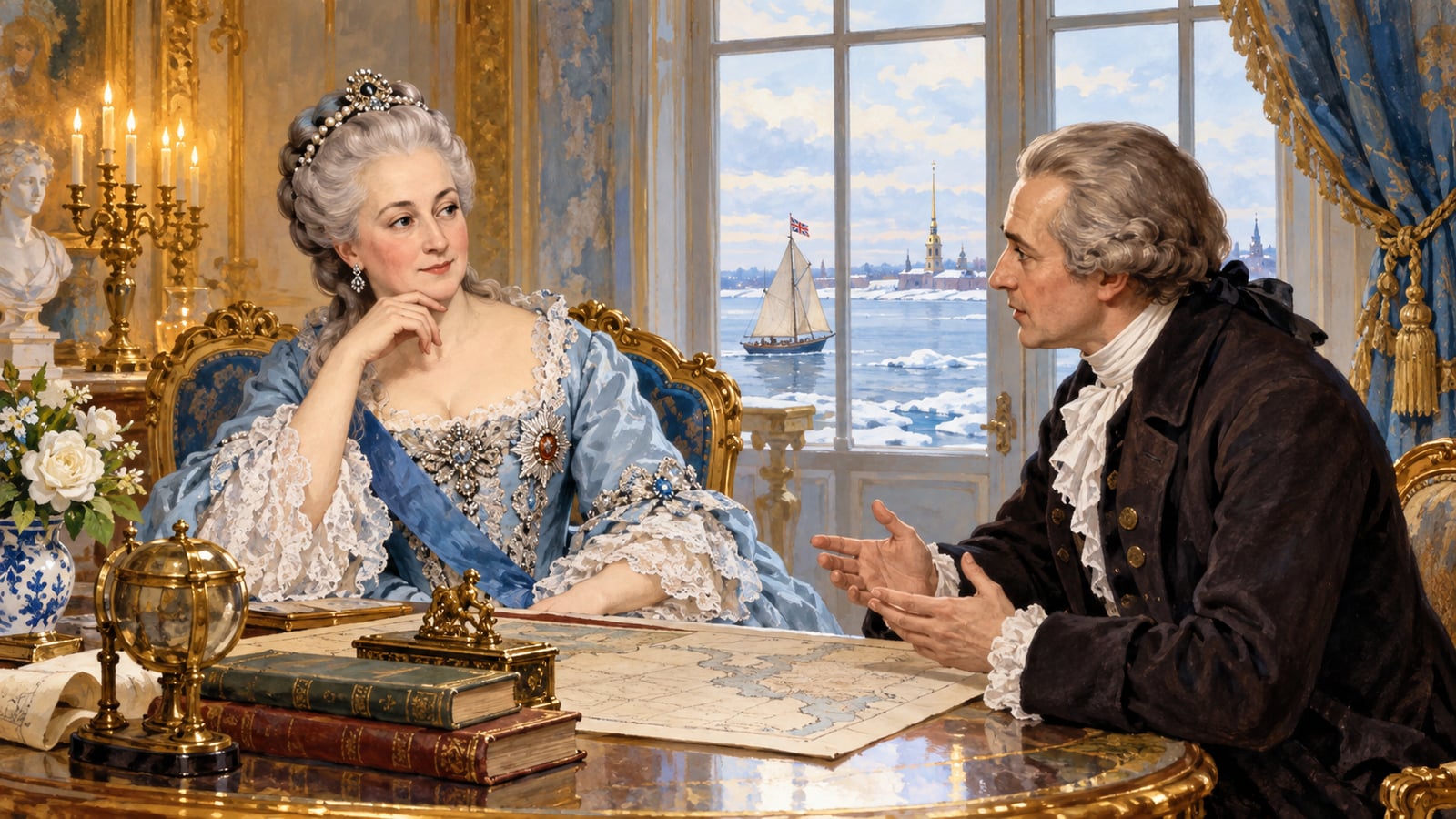
There was enough real history to give the fiction a foothold. Built for the 1889 World's Fair, the tower had not originally been guaranteed a permanent place in Paris. Gustave Eiffel's initial concession to use the site lasted twenty years. Its survival beyond 1909 depended on the city authorities.
Nor had everyone welcomed it. Artists, writers and architects protested during construction. Guy de Maupassant and Alexandre Dumas's son were among the signatories. Opposition to the tower was real, but it was not evidence of a municipal decision to sell it in 1925.
By then, radio had supplied an important reason to keep the structure. Its height made it useful for antennas and military communications. Eiffel supported installations for the army, and the tower acquired a strategic purpose alongside its public appeal. This part of its history did not fit Lustig's demolition proposal.
He drew instead on newspaper coverage of expensive upkeep and financial difficulties. Repairs and repainting cost money; in his account, that expense became a reason to dismantle the landmark. A maintenance problem and a decision to demolish were made to sound like parts of the same announcement.
Scrap dealers were an apt audience for the offer. The iron structure weighed 7,300 tonnes. Lustig invited bids and arranged visits to the tower. The object for sale was plainly real and available to inspect. What he had invented was the authority to sell it.
He also required discretion. Demolishing such a famous building would be controversial, he explained, so the arrangements had to remain confidential. The appearance of an official transaction came with a condition that discouraged discussing it elsewhere.
Lustig focused on Poisson. Accounts of their negotiations describe an additional request: a bribe. The supposed official complained that maintaining appearances and entertaining people cost more than his salary allowed. There was the price of the contract, and then there was money for the man who could award it.
Poisson paid. The account of their negotiations describes him as taking the bribe request as a sign that the official was genuine. Lustig was offering not simply forged paperwork, but a transaction with a corrupt decision-maker apparently attached to it.
Lustig left for Austria with the money. Poisson is reported to have refrained from pressing charges, embarrassed by the deception. The Eiffel Tower's own historical account gives no confirmed amount for his loss.
The tower was never dismantled. There was no iron for Poisson to collect. The official who had promised to hand it over was the thing that disappeared from Paris.
EDITORIAL RESPONSIBILITY
FactosBrain Editorial Desk
The FactosBrain Editorial Desk researched and reviewed this article under our editorial policy. We assess error reports under our corrections policy.