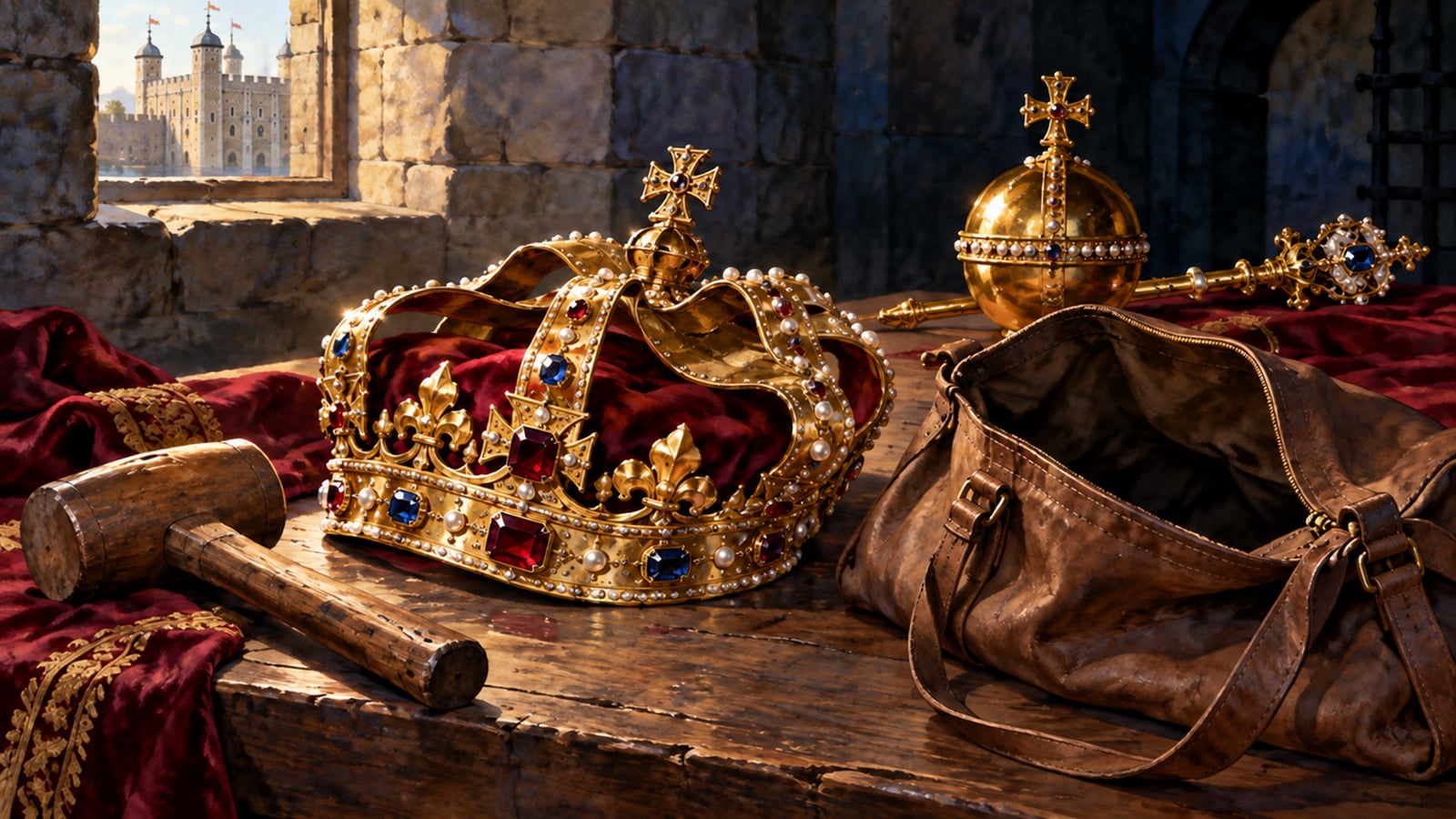
The crown was an awkward shape to hide. Thomas Blood's solution was to flatten it with a mallet. One accomplice struggled with the long sceptre; another concealed the orb in his clothing. In the Tower of London in 1671, objects designed to express royal authority were being treated as difficult luggage.
Blood had not arrived swinging his mallet. He approached the jewels through their keeper, Talbot Edwards, while posing as a clergyman. Visitors could pay to see the royal treasures. A metal grille protected them, but the man who could open it was accessible.
Edwards lived with his family above the place where the jewels were kept. During a visit, the woman accompanying Blood as his wife pretended to become ill. The family offered help, and Blood returned with a gift to thank them. The apparently grateful parson became a familiar visitor.
A possible marriage made the connection closer. Edwards had a daughter, and Blood claimed to have a wealthy nephew who would make a suitable husband. The prospect supplied another reason to return. What looked like two families becoming acquainted was preparation for access to the jewel room.
In May, Blood arrived with companions and asked to see the treasures. Once Edwards had admitted them, the visitors attacked him, binding and gagging him. The clerical disguise and cultivated friendship had served their purpose: the door was open.
Getting the regalia out was another matter. The crown was made to sit on a head, not disappear beneath a coat, so Blood struck it with the mallet. The sceptre was too long to carry away conveniently and an accomplice tried to shorten it. The orb could be tucked into clothing. For the thieves, the symbols of monarchy had become a problem of dimensions.
The escape failed. Edwards's son discovered the attack on his father and pursuit followed. Shots were fired as the men fled, but Blood and some of his companions were caught, and the jewels recovered. The elaborate preparation had not provided a reliable way out of the Tower.
His prospects should have looked poor. Blood was implicated in earlier kidnapping attempts and political plots as well as this robbery. While he was confined, petitions from him and his family complained of failing health. Charles II met him privately. What followed was more surprising than the attempted theft.
An August 1671 record preserves Blood's pardon. It covered a broad range of offences committed since a specified date, including treason, murder, felonies and assaults. He was released and received an income-producing grant of Irish land. The man who had failed to carry off the king's property was given property by the king.
The reason remains uncertain. Blood's connections among political and religious opponents of the government may have made him useful. The diarist John Evelyn was puzzled by his pardon and favour, and suspected that he had served as a spy. Later stories make much of the king admiring an audacious rogue, but admiration alone is not an established explanation.
The jewels stayed with the monarchy, and Blood walked free. A story that might have ended with the recovery of a stolen crown instead ended with a royal grant to the man who had damaged it. The king's response proved harder to account for than the thief's mallet.
EDITORIAL RESPONSIBILITY
FactosBrain Editorial Desk
The FactosBrain Editorial Desk researched and reviewed this article under our editorial policy. We assess error reports under our corrections policy.