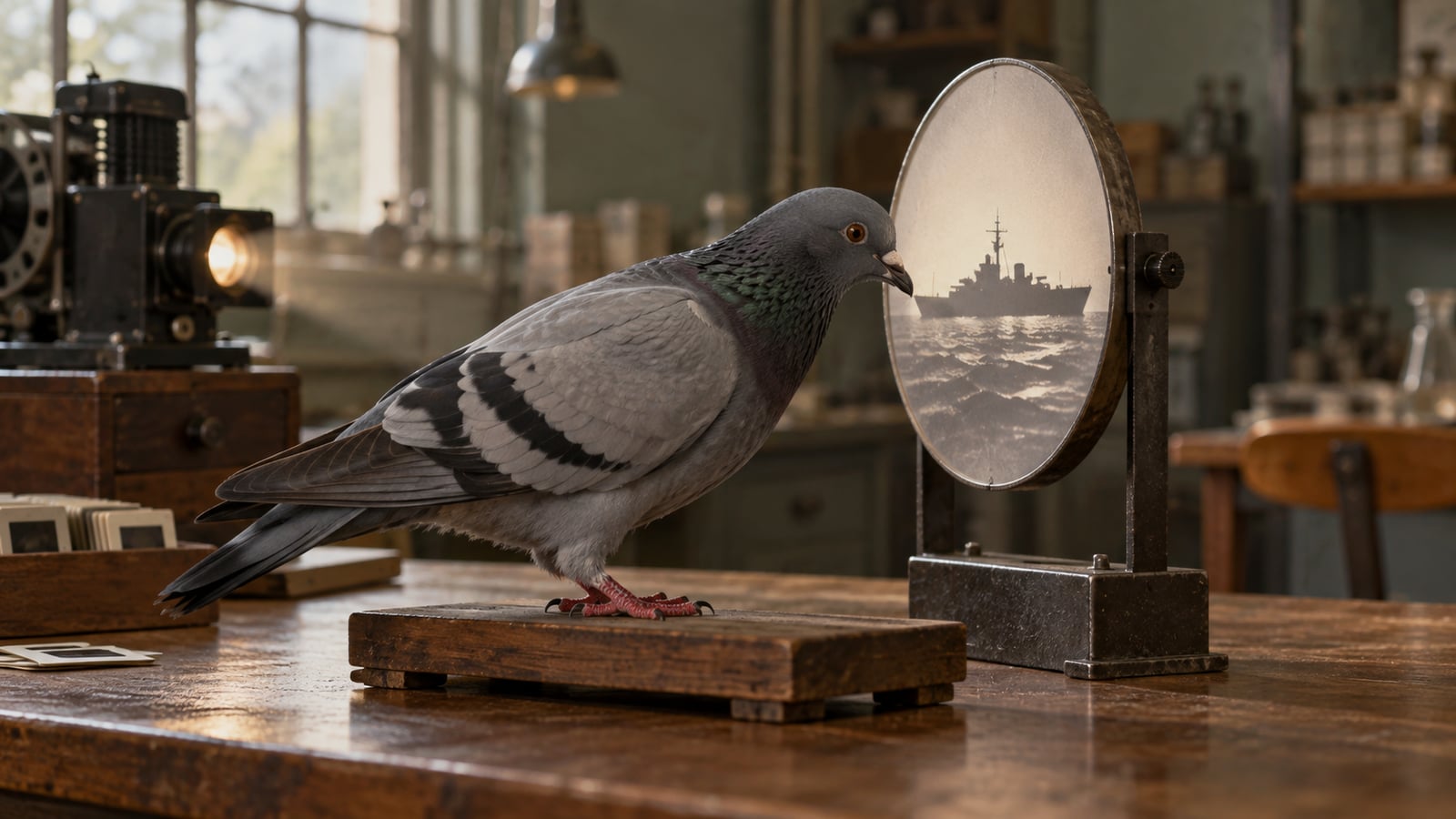
A ship appeared in front of a pigeon. Pecking its image earned the bird grain. When the ship moved, the beak followed. For the psychologist B. F. Skinner, that small, repeatable action suggested something far beyond an animal trick: a bird might supply the information needed to keep a weapon heading toward its target.
Project Pigeon, developed during the Second World War, did not involve releasing birds to fly ahead of a bomb. The pigeon would ride inside its nose. A lens would project the view ahead onto a screen, and the bird would peck at the target it had learned to recognize. The weapon would do the flying. The pigeon would indicate where it should go.
Military pigeons were already familiar as messengers. Using them as part of a guidance system was a much larger leap. Skinner's approach depended on training a reliable response with food rewards, rather than expecting a bird to understand a mission. What mattered was whether it would keep working at the image in front of it.
An unexpected company helped turn the idea into equipment. General Mills, better known for food, provided technical support, and a government contract followed in 1943. The proposed nose contained three pigeons in separate compartments. Combining their responses offered protection against one bird briefly stopping or choosing the wrong point. The guidance unit had become a very small crew compartment.
But a trained bird was only part of a working weapon. In Skinner's account, security restrictions limited his team's information, and evaluators disputed how its results would translate into missile control. Following a picture did not settle those engineering questions.
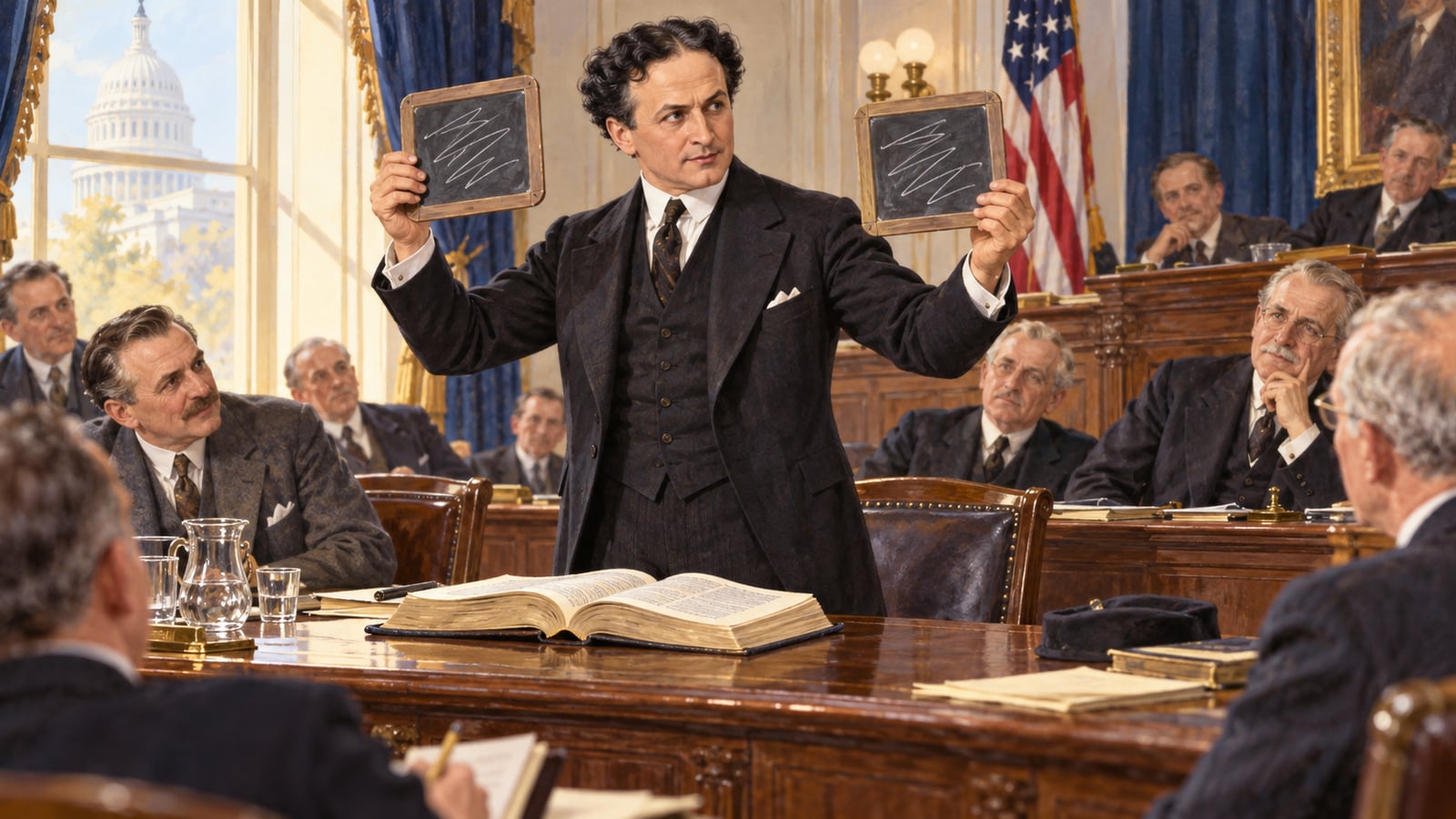
Skinner brought a bird to a committee demonstration. He recalled that it stopped pecking when someone blocked the projector and resumed when the image returned. To him, this was excellent. Yet he thought seeing an actual pigeon made the proposal seem more absurd to his audience. The demonstration did not save the wartime project.
The Navy revived the research in 1948 under the name ORCON, short for organic control. More training and tests followed, but the distinction between an experiment and an operational weapon remained. Pigeon guidance never went into combat. The renewed project ended in 1953 as electronic guidance developed.
Skinner kept some of the original birds and tested their memory later. He reported that even after six years, pigeons could respond to the target on which they had been trained. The research program had moved on. The birds could still perform the job they had learned.
EDITORIAL RESPONSIBILITY
FactosBrain Editorial Desk
The FactosBrain Editorial Desk researched and reviewed this article under our editorial policy. We assess error reports under our corrections policy.