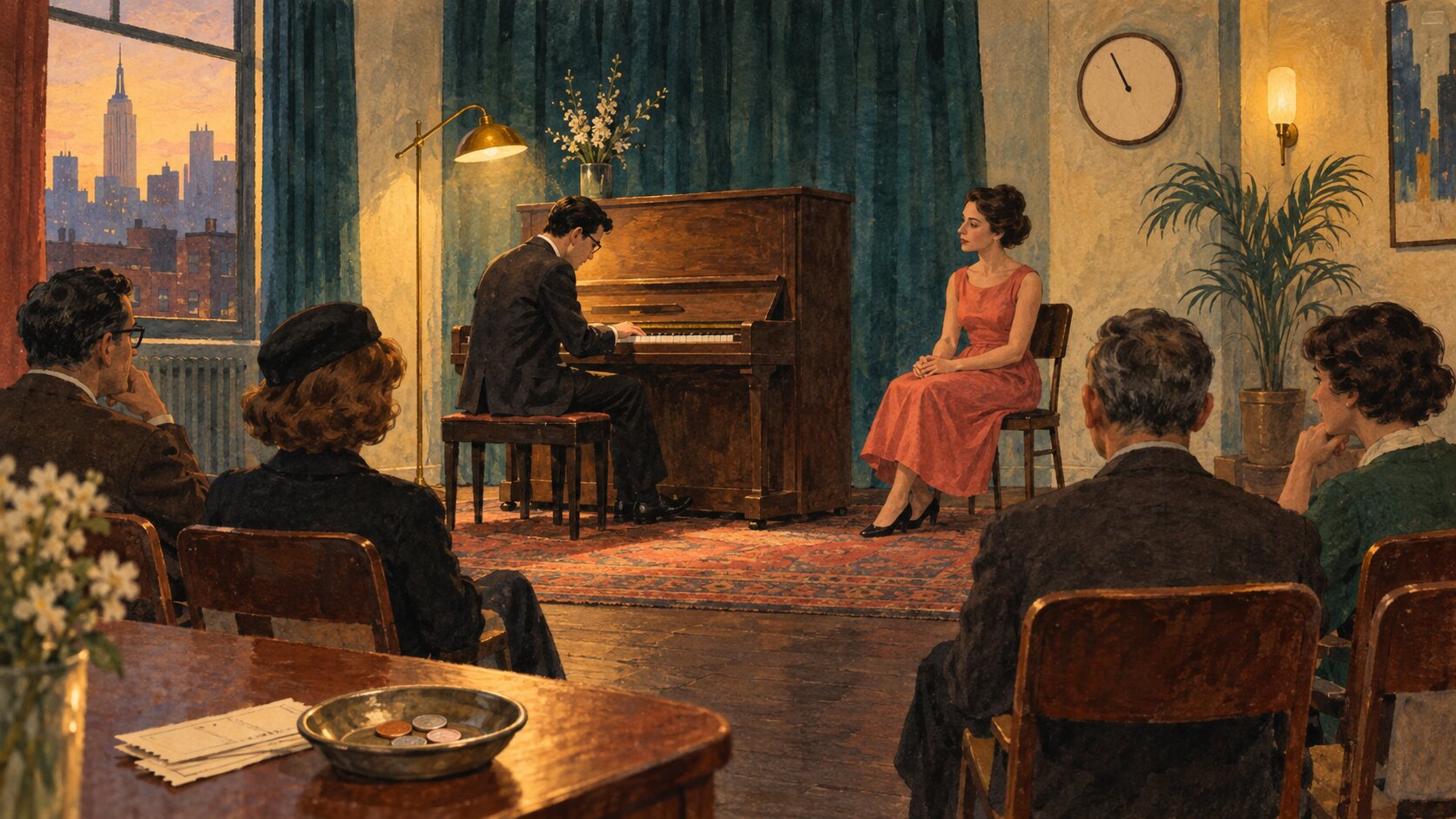
A piano concert in New York offered an unusual ticket deal in 1963. Admission cost five dollars, but listeners could claim five cents back for every twenty minutes they stayed. Reaching the end earned a further twenty-cent bonus. The end, at the Pocket Theatre, came eighteen hours and forty minutes after the beginning.
The music itself was short. Erik Satie's Vexations fits on a single page, with a marking to play very slowly. An ordinary performance of that brief passage would give nobody a reason to spend the night in a theater. The number written above the music made this occasion different: 840.
Satie wrote the piece around 1893. His note suggests preparing in deep silence and stillness if one wants to play the motif 840 times in succession. It is not a straightforward command to do so. Composer John Cage and his colleagues nevertheless decided to put that possibility into practice.
Repeating one small piece required a substantial arrangement. Rather than leave one person at the keyboard all night, the organizers assembled relay pianists. The ten players listed in the program included Cage and the young John Cale. Each ultimately played five separate turns, returning to the piano as the event continued.
A turn lasted about twenty minutes, with the next pianist waiting beside the instrument. They were not dividing up different movements of a long composition. Each took over the same music the previous player had been repeating. The people changed; the program did not.
For listeners, time became a small discount. An hour meant fifteen cents back; ten hours meant a dollar and fifty cents. Even staying throughout did not make the ticket free. Eighteen hours and forty minutes contains fifty-six twenty-minute intervals, worth two dollars and eighty cents. The completion bonus brought the potential return to three dollars.
The event began on September 9 and ended the following day. The players could rest between turns. A contemporary report describes Cage sleeping on a pad in the basement after playing his own share. The passage continued upstairs while its performers took breaks.
Reviewers worked in relays too. The New York Times sent a team to cover the occasion. The familiar arrangement of attending an evening recital and then going home could hardly account for a performance still continuing the following day. Reporting it also required a next shift.
Actor Karl Schenzer is reported to have been the sole audience member who stayed from beginning to end. The musicians repeatedly exchanged their place at the keyboard; he remained for the whole event.
Soon afterward, the two appeared together on the television game show I've Got a Secret. Their unusual participation was what the panel had to guess: one guest had played in the marathon, and the other had stayed to hear it. Cale then sat at a piano and played Vexations for viewers. This time he played it once.
EDITORIAL RESPONSIBILITY
FactosBrain Editorial Desk
The FactosBrain Editorial Desk researched and reviewed this article under our editorial policy. We assess error reports under our corrections policy.