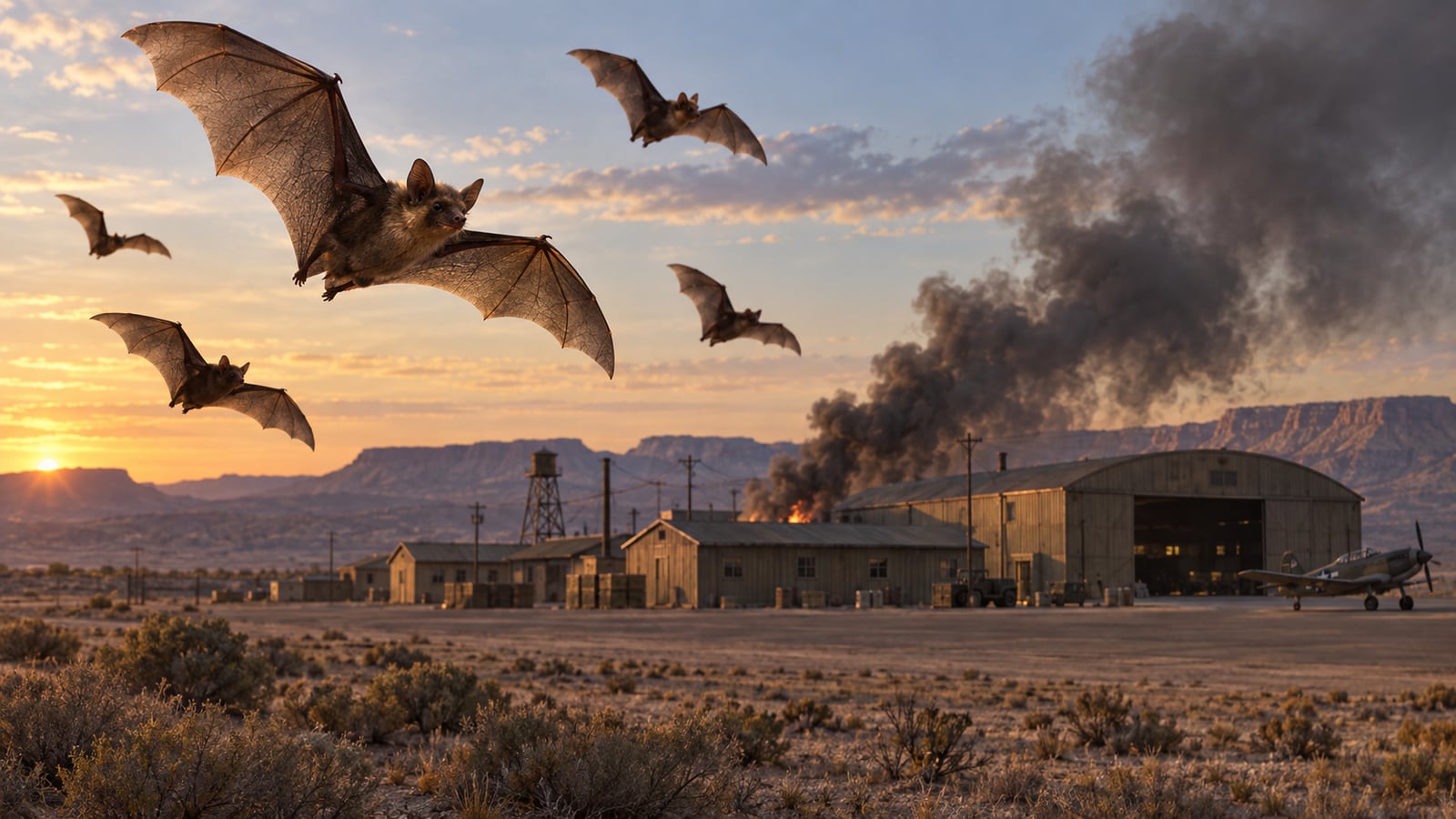
In 1943, bats woke up at an American military airfield in New Mexico. This was not the awakening the researchers had planned. Carrying incendiary devices, the animals flew into nearby buildings to shelter. Fires followed. An experiment intended to burn Japanese cities had demonstrated its danger at an American test facility instead.
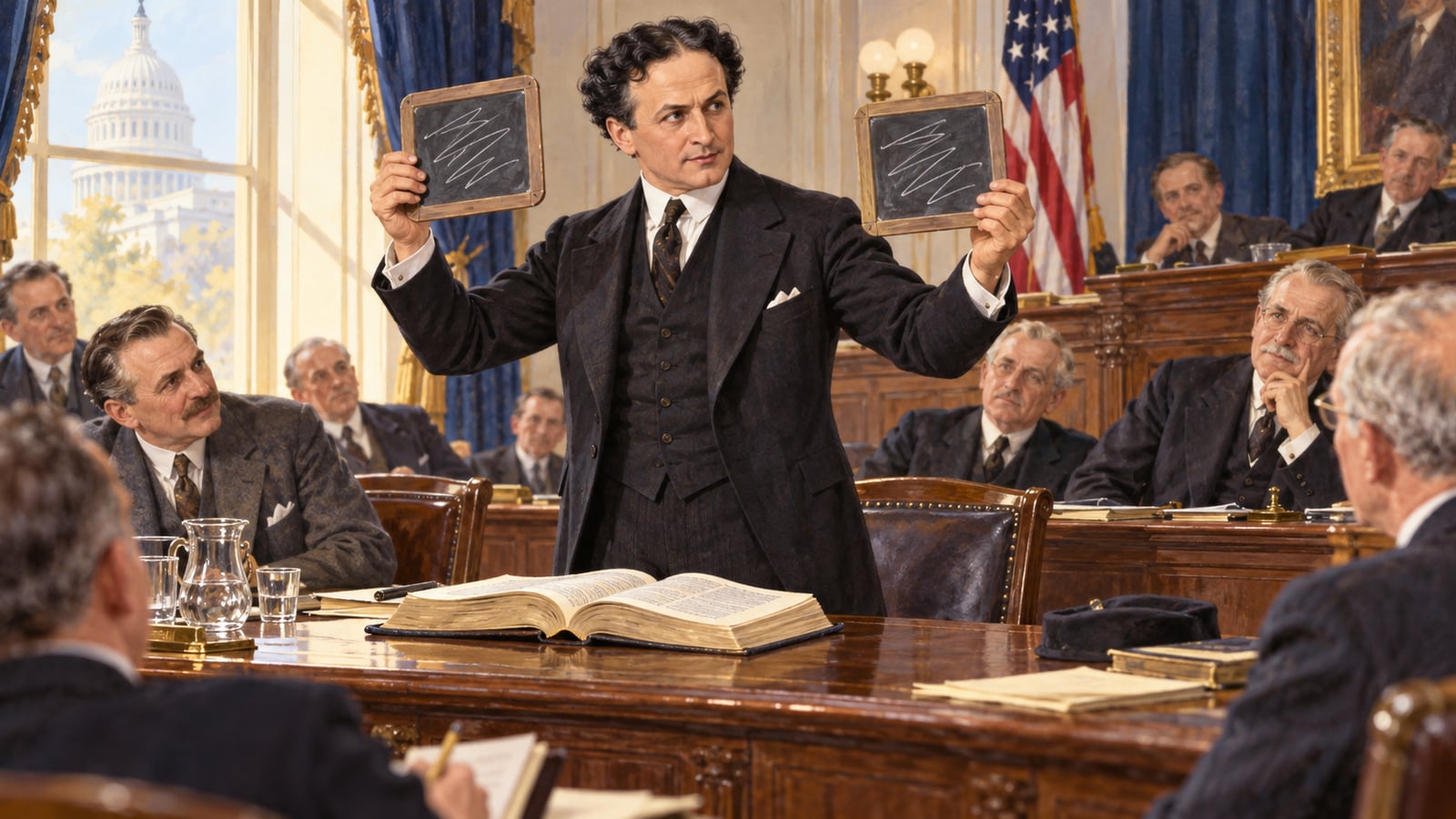
The proposal came from a dentist. Lytle Adams had watched the great flights of bats at Carlsbad Caverns and wondered whether the animals could carry fire-starting devices. In January 1942, he sent his idea to the White House. It might easily have remained an eccentric letter. Instead, presidential interest helped turn it into a research project supported by the military.
Adams hoped to exploit an ordinary habit: bats seek dark places in which to rest. They would not need to be taught the address of a particular building. The expectation was that, once released, they would find shelter beneath eaves or inside roofs. In Japanese cities with extensive wooden construction, many sheltered animals could mean many separate fires. Aircraft would be transporting living creatures as well as weapons.
That introduced difficulties a conventional bomb did not have. The researchers first needed a supply of suitable bats and searched caves in the American Southwest. They cooled the animals into a dormant state for handling and transport. But a bat that remained dormant after release could not fly. Keeping the cargo still and getting it airborne again were competing requirements.
Early trials included bats that failed to awaken sufficiently and fell to the ground. Containers also malfunctioned. Even successful flight did not establish useful delivery. An Army test account described some animals carrying dummy loads out of sight, while others returned to the building where the researchers worked. To a bat, that building was another possible refuge.
The Carlsbad fire exposed the consequences. Accounts published by the National Park Service and the U.S. Army describe bats waking unexpectedly while out for filming or photography, then flying away. Seeking shelter was the behavior the project relied upon. Choosing American military buildings was not. The same habit expected to carry fire into an enemy city brought it into the experimenters' surroundings.
The accident did not immediately end all work. The Navy took over the project under the name Project X-Ray, and the Marines conducted further tests. There was evidence that bats could start fires. Whether they could become a dependable weapon was a different question: a fire at a test site did not establish control over where and when the animals would deliver their loads in combat.
The program was abandoned in 1944. Army historical discussion emphasizes uncertainty about its usefulness; another account of the development describes the additional time needed to make it combat-ready. The bats were never deployed against Japan. The airfield fire remained part of the weapon's history, while the attack for which it had been designed never took place.
EDITORIAL RESPONSIBILITY
FactosBrain Editorial Desk
The FactosBrain Editorial Desk researched and reviewed this article under our editorial policy. We assess error reports under our corrections policy.