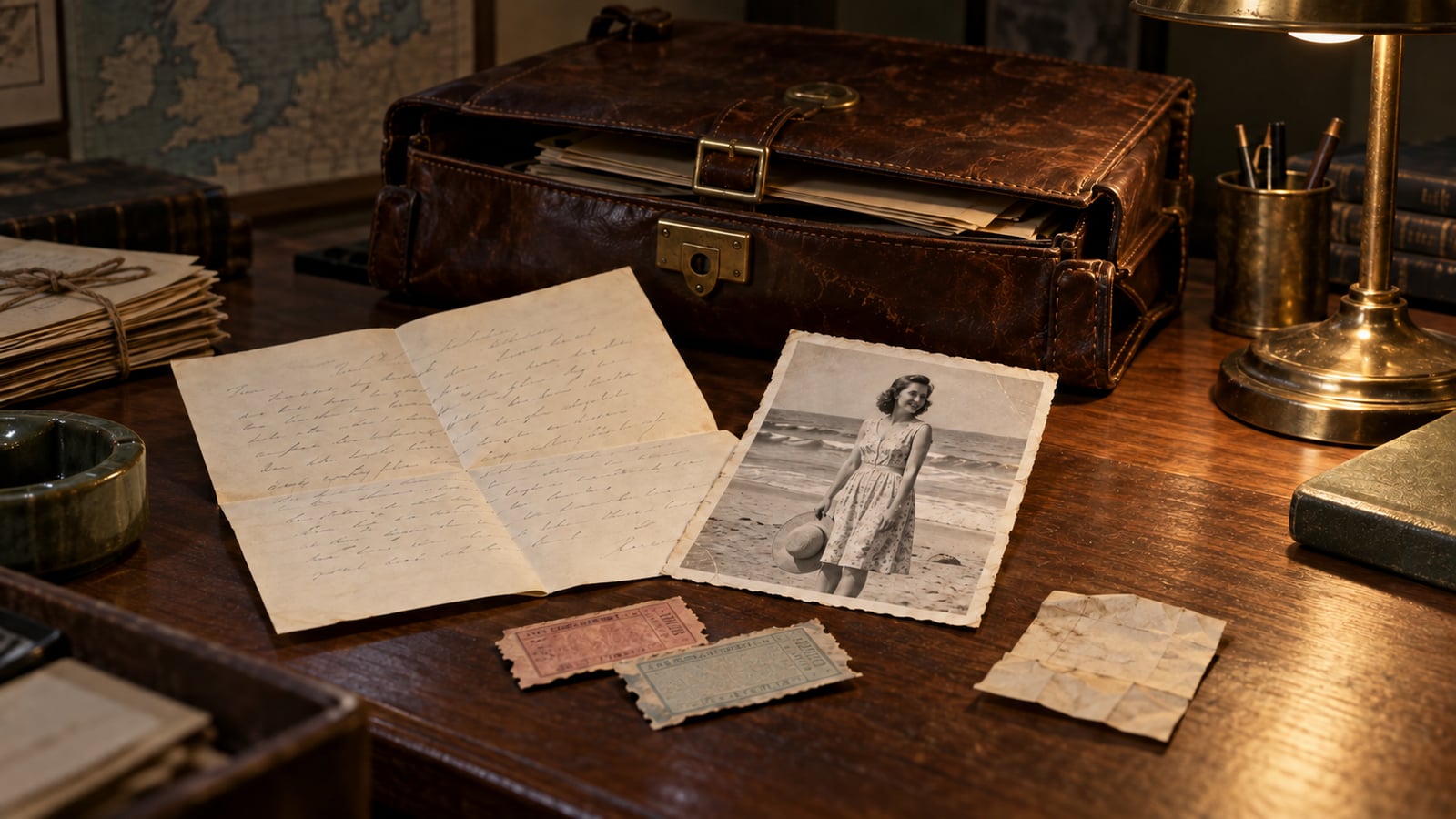
Major William Martin had a fiancée named Pam. Her photograph and letters were among his belongings, along with a receipt for an engagement ring and theater tickets. Anyone examining these small possessions could picture an officer leaving someone behind when he went away on duty. There was one difficulty: Major Martin did not exist.
In 1943, British intelligence gave that identity to a man who was already dead. The aim was to get false military documents into German hands. The Allies were preparing to invade Sicily. Operation Mincemeat would make it appear that an officer had died in an aircraft crash at sea, taking valuable secrets with him.
Naval intelligence officer Ewen Montagu and RAF officer Charles Cholmondeley developed the plan. A name and rank were only the beginning. The officer needed a plausible reason for carrying the papers, and a life beyond his assignment. The fictional Royal Marine acquired personal belongings that appeared to have no military importance at all.
Pam's photograph showed a real intelligence employee. The engagement, however, was invented. The picture and other personal items gave the supposed courier an existence separate from his secret documents. They invited anyone investigating him to see an ordinary private life around the extraordinary discovery: a man who received affectionate letters, bought a ring and happened to die carrying something important.
The papers pointed German attention toward Greece and Sardinia, presenting Sicily as a diversion. Delivering them openly would defeat the purpose. German intelligence had to believe it had acquired another country's secrets. The planners chose waters near Huelva in Spain, where Spanish and German intelligence contacts offered a route for the material to reach its intended readers.
The submarine HMS Seraph carried the body to the Spanish coast. A fisherman found it on April 30, and the papers entered Spanish custody. British officials then pressed for their recovery. That apparent alarm was part of the deception: a message seeking the return of important documents could itself help persuade an interceptor that the contents were genuine.
The information reached German intelligence. British codebreakers monitored German communications, and German forces reinforced other areas, including Greece. The actual Allied landing came in Sicily that July. The operation was not a one-man explanation for victory, but the invented officer's papers had become part of the enemy's assessment.
The body belonged to Glyndwr Michael, a Welshman who had lived in poverty in London and died there in January 1943. He was buried at Huelva under the fictional officer's name. His real identity remained hidden for decades. In 1997, Michael's name was added to the headstone: recognition of the person whose body had carried someone else's carefully manufactured life.
EDITORIAL RESPONSIBILITY
FactosBrain Editorial Desk
The FactosBrain Editorial Desk researched and reviewed this article under our editorial policy. We assess error reports under our corrections policy.