Some of Isaac Newton's papers concern neither falling bodies nor moving planets. They record who handled a suspicious coin, who saw a set of dies and which house contained the equipment. These were not notes for a detective story. Newton was investigating real people. Alongside his scientific reputation, he acquired another occupation: pursuing those who tampered with England's money.
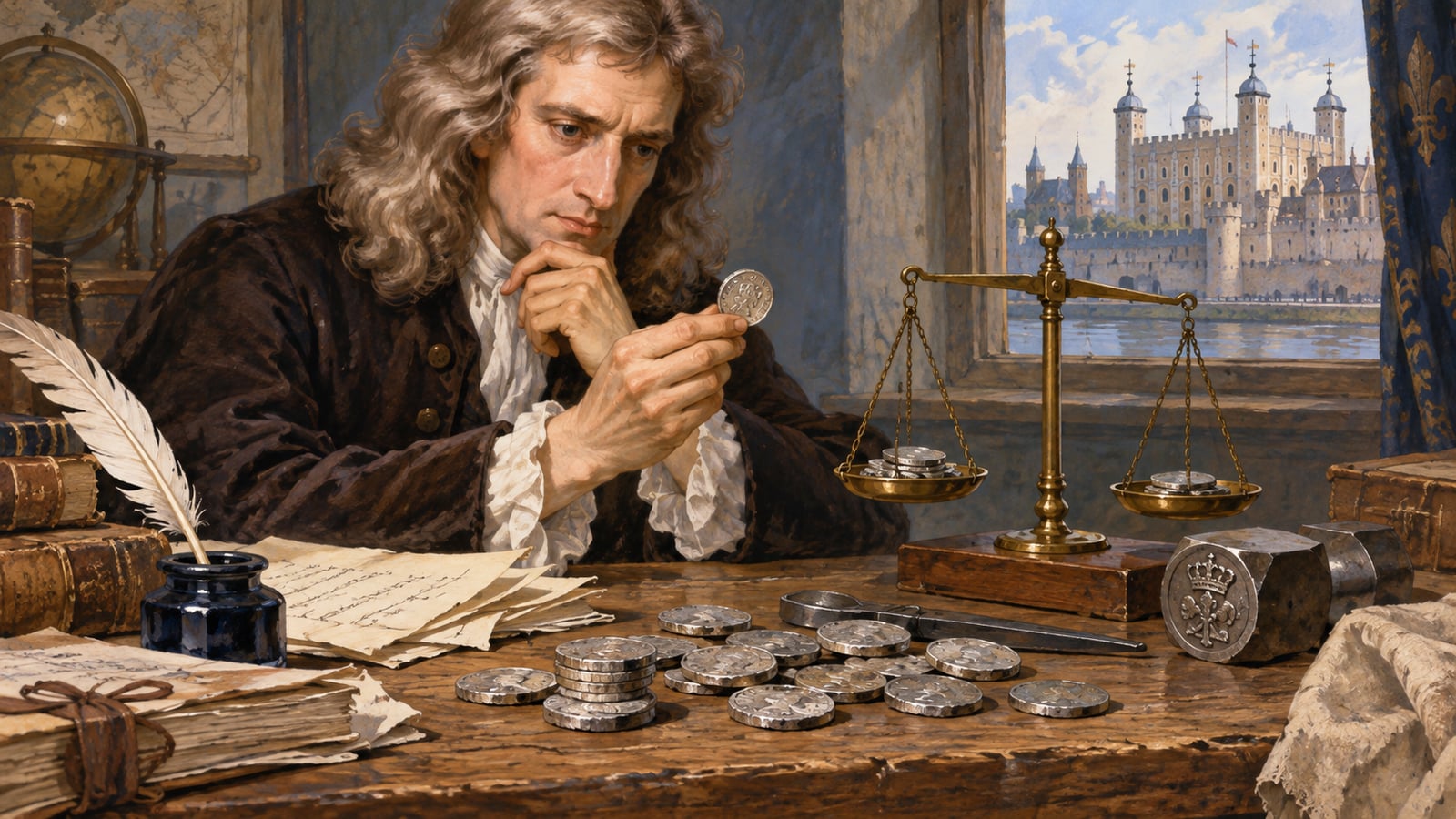
He entered the Royal Mint in 1696, leaving Cambridge for London. The Mint then occupied the Tower of London, and its new warden arrived during a huge operation to replace old silver currency. This was hardly a quiet appointment. Coins were being recalled and new ones produced while the country struggled with money that people could no longer confidently accept at face value.
One problem was clipping. Someone could shave silver from the edges of a coin, keep the metal and pass the reduced coin along. Counterfeiters created a further difficulty. Producing trustworthy replacements addressed only part of the problem; someone also had to investigate the people damaging the currency. Newton took that responsibility seriously enough to interview criminals and informers himself.
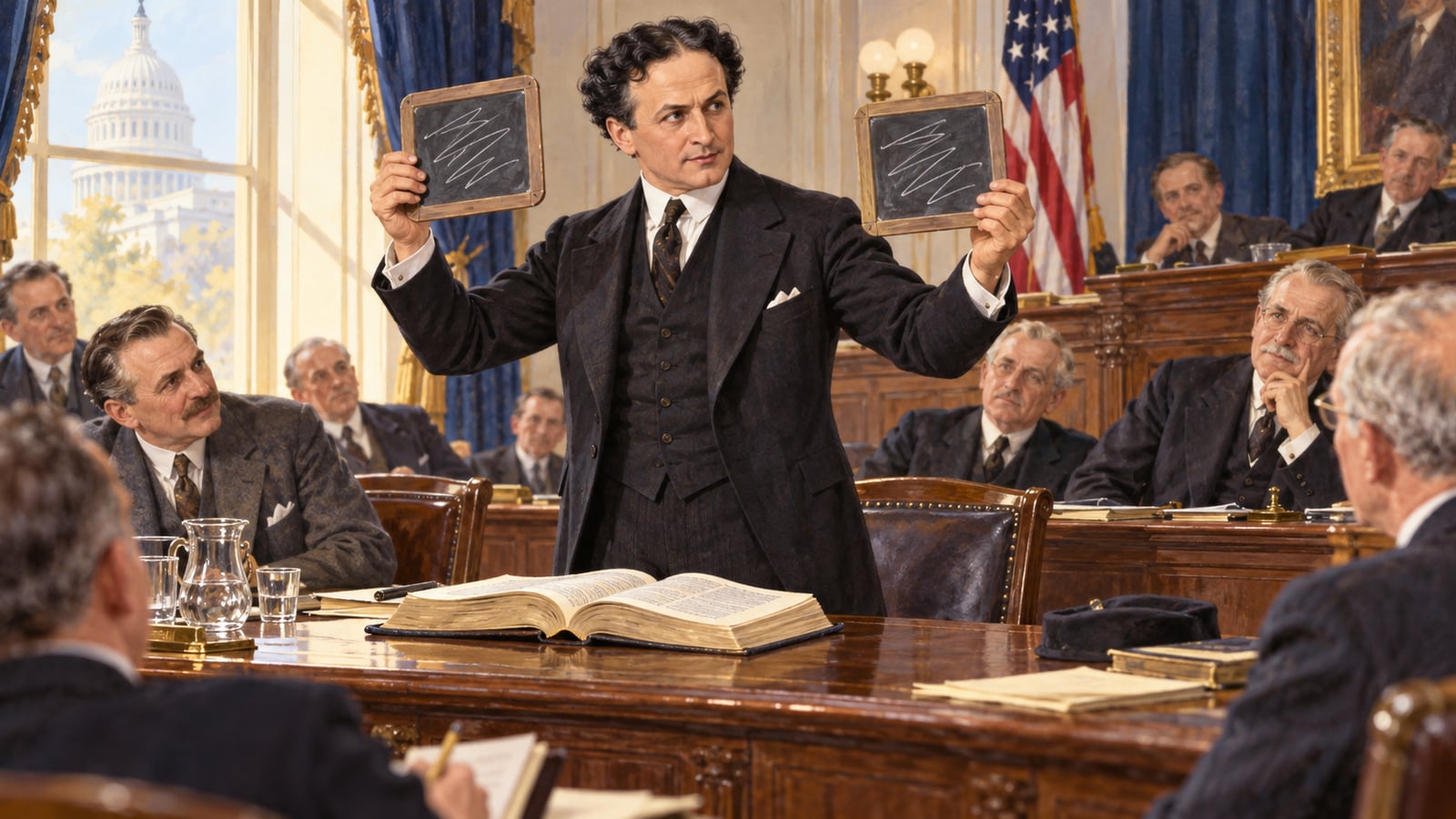
William Chaloner was among the men who came under scrutiny. Knowledge of counterfeiting gave Chaloner an unusual sales pitch: he could present himself as someone who understood how to stop it. Before a parliamentary committee, he demonstrated weaknesses in the coinage and promoted his own expertise at the Mint's expense. The investigator's subject was also offering advice about the investigator's workplace.
Newton's account assembled a much less flattering picture. Witnesses described dies, deliveries of false money and equipment moving between properties. One part alleged that Chaloner had recommended an associate to the Mint as a useful man for catching offenders. Newton interpreted the recommendation as an attempt to place a spy close to him. The case took shape through overlapping accounts of people, tools and transactions.
Such testimony was difficult to use. Informers might receive rewards, giving juries a reason to doubt their motives. In a complaint to the Treasury, Newton explained that accusations of testifying for money discouraged his witnesses and damaged his own reputation. Confiscations created another awkward incentive: an investigator involved in collecting a convicted person's property could look as though he was pursuing the property rather than justice.
His proposed solution was surprisingly blunt. He asked to be relieved of prosecutions. He lacked adequate assistance, described the work as troublesome and dangerous, and argued that the Crown's legal officers were better placed to handle it. The surviving document gives us a working official frustrated by the mechanics of an investigation, rather than an effortless genius enjoying a sideline.
Yet Newton continued, and Chaloner was among the counterfeiters he successfully prosecuted. At the end of 1699 he became master of the Mint, remaining there until his death in 1727. His papers preserve the less familiar labour behind that long second career: tracing an object, comparing accounts and identifying who had said what. Unlike the bodies in his mathematical work, the people in these inquiries could deliberately mislead him.
EDITORIAL RESPONSIBILITY
FactosBrain Editorial Desk
The FactosBrain Editorial Desk researched and reviewed this article under our editorial policy. We assess error reports under our corrections policy.