Before leaving Britain, some emigrants exchanged their money for the currency of their destination. It was a reasonable preparation for a new life. Unfortunately, the bank named on the notes did not exist. Printing money had proved much easier than building the city where it was supposed to be spent.
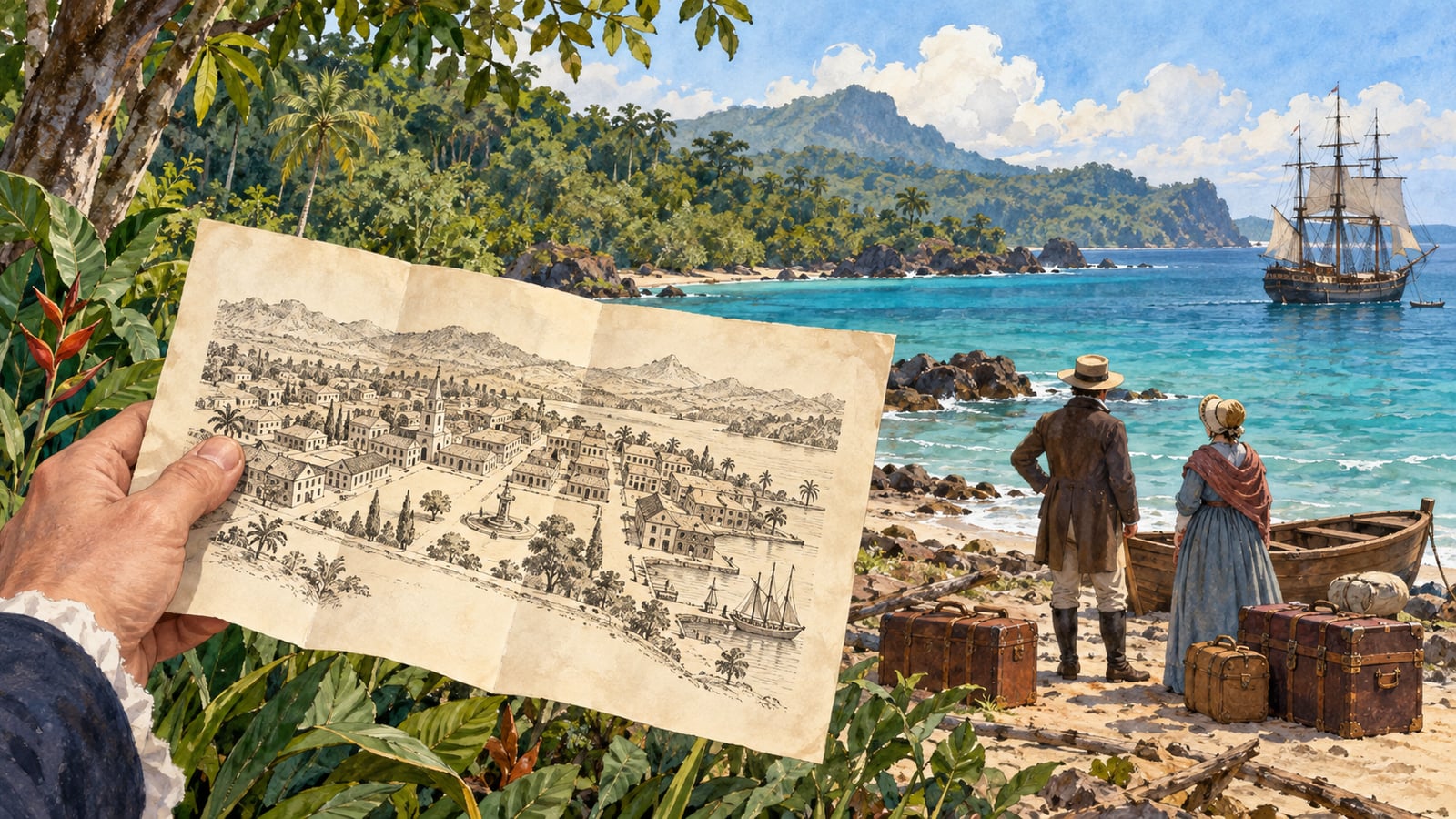
In the early 1820s, Poyais was advertised as an unusually welcoming place to start again. Land was affordable and fertile. Its capital supposedly had European-style public buildings and even an opera house. The climate offered tropical abundance without the diseases that might make a prospective settler hesitate.
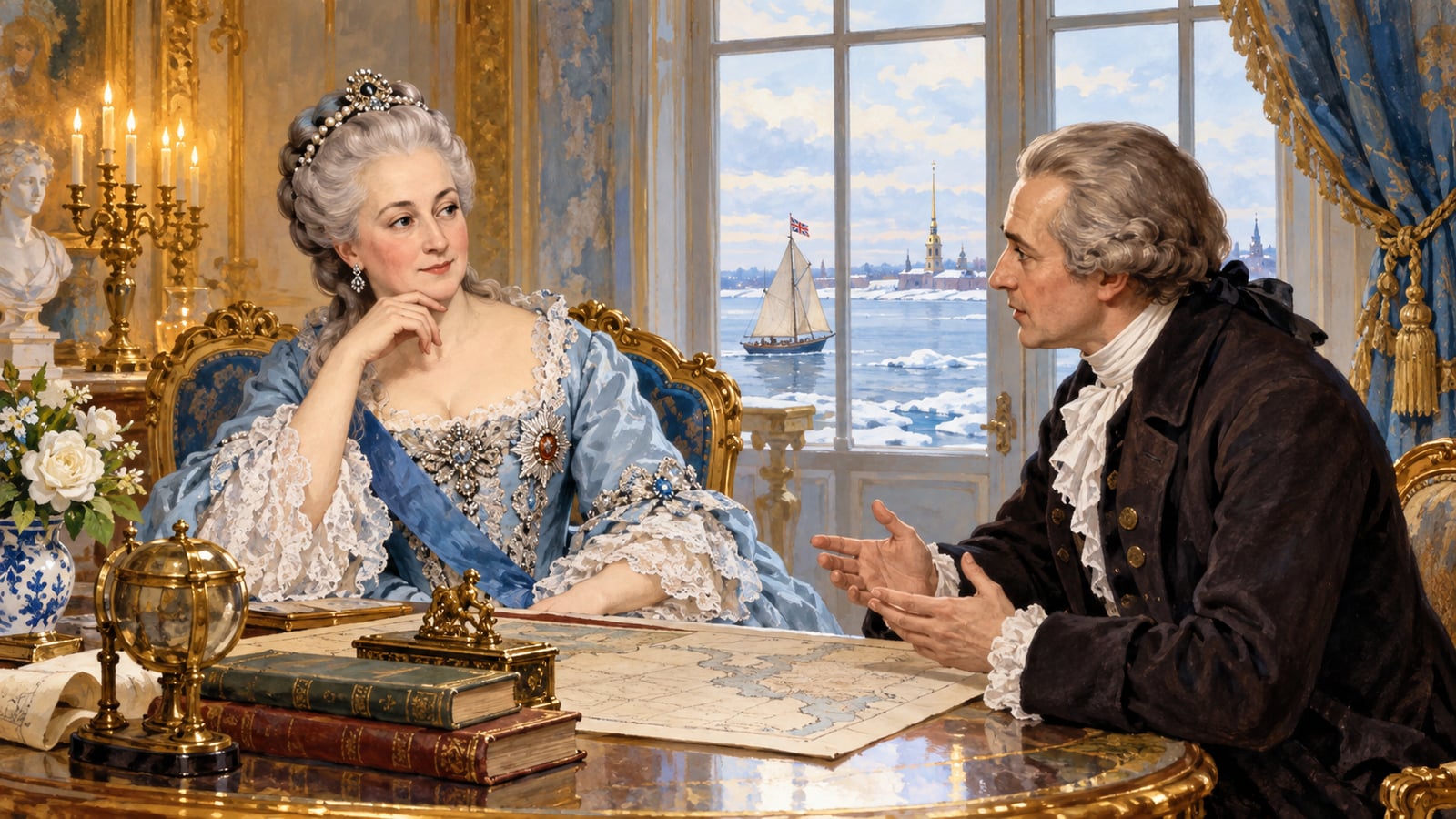
The country's representative was Gregor MacGregor, a Scot with a military career in South America. Presenting himself as the ruler of Poyais, he appeared in Britain seeking investment and settlers. An unfamiliar country was not automatically an impossible country: wars of independence were changing the Americas, and reliable news crossed the Atlantic slowly.
MacGregor supplied objects that made his story tangible. There were maps, a flag, descriptions of the country and certificates of land ownership. A grant from a Miskito ruler concerned real territory in what is now Honduras. But a document about land did not establish the prosperous state MacGregor described. His publicity supplied the missing city and institutions.
Investors could buy bonds. Emigrants could acquire land or look forward to positions in the supposed administration and military. The offer extended beyond property: buyers were being invited to imagine the work they would do and the place they would occupy once they arrived.
One ship left London in September 1822; another departed Scotland in January 1823. Some passengers had committed their savings to the move. Those who exchanged their cash for Poyais notes received paper promising payment at a bank in St. Joseph, the supposed capital. Neither the bank nor its office awaited them.
On the Central American coast, the passengers found no functioning settlement resembling the one they had been sold. This was not land without inhabitants or history. What was fictitious was MacGregor's ready-made destination: a country with a capital and institutions prepared to receive them.
The discovery did not come with an easy passage home. Settlers put together makeshift accommodation and struggled to survive. Illness spread, leaving fewer people able to work. Plans for farms and professional appointments gave way to immediate problems of shelter and survival.
Help from Belize eventually enabled survivors to leave in 1823, but many emigrants died. Accounts disagree on the precise totals. The central loss is clear without choosing a disputed number: families had crossed an ocean to inhabit a sales pitch, and a financial deception had become a fatal expedition.
Poyais nevertheless continued to attract paperwork. MacGregor moved to Paris and promoted it again. He was arrested and tried in France, but acquitted, and later resumed issuing land documents. A certificate bearing his signature and a London date in 1830 survives, years after returning settlers had described the reality overseas.
The most durable parts of Poyais turned out to be its printed ones: maps, bonds, notes and land grants. They became objects for collectors and historians. For the people who originally bought them, they had represented something much more ordinary—a home and a livelihood waiting on the other side of the sea.
EDITORIAL RESPONSIBILITY
FactosBrain Editorial Desk
The FactosBrain Editorial Desk researched and reviewed this article under our editorial policy. We assess error reports under our corrections policy.