On September 17, 1859, a well-dressed man walked into a San Francisco newspaper office and left a document. He politely asked the editors to consider publishing it, then departed. The document announced that he was Emperor of the United States.
Joshua Norton signed it as Norton I. He claimed that a large majority of Americans had demanded his accession and instructed representatives of the states to gather in a San Francisco music hall the following February. They were to revise the country's laws and remedy its troubles.
The Evening Bulletin printed the declaration beneath a question: did the country have an emperor among its people? Its introduction described the visitor's serious manner. Norton's imperial debut took place on a newspaper page, complete with an editor's account of the man who had delivered it.
He had once been a prosperous local businessman, trading goods and investing in property. In 1852, a famine in China drove up rice prices. Norton bought a shipment of Peruvian rice, only for other vessels to arrive carrying more. The market fell, and his attempt to escape the deal led to prolonged litigation. His losses preceded the imperial declaration by several years.
Norton continued issuing orders. In October 1859, he declared Congress abolished. By the following January, its members were still meeting in Washington. A new proclamation accused them of violating his decree and instructed the military commander to send troops to clear the congressional halls.
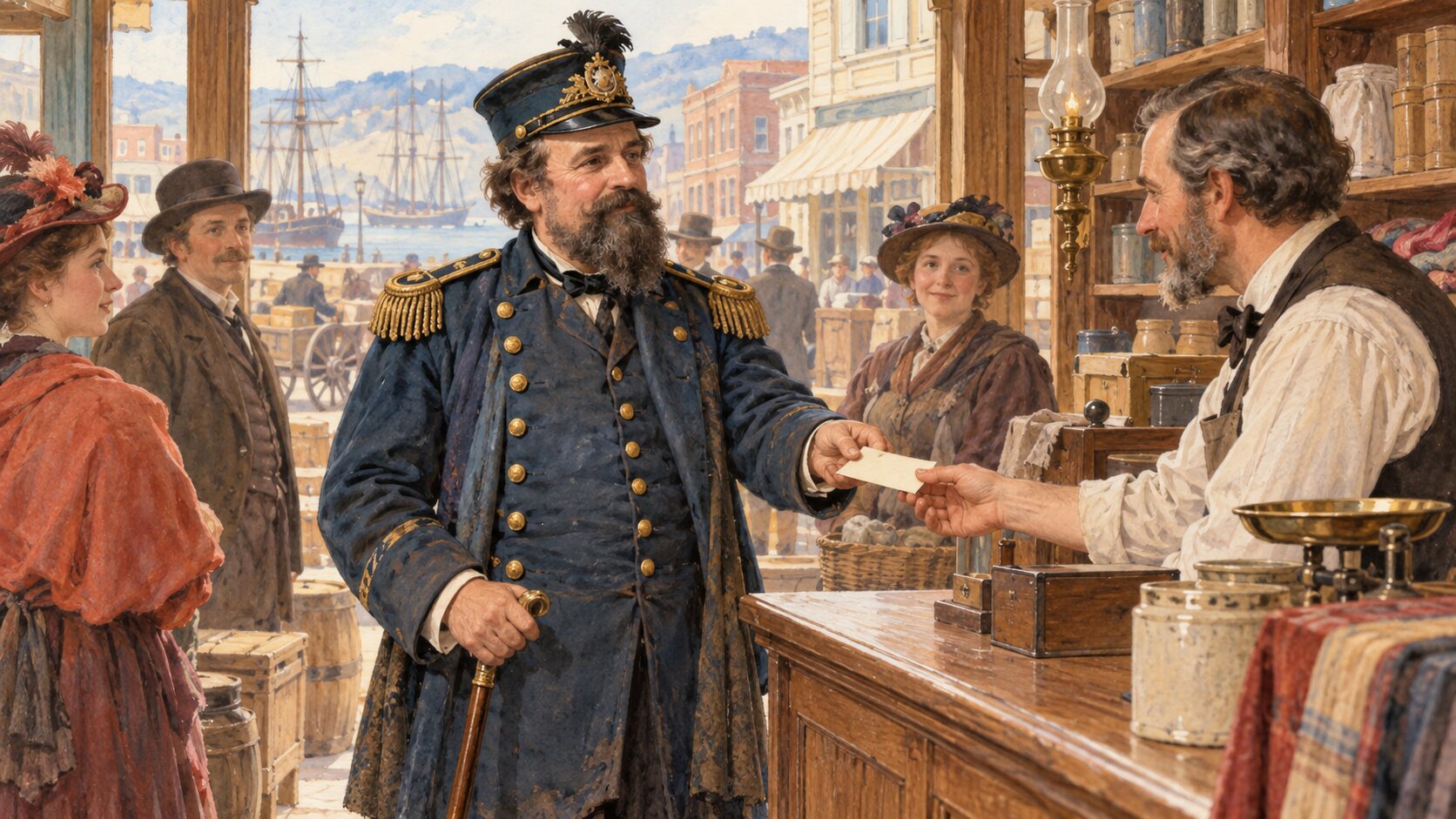
He had no political authority to enforce these commands. On the streets of San Francisco, however, he assembled a recognizable imperial appearance. He wore discarded military clothing and added epaulettes, a feathered hat, and a walking stick. His regalia helped make him a familiar figure around town.
His lodgings were much less impressive. In later years, his home was a small, sparsely furnished room at the Eureka Lodgings on Commercial Street. The man claiming an entire country returned to a boardinghouse room to sleep.
Other people's assistance supplied food and money. Norton maintained his title even when asking for help: contributions were taxes, and the imperial treasury needed funds. The language of his newspaper proclamations accompanied the practical business of getting through the day.
Some merchants found their own use for that language. A hat dealer gave Norton an old-fashioned hat and advertised his association with the emperor. Restaurants could offer him a glass of wine and promote an imperial connection. Such favors did not necessarily continue beyond a single occasion, but they gave businesses something to advertise.
Norton also put his title on paper that people could buy. He sold notes issued by the Imperial Government of Norton I to residents and visitors. A surviving fifty-cent note promises repayment in 1880 with interest. Its printer identified the firm as printers to His Majesty Norton I.
Visitors could keep the notes as souvenirs, while some establishments Norton frequented accepted his currency. The imperial name, powerless to close Congress, acquired a modest usefulness in local transactions.
Newspapers developed their own versions of the emperor too. Some editors invented proclamations in his name, whether for amusement or political purposes.
In January 1867, that character ran into a different kind of official response. Armand Barbier, a special officer belonging to a locally funded auxiliary security force, arrested Norton on grounds of insanity. Newspapers objected to his detention.
The Daily Alta California answered by taking the imperial comparison seriously. Norton, it argued, had shed no blood, robbed no one, and despoiled no country during his reign. That was more than could be said of some actual rulers.
Police chief Patrick Crowley released Norton and apologized. Norton then supplied an imperial conclusion of his own: he pardoned the officer who had arrested him.
EDITORIAL RESPONSIBILITY
FactosBrain Editorial Desk
The FactosBrain Editorial Desk researched and reviewed this article under our editorial policy. We assess error reports under our corrections policy.