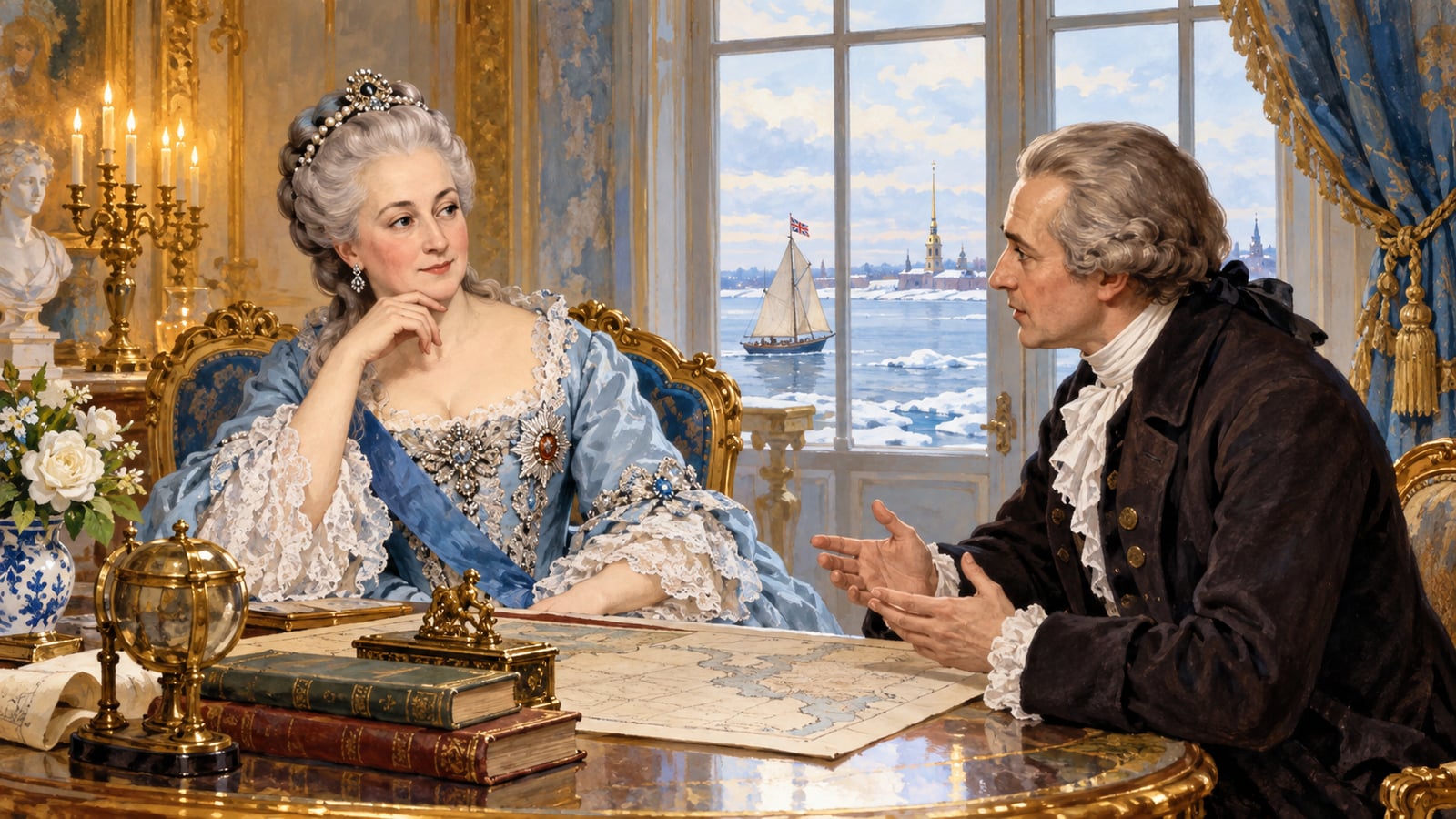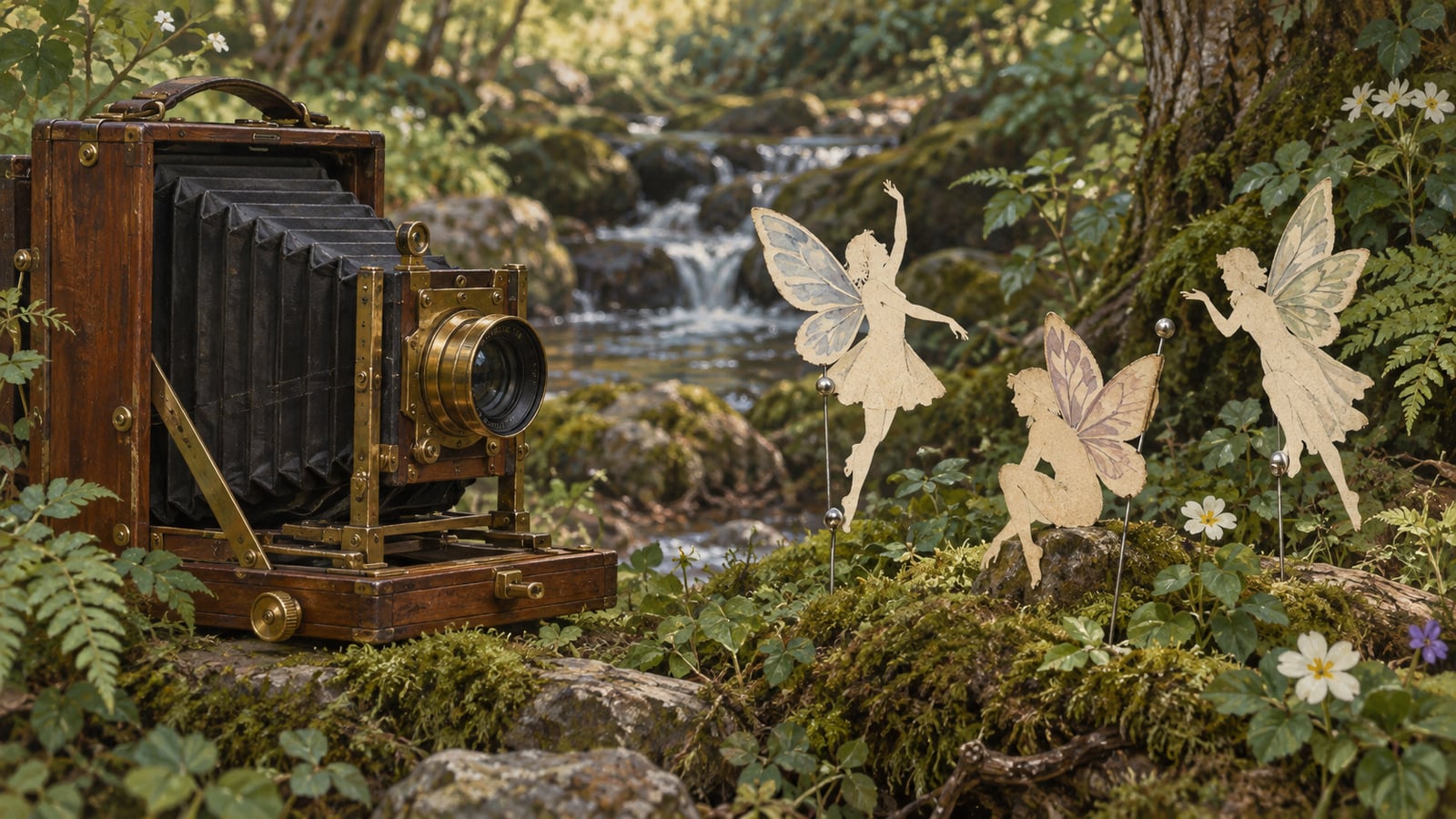
Four small fairies appeared to dance in front of a girl, with a stream behind her. The photograph was taken in Cottingley, England, in 1917. Fifteen-year-old Elsie Wright had borrowed her father's camera to photograph her ten-year-old cousin, Frances Griffiths. Among the adults who eventually championed the picture was Arthur Conan Doyle, the creator of Sherlock Holmes.
It is tempting to imagine Holmes examining the evidence. His creator, however, came down on the side of the fairies. Hearing about the photographs in 1920, Doyle followed a chain of contacts until he obtained them. A key connection was Edward Gardner, a Theosophist already investigating the pictures. They divided the work: Gardner would visit the family and examine the setting, while Doyle would turn the findings into a published account.
They did not simply glance at a print and declare the case closed. Photographic specialists examined the original negatives, and Doyle took them to Kodak's offices. The cameras used light-sensitive glass plates. Two exposures on one plate could place a fairy beside a child who had never shared the same scene. Looking for such manipulation seemed a sensible place to start.
The difficulty came in deciding what a clean negative proved. According to Doyle's own account, the Kodak specialists found no evidence of superimposition. They also said that, given their knowledge and resources, they could produce similar pictures by ordinary means. They would not certify a supernatural explanation. Doyle accepted that experts could imitate the result, but considered that insufficient reason to conclude that these children had done so.
A different expert, whom Gardner trusted, went much further. He claimed that the fairy figures had moved during the exposure. Gardner questioned him about cardboard models and other possible tricks, but the man stood by his assessment. Supporters and critics were scrutinizing the same details and reaching opposing conclusions. Doyle later reproduced their arguments at considerable length.
Gardner tried to secure stronger evidence. In 1920 he supplied the cousins with two new cameras and secretly marked photographic plates. If they substituted other plates, the marks would reveal it. More photographs followed, including one showing a fairy on a branch offering flowers to Elsie. The negatives were indeed made on the supplied plates. Another precaution appeared to have been satisfied.
But the girls' method required neither substituted plates nor double exposures. They could draw fairies, cut them out, fix them to the ground or branches with hatpins, and photograph the scene. The camera recorded objects that really stood in front of it. Those objects happened to be pictures. A secret mark on a glass plate did nothing to prevent a paper figure from appearing before the lens.
Doyle introduced the photographs to readers of the Christmas 1920 Strand Magazine and collected the correspondence and investigations in The Coming of the Fairies in 1922. He warned against assuming that an original must be fraudulent merely because someone could imitate it. The photographs he defended would eventually be explained with remarkably modest equipment.
The cousins were elderly when the secret came out in the 1980s. Elsie wrote to photographic investigator Geoffrey Crawley, explaining how the pictures had been made. Illustrations in Princess Mary's Gift Book, published in 1915, had provided inspiration for the cutouts. Elaborate darkroom expertise was unnecessary; a book, scissors and pins could do the job.
Even then, the cousins did not agree about everything. Elsie said all five photographs were faked. Frances continued to insist that the fifth was genuine. Their shared enterprise ended with two different accounts of that final image. Elsie's 1983 letter and the cameras survive in museum collections, offering a rather different explanation from the one Doyle had hoped the photographs would establish.
EDITORIAL RESPONSIBILITY
FactosBrain Editorial Desk
The FactosBrain Editorial Desk researched and reviewed this article under our editorial policy. We assess error reports under our corrections policy.