Winston Churchill made time for courtesy while preparing to escape from captivity. He drafted a letter telling the authorities that he intended to leave, praising their humane treatment of prisoners, and thanking an official for his personal civility. He regretted being unable to offer a more formal farewell. The letter was to be found on his bed after he had gone.
This was South Africa in 1899. Churchill, still decades away from becoming Britain's wartime prime minister, was reporting on the Boer War. Captured after helping during an attack on an armoured train, he was held in Pretoria. He argued that he should be released as a correspondent; his captors treated him as someone who had participated in the fighting. He began looking for a route out.
His published account reveals how incomplete the plan was. Watching the sentries suggested a chance to cross the boundary into a neighbouring garden. Beyond that lay the city, guarded railway lines, and hundreds of miles to Portuguese territory. Although the farewell letter expressed confidence in arrangements with friends outside, his narrative admits that attempts to make outside contact had failed.
One attempt was abandoned because a guard would not move away. On the night of December 12, Churchill got over the wall, but his companion could not follow. Returning seemed impossible, so he went on alone. The map and compass, unfortunately, remained with the man still inside. Churchill had money and chocolate, but no reliable guide to the long journey ahead.
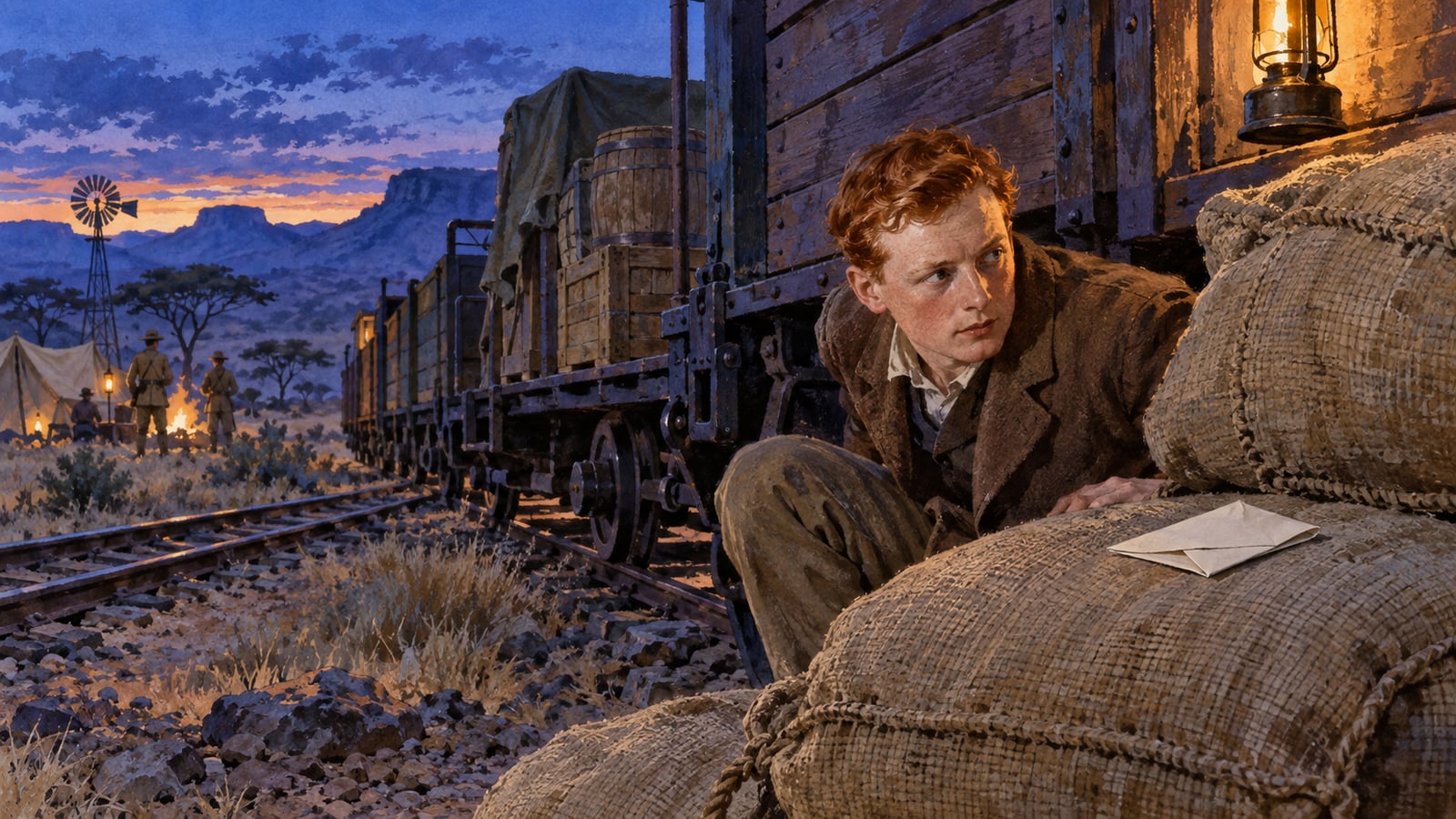
He followed a railway and climbed aboard a goods train, concealing himself among sacks without knowing precisely where it would take him. Before daylight he got off and found cover. Waiting through the day was a different experience from the exhilaration of getting beyond the prison wall. Hunger, fatigue, and uncertainty occupy a considerable part of his account.
He did not complete the escape unaided. John Howard, a British colliery manager, helped him and provided concealment at the mine. Revealing himself to a stranger meant risking recapture. In this instance, he had found someone prepared to assist rather than hand him over.
A further journey hidden in freight brought him to Lourenço Marques, now Maputo, in Portuguese territory. He reached the British consul and was able to return to the British side. Freedom had depended on more than scaling a wall: trains, a hiding place, and other people's help had carried him the rest of the way.
When his book appeared in 1900, a crucial part of that assistance was missing. In the introduction, Churchill explained that another man's life depended on his discretion, and promised to fill the gap after the war. A correspondent with an exciting story could not yet publish all of it.
The assured escapee in his farewell letter and the uncertain traveller in his narrative are strikingly different figures. One politely announced confidence in his arrangements. The other left his map behind and hid aboard a train whose destination he could not be sure of.
EDITORIAL RESPONSIBILITY
FactosBrain Editorial Desk
The FactosBrain Editorial Desk researched and reviewed this article under our editorial policy. We assess error reports under our corrections policy.