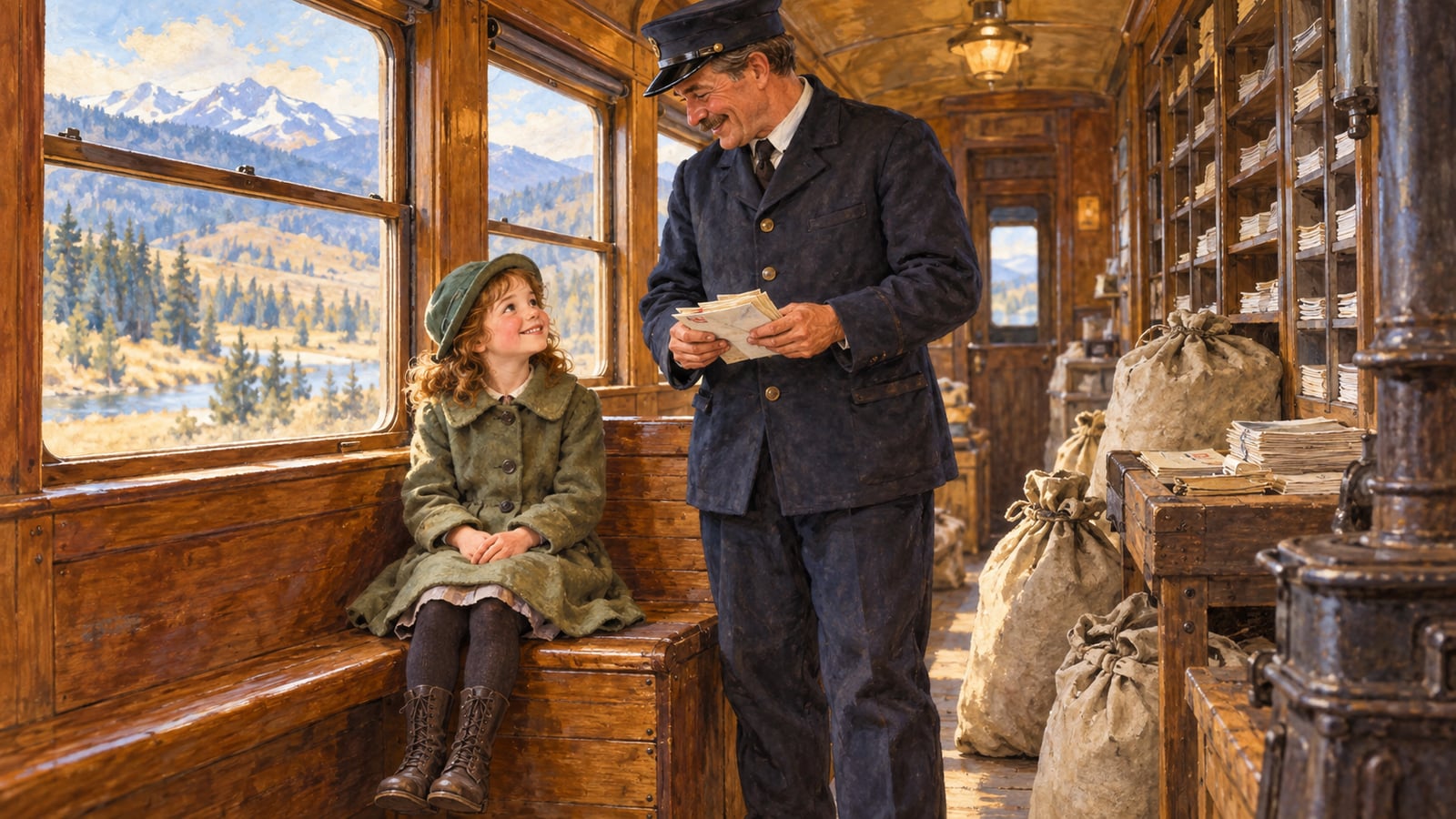
In February 1914, May Pierstorff traveled from Grangeville, Idaho, to visit her grandparents about 73 miles away. What made the journey memorable was how her parents paid for it. Instead of an ordinary passenger fare, they spent 53 cents on postage.
May traveled with the mail, accompanied by a relative who worked for the Railway Mail Service. She was not sealed in a box or abandoned inside a sack. A familiar adult went with her to a familiar destination. The arrangement combined something quite ordinary—entrusting a child to a relative—with something extraordinary: treating the journey as a parcel delivery.
Parcel Post had begun in January 1913, extending affordable package shipping to communities across the United States. Rural customers gained new ways to receive goods, and both customers and employees were learning the service's boundaries. A few families pushed those boundaries in a direction its creators had not intended.
Soon after the service opened, an Ohio couple sent their eight-month-old baby to his grandmother nearby. A rural carrier took him safely there. The parents paid 15 cents in postage and added $50 in insurance. Even a short delivery could make a striking newspaper story when the parcel was a baby.
May's journey the following year was considerably longer. Postage was cheaper than a train ticket, and a relative's job provided an escort. Imagining a child dropped anonymously into the postal network misses the person who actually accompanied her.
Postal historian Jenny Lynch has emphasized the trust rural families placed in their carriers. These were people they knew and regularly depended on. That relationship helps explain the otherwise baffling decision to send a child along with the post. It did not make child transportation an official service.
Postal authorities directed employees not to accept human beings as mail. Some journeys still occurred afterward. When a three-year-old traveled by post in Kentucky in 1915, officials investigated how she had been allowed aboard a train in violation of the rules.
Photographs can make the practice look more routine than it was. Familiar images of babies sitting in mailbags were playful staged pictures, as the National Postal Museum explains. They should not be mistaken for documentary evidence that infants normally traveled packed among parcels.
May's trip needed no unusual vehicle or ingenious equipment. There was a train already making the journey, a relative working on it and an inexpensive postage rate. Applying the parcel rate to a visit to her grandparents was enough to turn a family journey into postal history.
EDITORIAL RESPONSIBILITY
FactosBrain Editorial Desk
The FactosBrain Editorial Desk researched and reviewed this article under our editorial policy. We assess error reports under our corrections policy.