The offer seemed to give San Diego an easy way out of a water problem. Fill a reservoir, pay $10,000. Fail, pay nothing. Charles Hatfield was not proposing a new dam or a pipeline. He said he could persuade the sky to supply the water.
By late 1915, several years of disappointing runoff had made the city anxious about drought. Its reservoirs still contained water, but that did not remove the risk of another dry season. Supporters of Hatfield's proposal saw a bargain: either the city would get a large quantity of water cheaply, or an unsuccessful experiment would cost it nothing.
Hatfield had sold sewing machines before building a reputation as a rainmaker. He experimented with chemical mixtures and said his process encouraged moisture already in the atmosphere to fall. Newspaper accounts of rain arriving after his work helped sell the service. They recorded a sequence of events, however, rather than demonstrating that his chemicals controlled the weather.
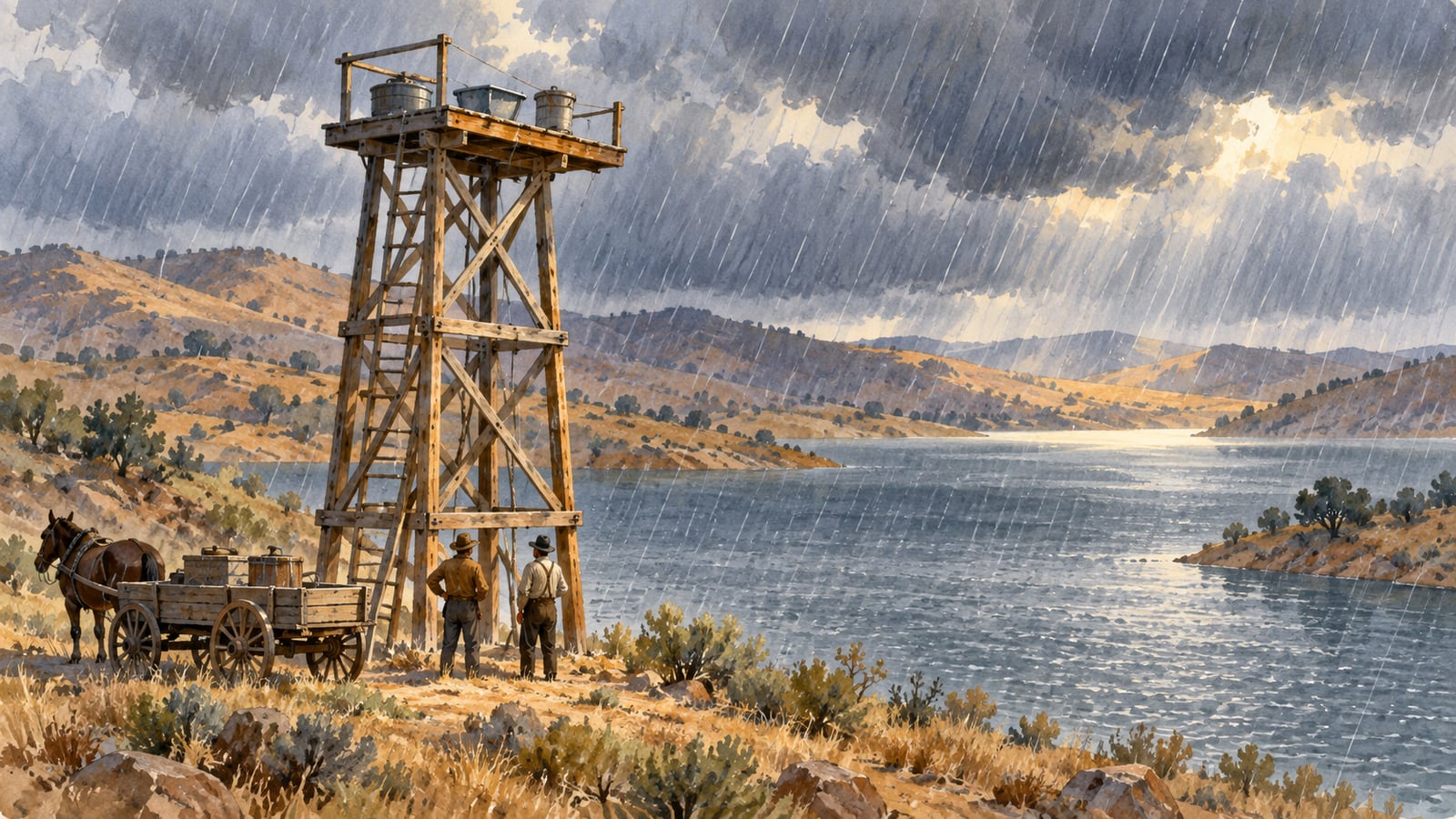
The council accepted an offer and called for a written contract. Hatfield began before one had been signed. Beside Morena Reservoir, he and his brother erected a wooden tower and put chemicals into containers on its platform. The rising water and the missing signature would eventually become competing parts of the same argument.
Rain arrived in January 1916. By the middle of the month, it was disrupting far more than outdoor plans. Rivers rose, bridges failed, trains stopped and communications broke down. The man working beside a distant reservoir became a compelling explanation for what everyone could see happening. He had promised rain; rain was certainly falling.
Another round of storms struck ground that was already saturated. On January 27, Lower Otay Dam failed, releasing water through the valley below. Homes and farms were swept away, and people were killed. What had begun as a proposal to improve a water supply was now entangled with a disaster.
Hatfield nevertheless wanted his fee. Morena's water level had risen, and he maintained that his work had increased the rainfall. He did not accept responsibility for the destruction. In his account, he had supplied water to a reservoir, not sold the city a flood.
The city disputed the bill. There was no signed contract, and Hatfield could not establish that the rain was his achievement. The storms also extended well beyond San Diego. Heavy rain and snow affected a broad sweep of the American West, giving the city's weather a context much larger than one chemical tower.
Then came a condition that made collecting the money still less attractive. If Hatfield wanted payment for causing the rain, the city wanted him to accept liability for the damage. Claims against it ran into millions of dollars. The $10,000 fee looked rather different when attached to that possible bill.
Hatfield sued, but never collected his money. His case lingered until it was dismissed in 1938. The dispute did not end his career: customers elsewhere continued to seek his services, and he continued accumulating newspaper accounts of rain following his work.
San Diego had given the rainmaker an extraordinary result to advertise. He arrived, the water rose, and his name became inseparable from the flood. Turning that publicity into payment required answering a much less convenient question: just how much of the rain was he prepared to claim?
EDITORIAL RESPONSIBILITY
FactosBrain Editorial Desk
The FactosBrain Editorial Desk researched and reviewed this article under our editorial policy. We assess error reports under our corrections policy.