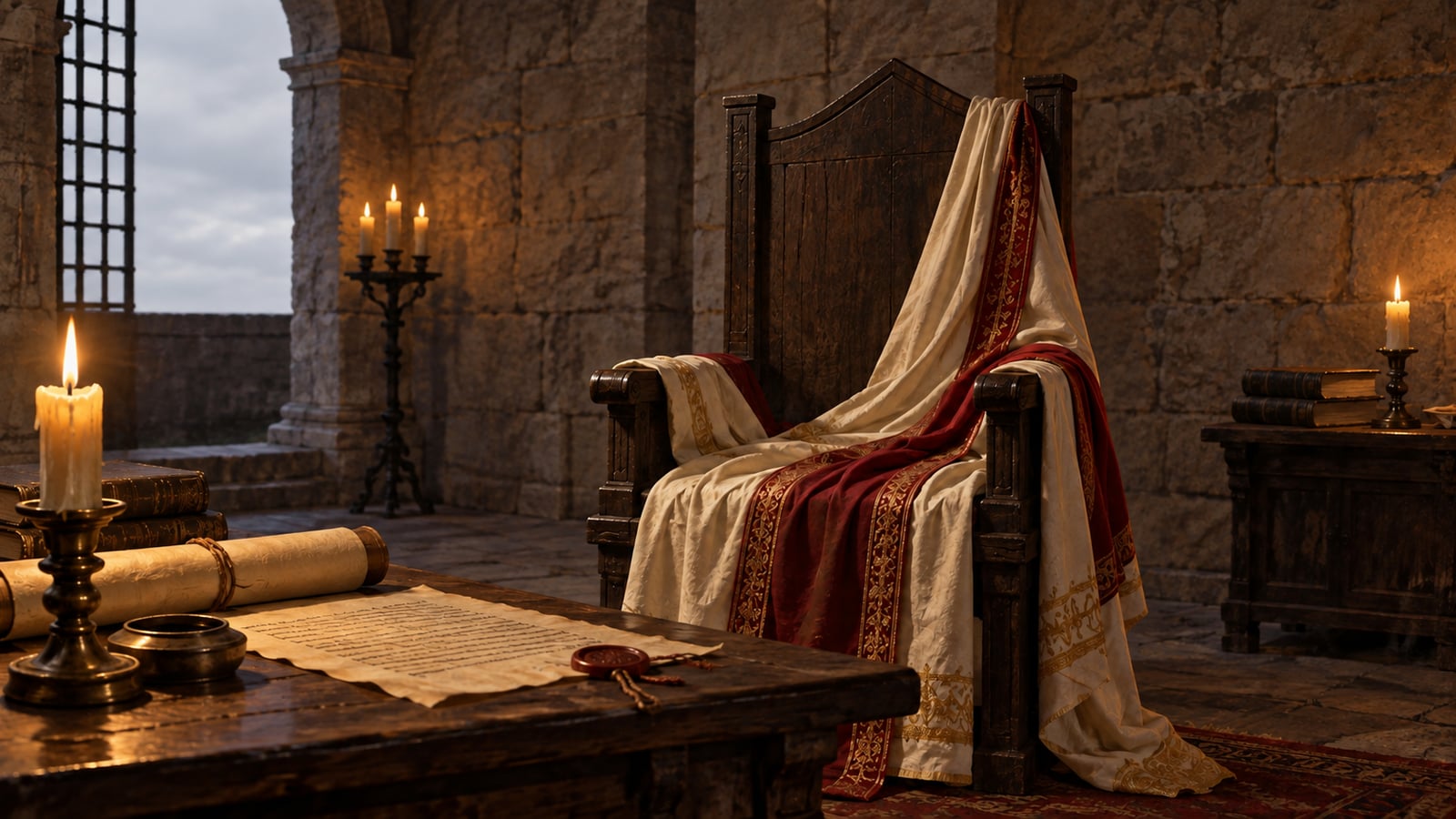
The defendant could not answer questions. He was dead. The proceedings went ahead anyway: his body was removed from its tomb, dressed in papal vestments and placed in a chair. A deacon was assigned to speak for him. In Rome in 897, the former pope Formosus faced a trial arranged by another pope, Stephen VI.
What could a guilty verdict do to someone already dead? In this case, it could affect the positions of people still alive. If Formosus had not legitimately held the papacy, his official actions could be attacked as invalid. For clergy he had ordained, the proceedings threatened more than a predecessor's reputation. Their own standing was at stake.
The papacy was entangled in struggles for power in Italy. A pope could crown an emperor, making him important to rival rulers. Formosus had recognized Lambert as emperor, then sought help from his rival Arnulf. After Arnulf entered Rome, Formosus crowned him as well. The pope's death did not settle the conflicts surrounding those choices.
One accusation concerned his move between bishoprics. Formosus had been bishop of Porto before becoming bishop of Rome—the pope. To a modern reader, changing offices might sound like an ordinary promotion. Church rules, however, restricted a bishop's transfer from one see to another. The struggle over authority was fought partly through those rules.
The verdict went against Formosus. His acts and ordinations were declared invalid. The body was stripped of its papal clothing, and fingers of the right hand were mutilated. It was eventually thrown into the Tiber. The proceedings attacked both the dead pope's record in office and his physical remains.
Stephen did not live long to enforce the result. Within months, he was imprisoned and strangled. Formosus's treatment changed again. Later that same year, under a subsequent pope, his body was reburied in St. Peter's and the trial's decisions were overturned. A change among the living brought a change in the official fate of the dead.
The dispute nevertheless continued. Decisions recognizing Formosus's acts were followed by renewed attempts to reject them. By then, clergy he had ordained had themselves ordained others. Invalidating one man's authority threatened a growing chain of people whose offices depended on what had followed from it.
That is why the aftermath survives in more than accounts of a corpse being moved and mistreated. Writers also produced defenses of the validity of Formosus's ordinations. The defendant never spoke, but living people continued arguing over his name. Putting him back into a tomb did not put the consequences of his trial to rest.
EDITORIAL RESPONSIBILITY
FactosBrain Editorial Desk
The FactosBrain Editorial Desk researched and reviewed this article under our editorial policy. We assess error reports under our corrections policy.