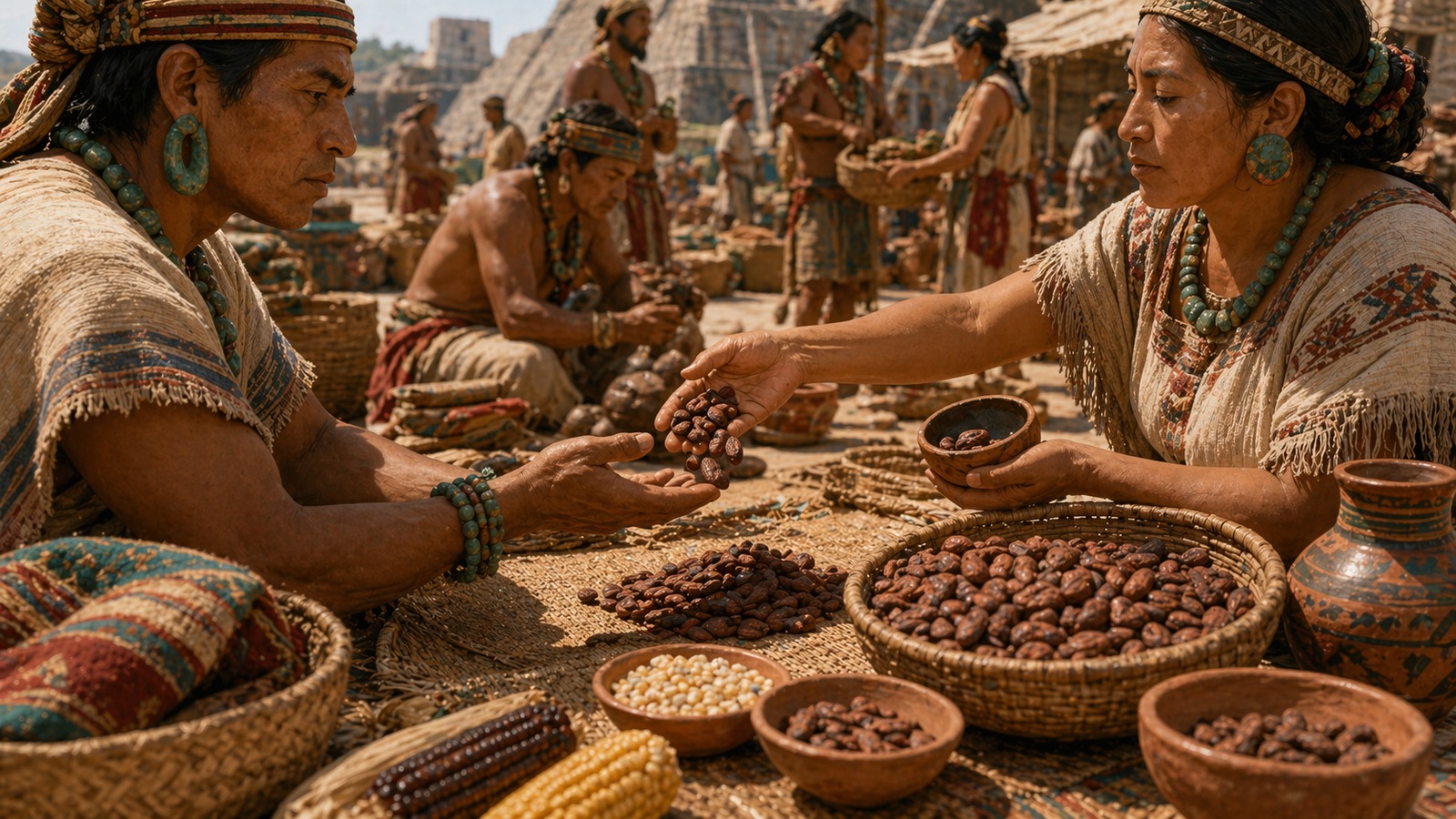
Long before cacao became the sweet solid bar familiar today, its seeds were valuable goods in parts of Mesoamerica. People processed cacao into drinks, offered it in ritual and diplomatic settings, paid it as tribute and used measured quantities of beans in market exchange. The same object could therefore be an ingredient, a status good and a practical means of payment.
Cacao's value came partly from ecology. The tree thrives in warm, humid conditions and could not be grown equally well throughout the highland regions where many consumers lived. Cultivation, processing and long-distance transport required labor. A durable dried bean was also small enough to count and carry, making it more convenient for everyday purchases than many bulky goods.
In the Aztec imperial economy, subject regions delivered cacao among other tribute items, while historical accounts describe beans being counted for transactions in markets. This was commodity money: the item used in exchange also had value for another purpose. It did not depend on a government mint turning beans into standardized metal coins.
That system was not perfectly uniform. Beans varied in size and quality, could be damaged by moisture or consumed, and were sometimes reportedly imitated with emptied shells or substitutes. Larger obligations might be reckoned in bundles or alongside textiles and other valuables. “Cacao was money” is accurate, but it should not suggest one modern national currency used identically everywhere.
The drink made from cacao was also unlike most modern hot chocolate. Beans were fermented, dried, roasted and ground, then combined in preparations that could include water, maize, chili or other flavorings. Sugar became central to European chocolate traditions after contact and colonization, eventually helping transform cacao from a drink and exchange good into mass-produced confectionery.
A cacao bean could circulate because people trusted both its usefulness and the social system around it. Its history shows that money need not begin as paper, metal or a number in an account. Communities can make exchange work with a valued commodity—as long as participants recognize what counts, how it is measured and why someone else will accept it.
EDITORIAL RESPONSIBILITY
FactosBrain Editorial Desk
The FactosBrain Editorial Desk researched and reviewed this article under our editorial policy. We assess error reports under our corrections policy.