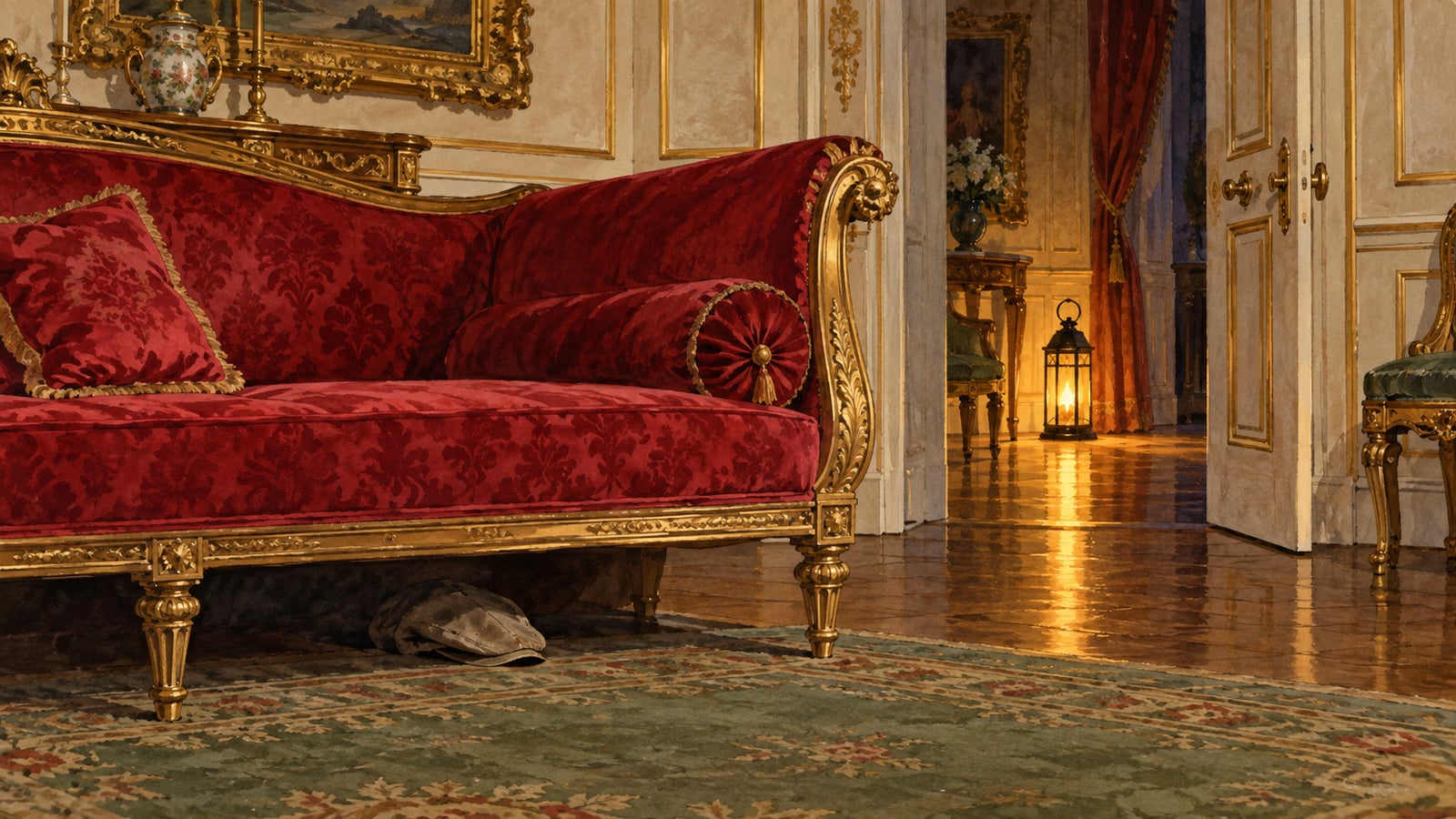
In December 1840, an intruder was discovered beneath a sofa in a room near Queen Victoria's bedroom. The face was already familiar. Edward Jones had been caught inside Buckingham Palace two years earlier. Removing him from the building had proved easier than keeping him out.
The first episode began before dawn in 1838, when a palace employee spotted a boy in the Marble Hall. Jones fled and was caught after a pursuit. He was covered in soot, and a sword and articles of clothing were found in the palace. The circumstances prompted speculation about a chimney. Whatever his route, a teenager had managed to move around a royal residence guarded by soldiers, police and household staff.
His own explanations were unreliable. He initially supplied a different name, and his account of how long he had stayed in the building changed. It is unwise to turn every boast into a documented adventure. At his trial that December, however, his lawyer successfully presented the incident as an excessive desire to see the palace. The jury acquitted him.
The return in 1840 was more troubling. This time Jones had reached a room used by the royal household, close to the Queen's bedroom. Victoria had recently given birth to her first child. A boy beneath the furniture was not merely an embarrassing discovery at the edge of the grounds.
The Privy Council, the monarch's advisory body, questioned him in private. He reportedly said he wanted to hear palace conversations and write about them. The explanation did not secure another release. He was confined for three months, while his name circulated beyond the palace walls.
In March 1841, less than a fortnight after leaving confinement, he was caught there again. Accounts of this visit described him helping himself to meat and potatoes taken from the palace. He had apparently found time for a meal inside the building he was supposed to stay away from.
Security had been strengthened after the previous intrusion. An internal night patrol detected him, but only after he was already inside. Another three-month confinement followed. Arrest, detention and release had begun to look like stages in a journey back to the same destination.
Outside the palace, Jones became material for jokes, songs and satire. The banker Thomas Raikes mentioned him in his diary, including a pun on the architect Inigo Jones: the intruder's name could be made to sound like a declaration that he was going in. What was a security problem for the household became an entertaining recurring character for the public.
Jones subsequently went to sea. Punch responded with an invented account of his nautical life, including a song that had him longing for another look at the palace. It was a comic impersonation, not his authentic diary or a reliable statement of his intentions.
Sending the real Jones away did not remove the version of him that readers knew. The palace could have its intruder arrested. In the songs and printed jokes, the boy remained free to return.
EDITORIAL RESPONSIBILITY
FactosBrain Editorial Desk
The FactosBrain Editorial Desk researched and reviewed this article under our editorial policy. We assess error reports under our corrections policy.