On November 27, 1810, pianos and an organ arrived at a house on Berners Street in London. Coal wagons arrived too, along with furniture, linen, and jewellery. An undertaker brought a coffin made to the dimensions in his order. Something extraordinary seemed to be happening at Number 54. Its resident was in no position to explain it: she had ordered none of these things.
The woman who lived there was Mary Tottingham. The visitors had not simply mistaken her address for another. They had received letters directing them to this particular house. Someone had used her name to order goods and arrange visits around the city. Everyone had an appointment except the person supposedly making them.
The requests were tailored to their recipients. Examples printed in a newspaper included an invitation to discuss the sale of an estate and an order for a carriage drawn by four horses, ready for a journey toward Bath. Another asked an important gentleman to call on business that required a meeting. Read separately, the notes gave their recipients ordinary reasons to go.
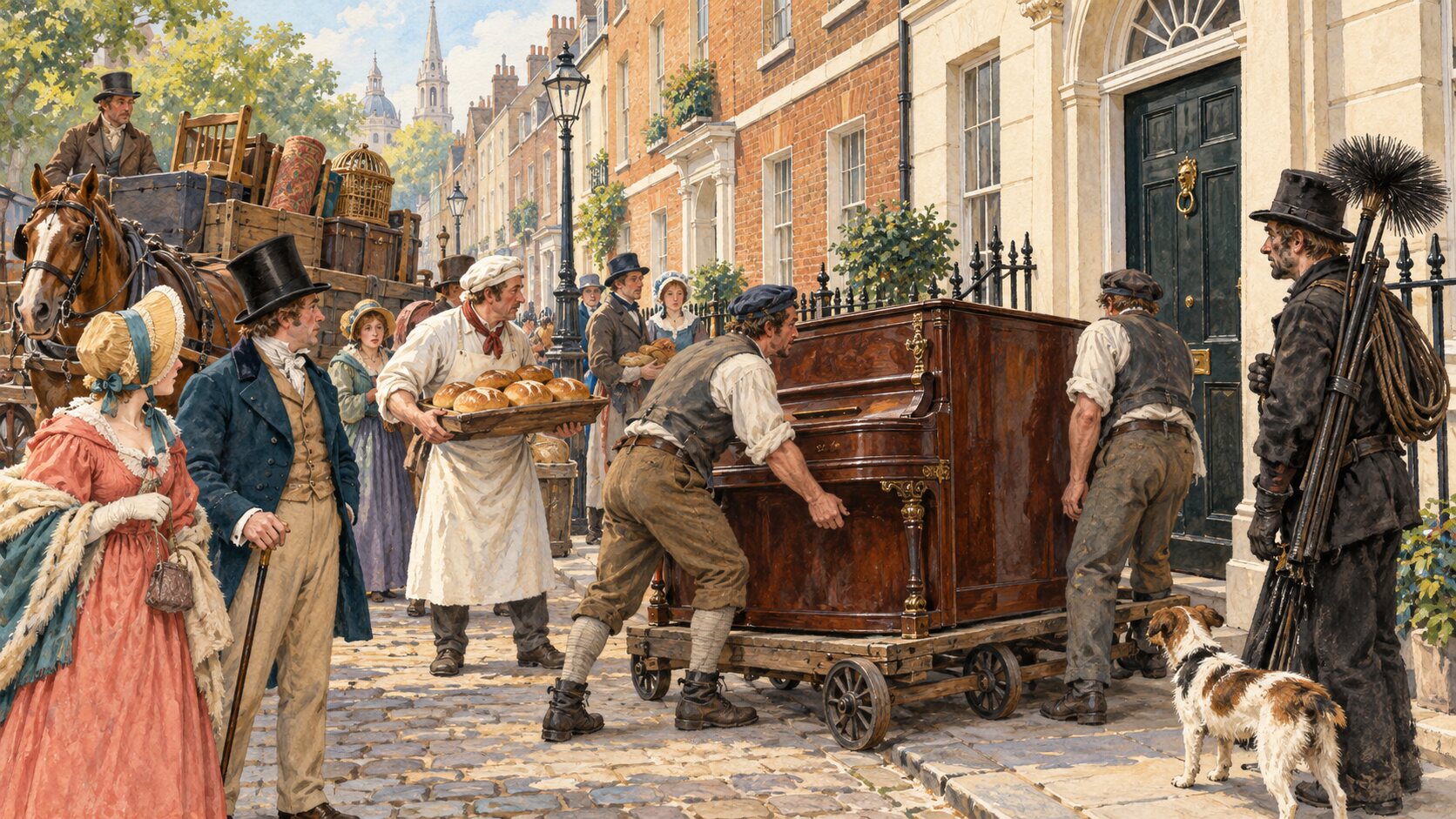
The difficulty appeared when those reasons converged on one doorstep. Wagons carrying coal from the Paddington wharves and carts loaded with furniture all tried to get close to Number 54. Contemporary reporting described enough goods to supply the street. These were substantial loads that had to be moved, rather than parcels that could simply be left at a door.
Six men carried an organ through a gathering that included barbers with wigs, dressmakers with boxes, and opticians bringing their wares. Doctors, tooth-pullers, and miniature painters came too. An attendant for childbirth and an undertaker had business at the same household, although its resident had requested neither service.
Tradespeople tried to leave with the goods they had brought, while spectators gathered to laugh at their predicament. Those attempting to reach the house and those trying to retreat now had to negotiate the same crowded street. Refusing an order at the door did not remove the wagons or the onlookers. What had begun as a problem for one household was preventing other people from moving through the area.
Then London's Lord Mayor arrived in his carriage. His letter offered a different reason for the visit. Mrs. Tottingham, it claimed, had been summoned to appear before him but was confined to her room by illness. Would he instead do her the favour of calling at her home? The merchants had been offered business; the mayor had been asked to accommodate a sick woman.
He did not stay long. At the Marlborough Street police office, he explained the note to the sitting magistrate. Officers were sent to restore order, but clearing the crowd was difficult while still more people and deliveries were arriving.
Police took up positions at the street corners to stop additional tradespeople approaching the house with goods. Confusion persisted at four in the afternoon. At five, another group began assembling: servants looking for positions. While officers tried to deal with people who thought they had something to sell, newcomers arrived believing the house had work to offer.
The name most closely associated with the prank is Theodore Hook, a writer of comic stage works and novels. In the familiar account, he bet a friend that he could make an ordinary house the most talked-about address in London.
A biography published after Hook's death described him preparing the letters with accomplices and watching the result from a room across the street. He was never prosecuted for the Berners Street affair, however, and why this particular household was selected remains unclear.
The attempt to identify the culprit was real. Contemporary reporting mentioned a reward and called for the person responsible to compensate those who had been deceived. For the people who had carried goods through London only to bring them back again, the day had consequences beyond its value as entertainment.
A satirical print followed within days. Published on December 6, it packed the Lord Mayor into a room with men carrying a coffin and assorted goods. The mayor promised to uncover the culprit ‘by Hook or by Crook’. The familiar expression for succeeding by any available means also contained the name of the writer later associated with the prank.
EDITORIAL RESPONSIBILITY
FactosBrain Editorial Desk
The FactosBrain Editorial Desk researched and reviewed this article under our editorial policy. We assess error reports under our corrections policy.