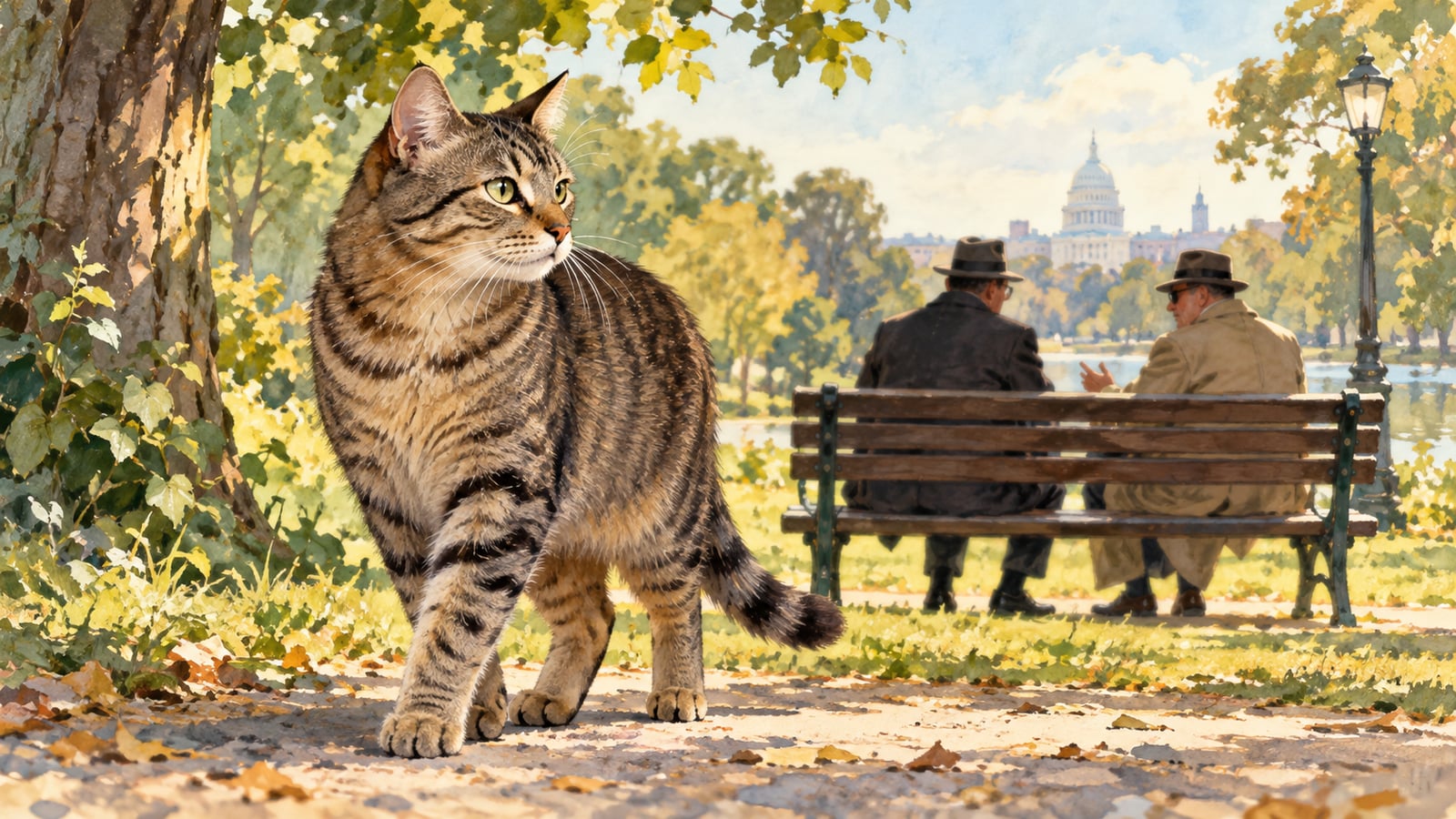
Imagine two people talking on a park bench. A stranger who stopped beside them might bring the conversation to a halt. A passing cat would attract much less suspicion. That difference helped make a cat seem useful to the CIA in the 1960s: it could approach people in places where a human eavesdropper would stand out.
The cat did not have to understand a secret. It only had to carry a microphone close enough to pick one up. The people on the bench would see an ordinary animal; someone listening at a receiver would hear their conversation. For meetings held outdoors, it was an intriguing proposition.
According to the CIA's later account, work began in 1964. A microphone went into the cat's ear, a small transmitter beneath loose skin, and an antenna was concealed in its long fur. Keeping everything out of sight mattered. Hanging a bulky recorder around its neck would have defeated the point of using a cat in the first place.
Small equipment brought its own limits. There was little room for a battery, which restricted how long the transmitter could operate. The team could not simply wait for the cat to wander into an interesting conversation eventually. It needed to reach the right place while the equipment was still working.
The electronics did work. Sound picked up at the ear could be transmitted to a receiver. The remaining task was to get that ear where the listeners wanted it. This was a different problem from making a smaller microphone.
In field tests, the cat did not reliably head for the chosen location. The CIA's later explanation was straightforward: it went where it wanted. The same freedom that made a wandering animal look unremarkable made it difficult to send on an assignment.
Training was not entirely unsuccessful. A declassified assessment recorded that cats could be trained to move over short distances. The researchers had managed to teach the animal something. They had not, however, produced a dependable operative.
An actual assignment asked much more of it. Moving a short distance under test conditions did not guarantee that the cat would approach the right people in an unfamiliar place, then remain within earshot. Unlike a human agent, it could not assess the mission. Unpredictable surroundings and the risk of exposing the operation further narrowed its usefulness.
The CIA decided the approach was impractical, and the project ended in 1967 without an operational deployment. Its assessment praised the researchers' energy and imagination. The people who had built the unusual equipment received credit; the animal carrying it received no mission.
A much sharper ending later became famous: the cat supposedly walked into the road during its first test and was killed by a taxi. That account spread through a former CIA employee's recollections, but the agency later disputed it. The taxi story remains unconfirmed.
What the project had achieved was strange enough. The CIA could put a microphone and transmitter on a cat and send its surroundings back to a listener. After that, it still had to persuade the cat. However valuable the conversation on the bench, the animal needed a reason of its own to go there.
EDITORIAL RESPONSIBILITY
FactosBrain Editorial Desk
The FactosBrain Editorial Desk researched and reviewed this article under our editorial policy. We assess error reports under our corrections policy.