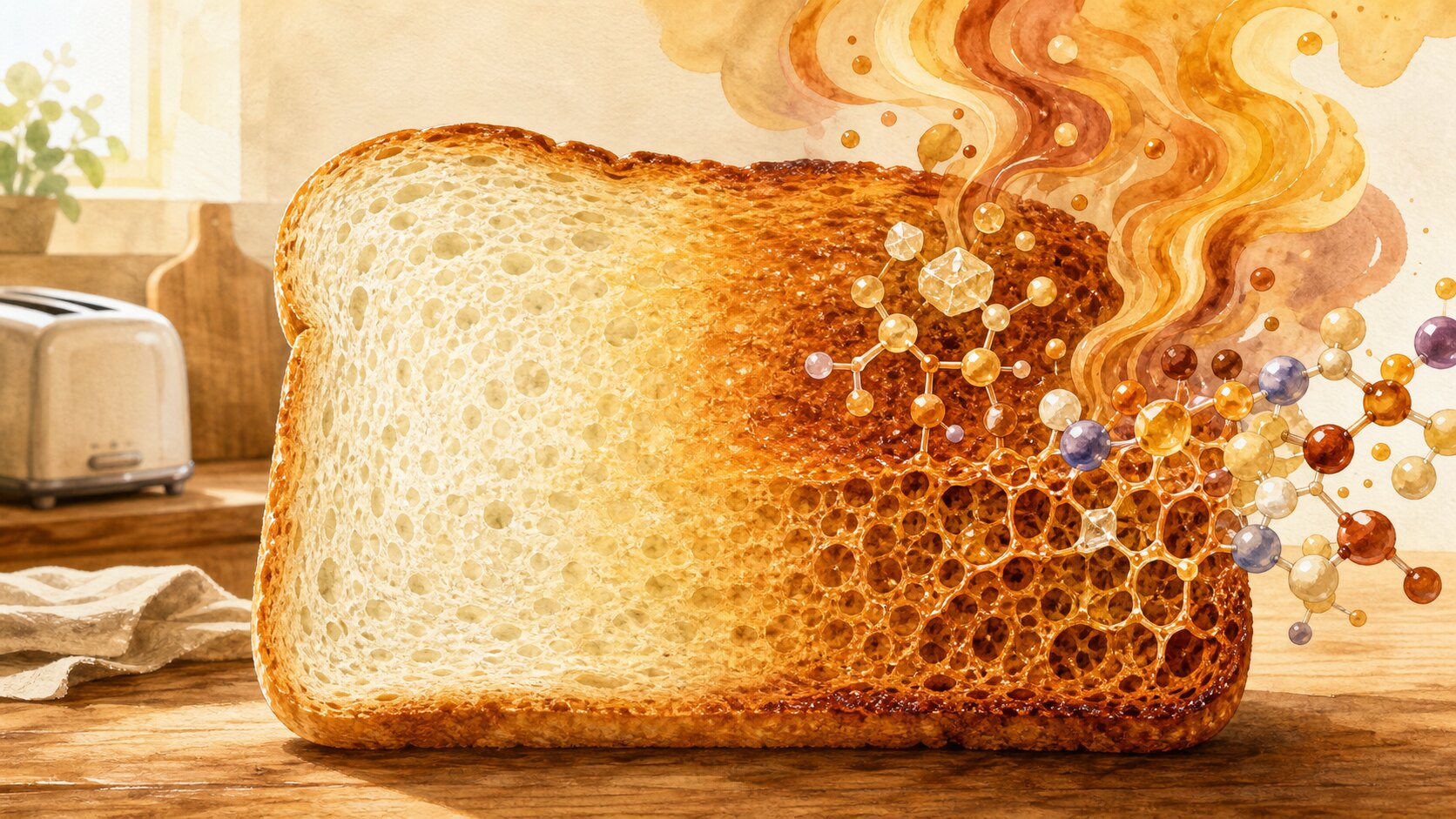
White bread turns brown in a toaster mainly because of the Maillard reaction. On the heated surface, reducing sugars meet amino acids, the building blocks of proteins, and enter a cascade of chemical reactions. The products include brown pigments and many new molecules responsible for roasted, nutty and bread-like aromas.
This is not a single substance simply changing color. After a sugar and an amino group first react, the resulting molecules rearrange, fragment and combine along many pathways. Larger brown compounds known as melanoidins eventually form, while smaller volatile compounds contribute to the varied smells associated with bread crust, roasted nuts and coffee.
The surface browns before the moist crumb because water controls temperature. Inside bread, abundant moisture keeps the temperature near the boiling point of water for a time. At the surface, water evaporates more readily, allowing the temperature to rise further. Maillard chemistry accelerates much more effectively on this hotter, relatively dry exterior than in the damp interior.
People often describe all browning as caramelization, but the two processes differ. Caramelization primarily involves sugars breaking down and recombining under heat. The Maillard reaction requires both a sugar and a nitrogen-containing partner such as an amino acid. Several reactions may overlap in toast, but Maillard chemistry is central to its characteristic crust color and toasted aroma.
Different breads brown differently because their ingredients and heating conditions vary. The amounts of accessible sugar and protein, acidity, moisture, temperature and time all change the reaction rate and the mixture of products. Even the same slice can taste different when heated gently for longer versus more intensely for less time because drying and aroma formation do not follow exactly the same course.
Crispness and brown color are related but not identical. The brittle texture comes largely from water leaving the surface and making the bread structure rigid and easy to fracture. Maillard chemistry adds color and aroma. A slice can therefore dry substantially while staying pale, or brown quickly because of its ingredients while parts of it remain soft.
Browning is also different from charring. Controlled Maillard reactions create a golden surface and complex flavor, but continued heating removes more water, breaks materials down and eventually produces a blackened, bitter crust. Toast is appealing not because heat paints bread brown, but because the surface briefly becomes a chemical workshop that builds new colors and aromas.
EDITORIAL RESPONSIBILITY
FactosBrain Editorial Desk
The FactosBrain Editorial Desk researched and reviewed this article under our editorial policy. We assess error reports under our corrections policy.