Look a little closer
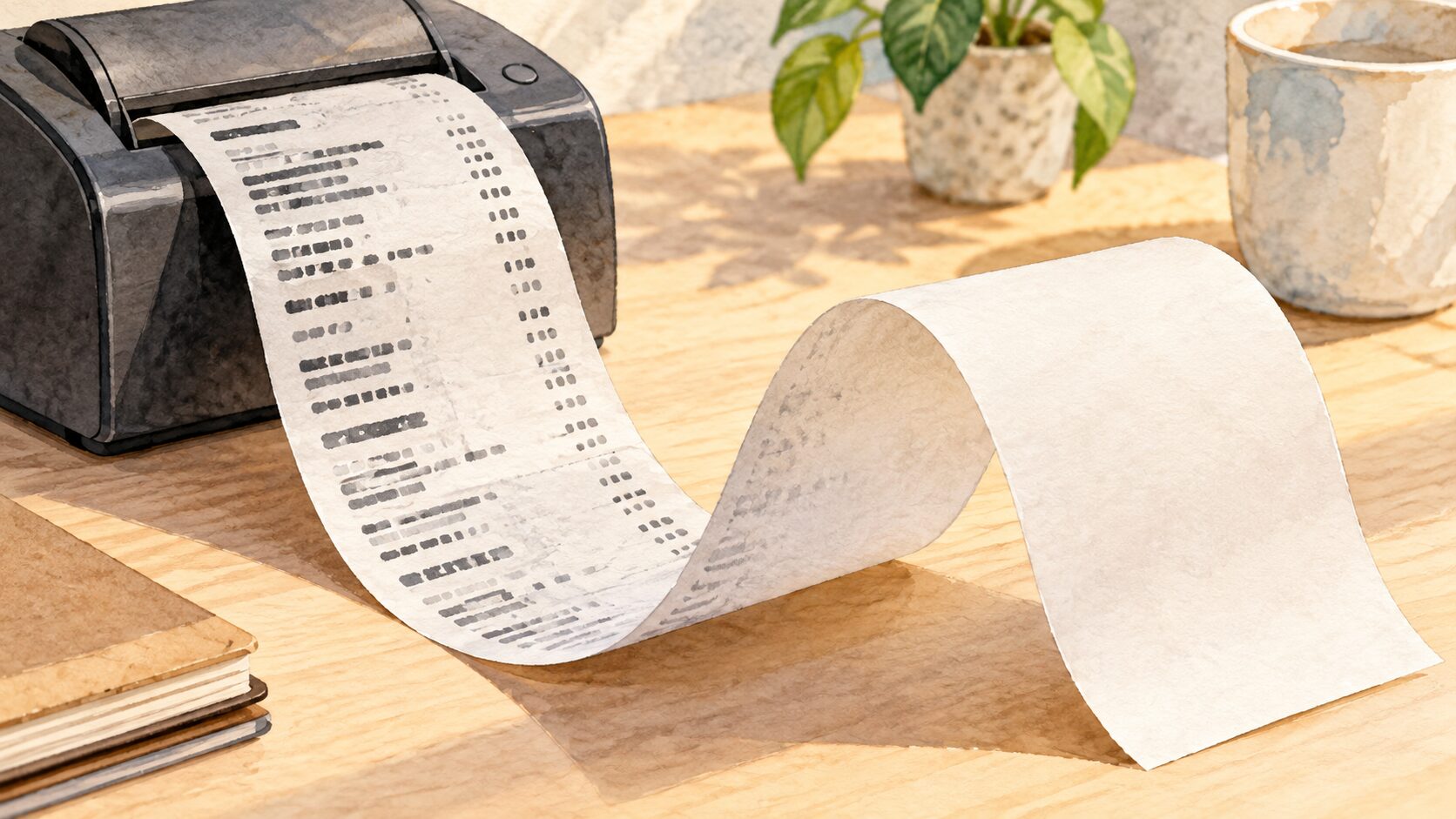
Many receipts fade because they are printed on thermal paper rather than marked with a separate layer of ordinary printer ink. A checkout printer heats selected spots on a chemically coated sheet, making those spots turn dark. The resulting image can lose contrast when the paper is exposed to heat, sunlight, moisture, oils, or certain plastics. The reason a receipt becomes hard to read is therefore tied to how its marks were made in the first place, not simply to ink evaporating from the page.
A direct-thermal printer usually has no ink cartridge for its receipt image. Tiny heating elements in the print head warm only the areas needed for letters, numbers, and barcodes. The coating on conventional thermal paper contains a nearly colorless dye and a developer that helps the dye change into a colored form when heated. The U.S. Environmental Protection Agency describes how the components in the coating interact when the print head delivers its pulse of heat. Areas that were never heated remain pale, creating the contrast that lets us read the receipt.
This process is useful because it is fast and needs few consumables at the counter. It is common in receipts, tickets, and labels. But a dark print at the moment of sale is not a promise of permanent visibility. Paper formulations differ, as do protective coatings and printer settings. A weak initial print has less contrast to spare when conditions later damage the image. An EPA assessment notes that a suitable paper-and-printer combination can remain readable for years under proper storage, while also stressing that the grade of paper and storage conditions affect the result.
Heat can damage more than the dark marks alone. Leave a thermal receipt in a hot car, for example, and unprinted areas may darken as well. If the pale background moves toward the color of the printed marks, the receipt becomes difficult to read even when the original characters have not simply vanished one by one. Thermal-paper manufacturer Koehler lists prolonged high temperatures among the factors that can shorten print durability. It also warns about direct sunlight and prolonged exposure to moisture. Several unfavorable conditions together can be worse than one condition by itself.
Contact materials matter too. A receipt tucked into a transparent sleeve might seem carefully protected, yet some PVC sleeves contain plasticizers that interfere with the thermal image. Oils, fats, alcohol, fuels, and aggressive chemicals can also reduce legibility, according to Koehler's storage guidance. This does not mean every clear folder destroys every receipt. The chemistry of the paper, the sleeve material, contact time, and temperature all matter. The broader lesson is that keeping paper physically flat and enclosed is not the same thing as keeping its thermal coating chemically stable.
Thermal receipts are not all destined to disappear within days. Manufacturers produce grades with different protective layers and storage expectations, including papers intended for long-lived records. It is equally misleading to promise that any particular shop receipt will last a fixed number of years. If a purchase record is important for a warranty, return, or expense claim, preserve the details soon after receiving it. Keeping the original in a cool, dry, dark place helps, and a photograph or electronic copy provides an independent record if the physical print later becomes unreadable.
Two kinds of damage can look like one problem. In one receipt, printed lines become faint; in another, the background darkens until the lines have little contrast. A barcode is especially sensitive to this loss of separation between marks and spaces. That is why preserving a clear copy while the receipt is still readable can be more useful than waiting to see whether the paper itself survives.
The contrast between two old receipts can be striking: one still has crisp characters while the other has a darkened background or ghostly gray print. That difference need not mean one printer used more ink. The image depended on a heat-sensitive coating from the start, and the two sheets may have had different formulations and very different lives after printing. Once the printing method is understood, fading stops looking like a mystery of disappearing ink and becomes a question about materials and storage.
EDITORIAL RESPONSIBILITY
FactosBrain Editorial Desk
The FactosBrain Editorial Desk researched and reviewed this article under our editorial policy. We assess error reports under our corrections policy.