Purple became associated with royalty less because of anything mystical in the colour itself than because one famous ancient dye was scarce and costly. Phoenician cities, including Tyre on the eastern Mediterranean coast, produced deep purple-red textiles from marine snails. Wearing cloth that demanded rare materials, skilled labour and trade became a visible way to display wealth and authority.
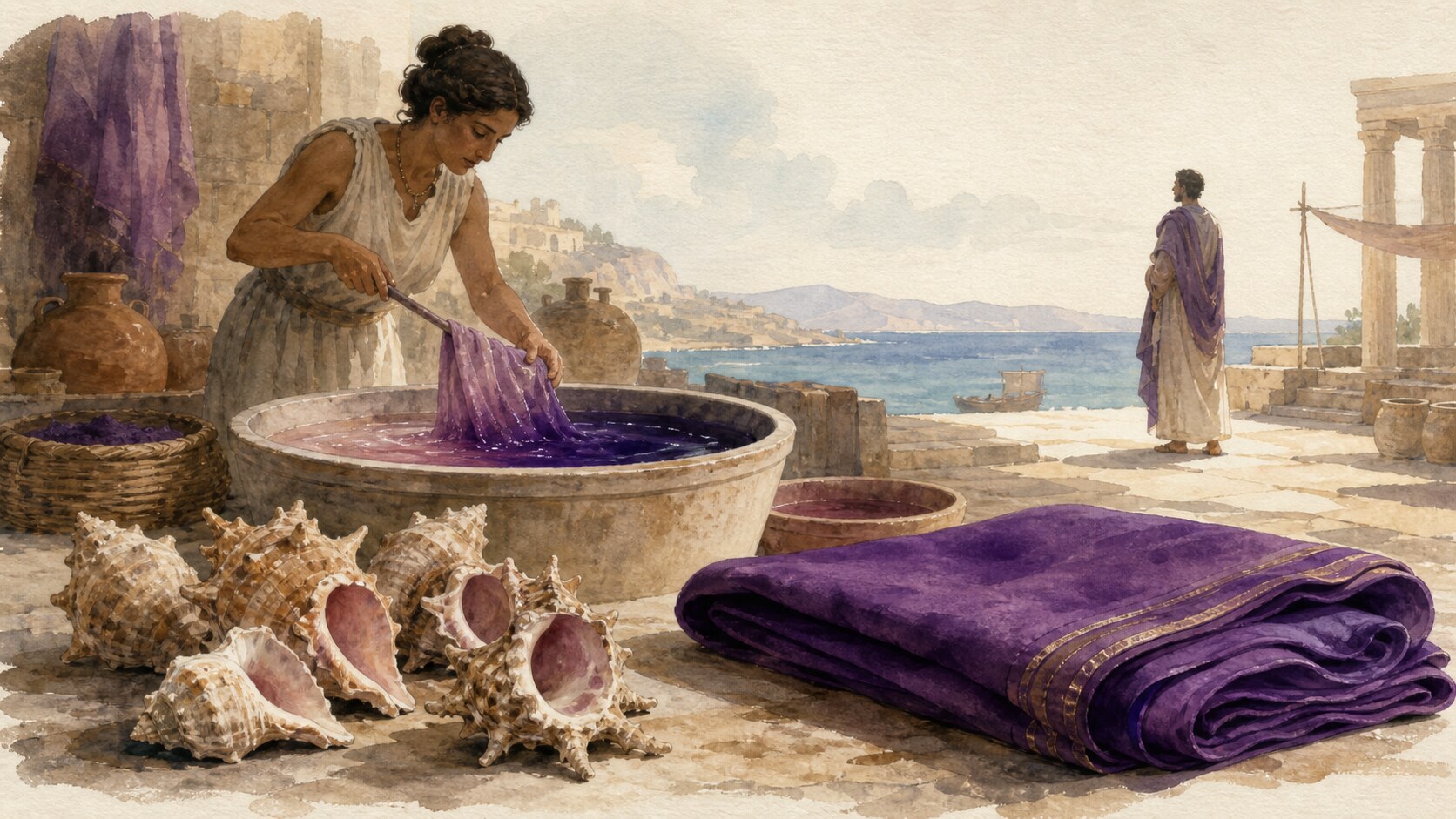
The dye known as Tyrian purple came from a small gland in several kinds of muricid sea snail. Each animal yielded very little colourant, so making enough dye for cloth required large numbers of snails and extensive processing. The secretion was not simply collected as ready-made purple paint: exposure to air and light helped transform its compounds until the desired red-purple colour developed.
Phoenician trading networks mattered as much as the difficult recipe. Merchants from coastal city-states such as Tyre and Sidon connected ports across the Mediterranean, turning dyed textiles into prestigious long-distance goods. A rare biological source, specialist knowledge and the cost of transport reinforced one another, making the finished fabric far more conspicuous than ordinary clothing.
Purple consequently appeared again and again in royal and imperial settings. In Rome and later Byzantium, particular purple garments and furnishings helped communicate the status of emperors and elites; costly purple also entered ceremonial religious textiles and luxury manuscripts. When rulers restricted or monopolized prestigious materials, the colour’s association with power became even stronger.
Ancient “purple” was not one exact modern swatch. The snail species, number of dye baths, exposure to light and details of processing could produce shades ranging from reddish crimson to dark violet. Other plants and minerals could also create purple hues. It would therefore be wrong to assume that every purple object in antiquity used Tyrian dye or belonged to a ruler.
The material basis of the symbol eventually changed. William Henry Perkin’s development of the synthetic purple dye mauveine in the 1850s made vivid purple textiles available to many more buyers. Purple no longer had to advertise access to a tiny supply of Mediterranean shellfish, yet centuries of imperial clothing and ceremony had already given the colour a durable cultural meaning.
Purple’s royal reputation was therefore built through economics and politics as well as aesthetics. The ability to obtain a difficult dye, command specialist labour, move luxury goods and regulate their use turned colour into a public statement of power. Even after chemistry made purple cheaper, the older association survived—an example of how the history of a material can outlast the scarcity that first made it symbolic.
EDITORIAL RESPONSIBILITY
FactosBrain Editorial Desk
The FactosBrain Editorial Desk researched and reviewed this article under our editorial policy. We assess error reports under our corrections policy.