Look a little closer
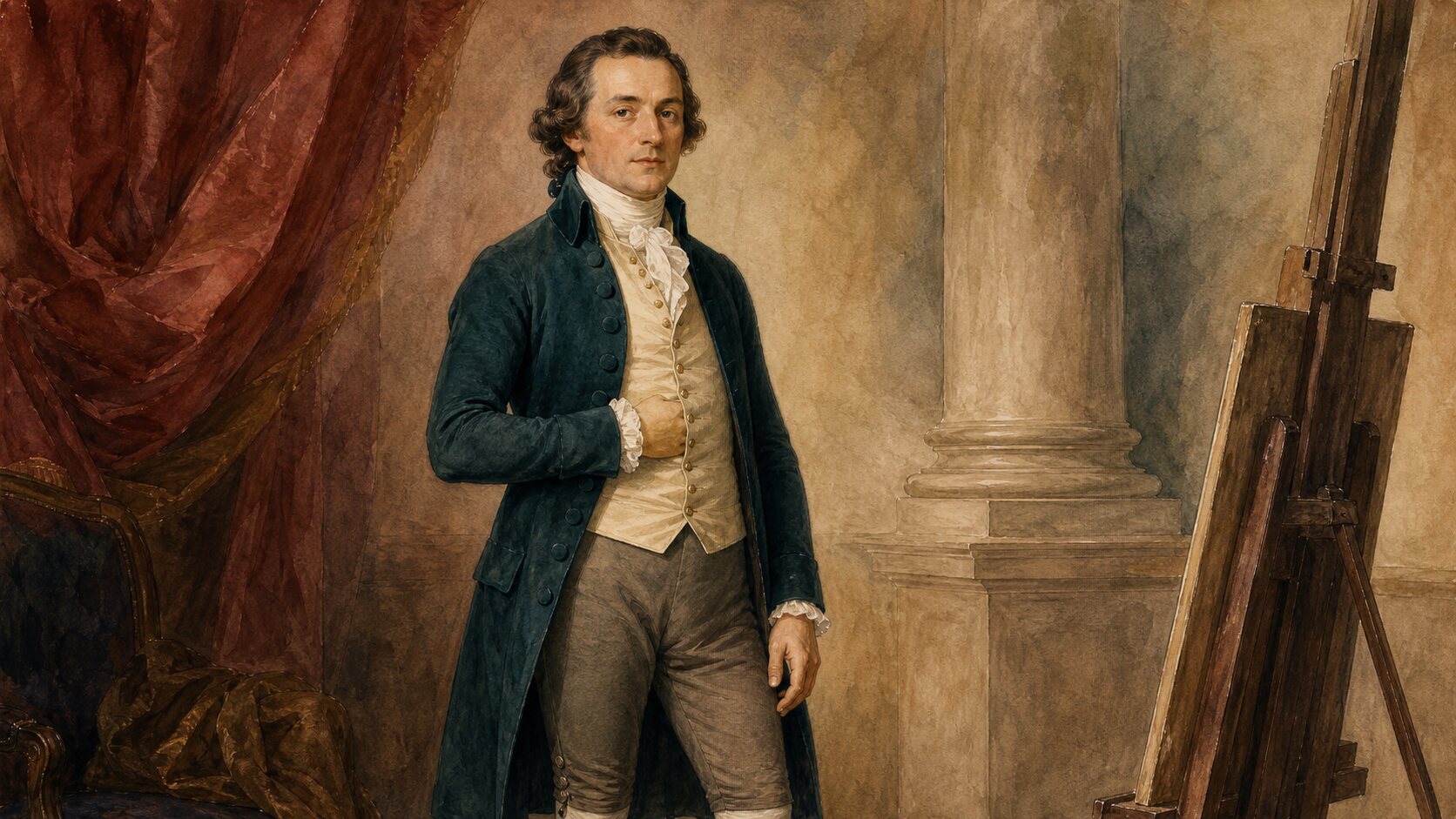
In many eighteenth- and nineteenth-century male portraits, a hand tucked into the waistcoat was a conventional sign of composure, gentility, and restrained authority—not usually evidence that the sitter was pressing an aching stomach or concealing a damaged hand. Portraitists arranged hands as deliberately as photographers now direct shoulders and expressions. Napoleon made the pose iconic, but he did not invent it.
Hands in a formal portrait were part of its argument about character. A clenched fist or pointing finger could imply command and action; a hand on a document could identify learning or office. Sliding one hand between waistcoat buttons quieted the silhouette without making the sitter look limp. The subject appeared to possess energy while keeping it under control, an attractive balance for a gentleman, official, or ruler who wanted to project steady power.
The pose appeared repeatedly in British and European gentleman portraits before Napoleon was born. Art historian Arline Meyer argued in a 1995 Art Bulletin study that the type reworked classical statuary, rhetoric, and contemporary conduct literature. François Nivelon's 1738 guide to genteel behavior described the stance as combining manly boldness with modesty. Hiding the hand was therefore not merely a passive omission. It actively displayed a culturally approved form of restrained masculinity.
Its classical connection should not be reduced to an unbroken rule that meant exactly the same thing from ancient Greece onward. Educated eighteenth-century Europeans treated statues of draped orators and statesmen, along with classical advice about controlled gesture, as prestigious models. Painters adapted that visual language to a modern waistcoat. Antiquity supplied authority and a vocabulary of civic self-command rather than one original pose copied without change for two thousand years.
Jacques-Louis David's 1812 portrait The Emperor Napoleon in His Study at the Tuileries used this vocabulary for political effect. Napoleon stands with one hand in his waistcoat while law books, papers, and a nearly spent candle suggest prolonged work. The National Gallery of Art identifies the posture with nobility and composure. The canvas is not a candid record of one instant; it combines objects and times into a constructed image of a ruler who labors through the night yet remains perfectly controlled.
The picture therefore cannot establish the popular story that Napoleon held his abdomen because of an ulcer or chronic pain. Questions about his health are separate from the iconographic reason a painter selected this pose. Earlier portraits and its use for many other gentlemen fit a shared convention much better than a symptom unique to Napoleon. Treating the position as a medical record mistakes a designed public signal for an involuntary private gesture.
Nor is “artists found hands difficult” a sufficient general explanation. Concealing five fingers may simplify one part of a composition, but painters still rendered the remaining hand, face, buttons, and elaborate fabrics, and the posture appears in expensive official portraits. Museum collections and conduct literature show that viewers could recognize it as meaningful. Practical comfort, fashion, and convenience may still have influenced individual sittings; a convention does not require every artist or patron to hold precisely the same intention.
The pose survived into mid-nineteenth-century photography because the new medium did not immediately discard the social grammar of painted portraiture. Studios borrowed chairs, columns, curtains, and familiar bodily arrangements that helped clients present status and character. Some sitters inserted the left hand rather than the right, and civilians as well as rulers adopted it. A hidden hand alone therefore cannot prove a particular politics, personality, or membership in a secret society; a widely available convention could be used in many contexts.
The tucked hand reveals that an old portrait was not merely a copy of someone's face and clothes. It was a reputation built through posture. Placing the hand inside the waistcoat suggested not an absence of action but the capacity to act without uncontrolled display. Once Napoleon is compared with earlier sitters and the conduct books that taught such gestures, the hand stops looking like an anatomical secret. It becomes what the portrait intended it to be: a public sign designed for viewers to read.
EDITORIAL RESPONSIBILITY
FactosBrain Editorial Desk
The FactosBrain Editorial Desk researched and reviewed this article under our editorial policy. We assess error reports under our corrections policy.