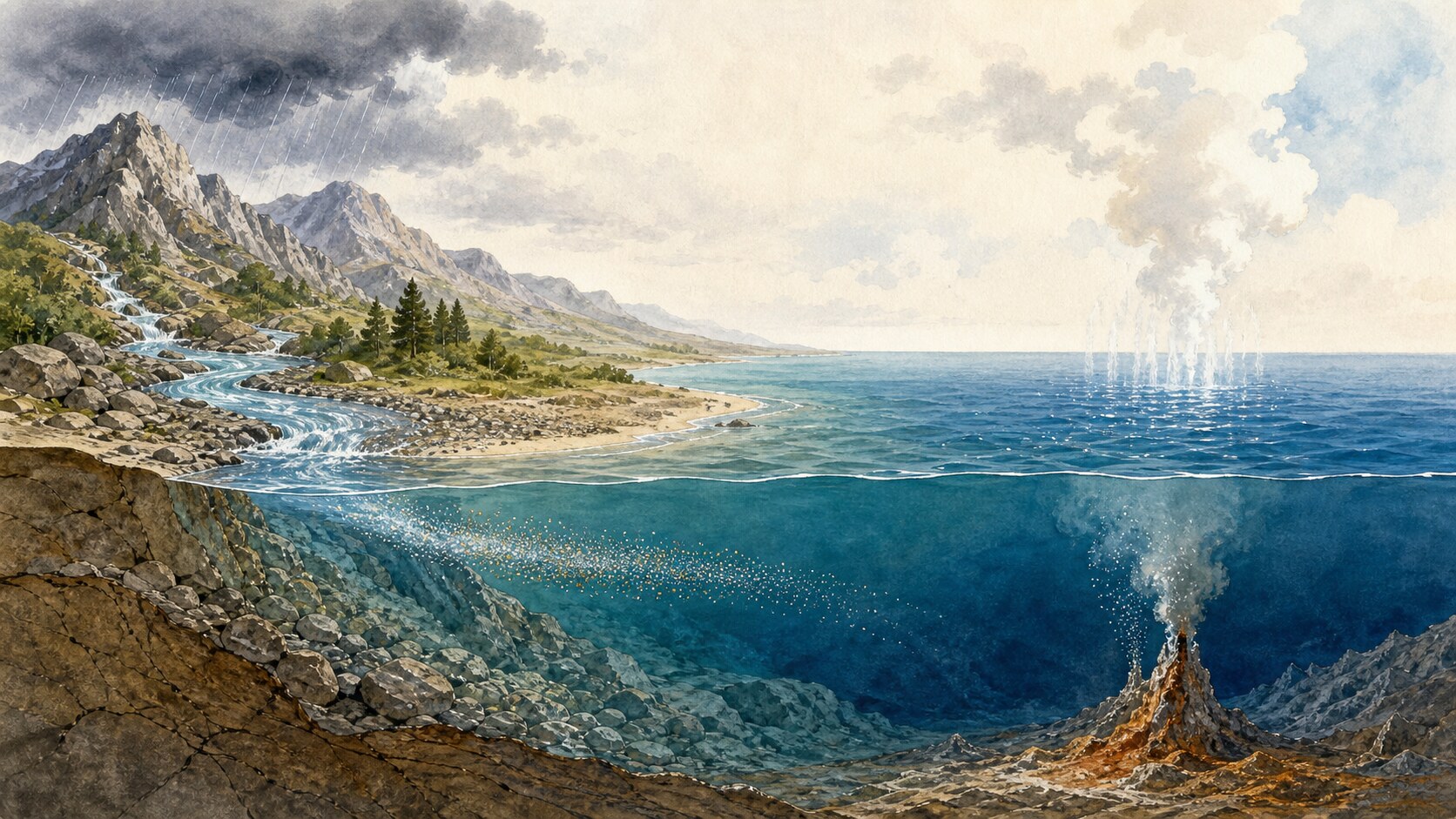
Ocean salt is the long-term result of ions arriving mainly from weathered land rocks and reactions at the seafloor. Rain and rivers slowly release and transport dissolved material to the sea. When ocean water evaporates, water molecules leave for the atmosphere while most of those ions remain behind.
Rainwater takes up carbon dioxide from air and especially from soil, making it mildly acidic. As it passes through cracks, it chemically weathers minerals and releases dissolved sodium, calcium, potassium and other charged particles. A river may taste fresh because its concentrations are low, yet rivers continuously deliver these ions to the ocean.
The seafloor is not merely a container. Seawater circulates through fractures in oceanic crust, reacts with hot rock and returns at hydrothermal vents, gaining some elements and losing others. Underwater volcanism and exposed salt deposits also contribute material, although continental weathering and seafloor exchange are major parts of the long cycle.
Sodium and chloride are the most abundant ions in seawater and together account for most of its dissolved ions. Magnesium, sulfate, calcium, potassium and many trace components are present too. Average open-ocean salinity is about 35 parts per thousand, roughly 35 grams of dissolved salts in a kilogram of seawater, but that is a global benchmark rather than a value found everywhere.
Salt does not simply accumulate forever at an unchanged rate. Organisms incorporate ions into shells and skeletons, minerals precipitate, and sediments and ocean crust remove or exchange chemical components. Different ions have different residence times. Modern salinity therefore reflects a long-running balance between inputs, removals and recycling, not just evaporation concentrating an ever-growing stock.
Local salinity can differ substantially from the average. Strong evaporation with little freshwater input raises it, while heavy rain, large rivers or melting ice dilute surface water. Currents and mixing redistribute those contrasts. Maps of salinity therefore record both the water cycle and ocean circulation, not a uniform layer of equally salty water.
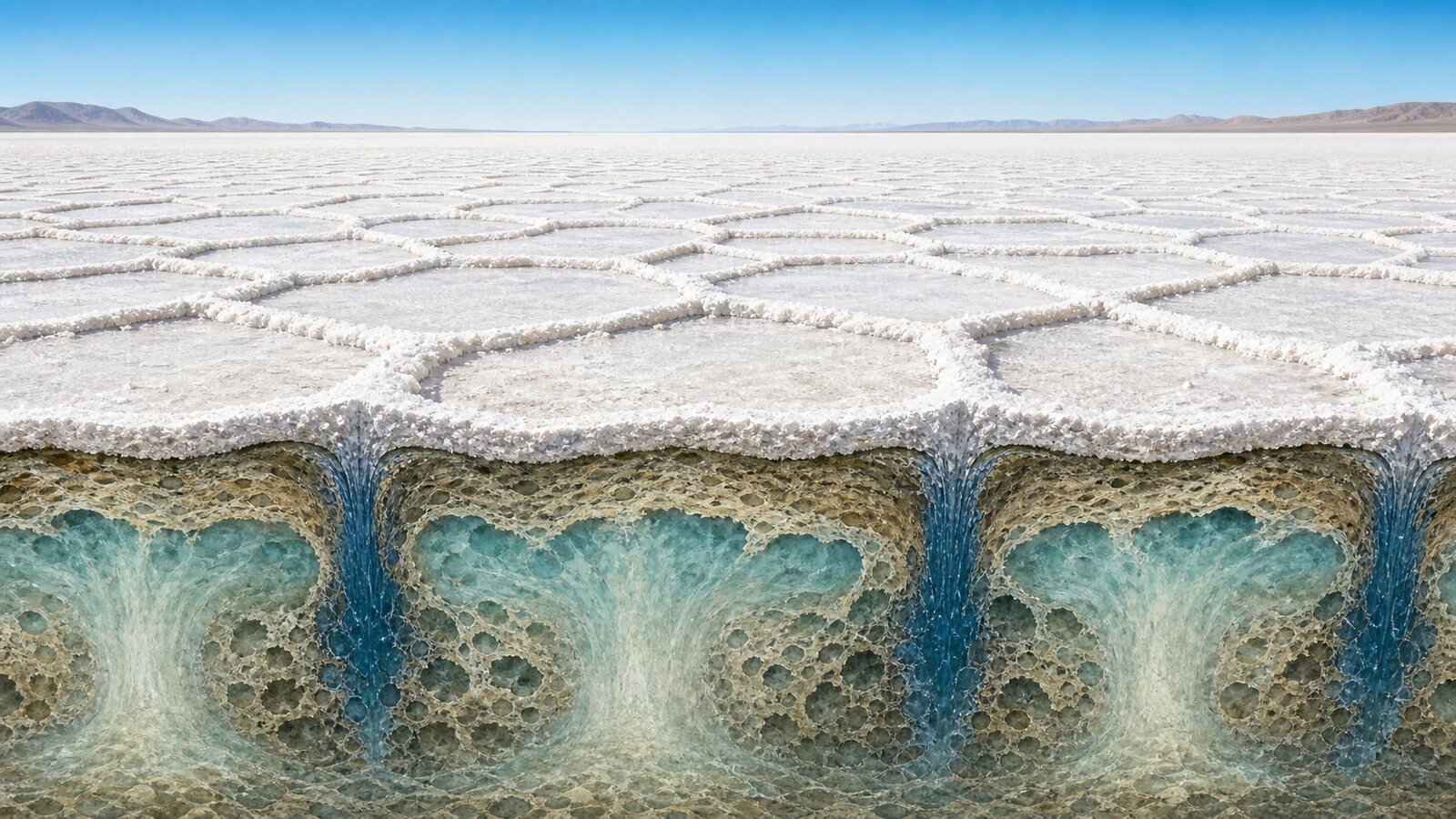
The same logic helps explain why most rivers and many lakes remain fresh. Their water and dissolved ions keep flowing onward before becoming highly concentrated. A landlocked lake with no outlet can become salty when evaporation repeatedly removes water but leaves solutes behind. The ocean's taste is a planetary chemical record of water cycling quickly while many ions stay much longer.
EDITORIAL RESPONSIBILITY
FactosBrain Editorial Desk
The FactosBrain Editorial Desk researched and reviewed this article under our editorial policy. We assess error reports under our corrections policy.