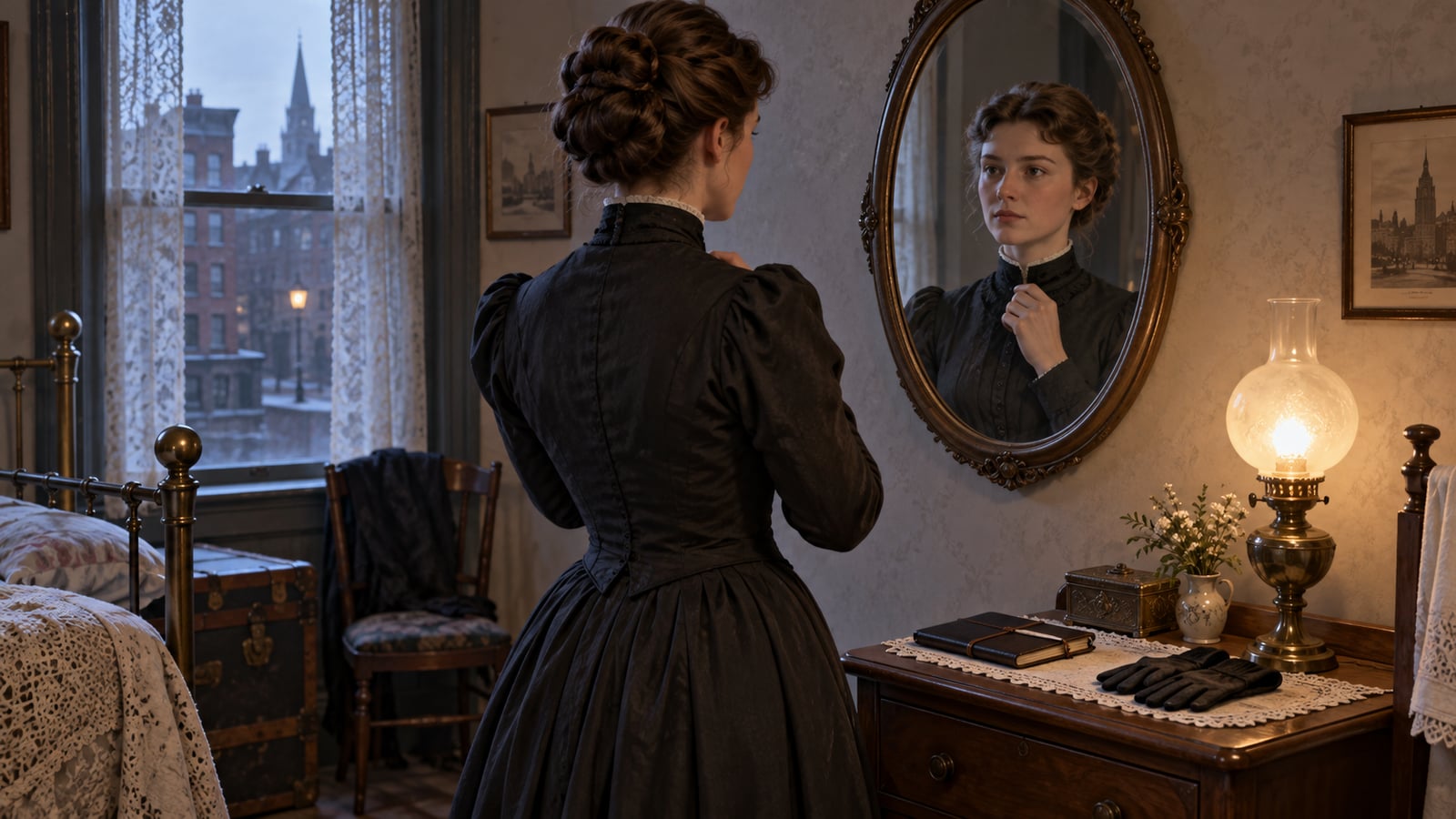
Nellie Bly practiced staring at herself in a mirror. She was not preparing for a stage performance. She wanted doctors to believe she needed psychiatric confinement. In 1887, the New York World proposed that she enter an asylum and report on its treatment of patients. She accepted, with one practical question still unresolved: how would she get out again?
According to the book she later wrote, her editor had no detailed exit plan. If necessary, the paper would reveal her identity and assignment. Using the name Nellie Brown, she entered a women's lodging home and persuaded those around her that something was wrong. Medical examinations eventually led to her confinement in the women's asylum on Blackwell's Island. Reporting from inside now meant letting other people control her departure.
Once on the island, she made a change. Bly wrote that she stopped trying to act ill and spoke and behaved as she normally would. Most of those responsible for her care still treated her as mentally unwell. The impression that had helped her enter was harder to escape. Speaking coherently and objecting to her treatment did not simply unlock the door.
Daily life supplied the material for her report: cold bathing, unpalatable food and inadequate clothing. She described cold water poured over her head and the difficulty of obtaining more clothes. These were experiences a visitor might miss. For someone who had to stay, the same meals, washing arrangements and discomfort returned each day.
Other women had even less opportunity to explain themselves. One, Louise Schanz, did not speak English. In Bly's account, a doctor asked a nurse to communicate in German, but no adequate conversation followed. The problem was not that a reporter could reliably diagnose every person she met. It was that decisions were being made without properly hearing the person affected.
After ten days, Bly was released. A lawyer came to tell her that people outside were prepared to take responsibility for her. She had someone waiting to secure her departure; the women she had lived with remained. Her account describes relief mixed with distress at leaving them. The assignment could end for the reporter while their confinement continued.
Publication brought an official investigation. Bly testified before a grand jury and accompanied its members back to the island. This time, she wrote, the kitchen was clean and the bread looked nothing like the bread she had eaten. New washbasins had replaced the buckets. Entering as an investigator produced a different view of the institution from entering as a patient.
Several women she wanted the investigators to meet had been transferred or discharged. Nevertheless, she reported that the jury supported her account and recommended changes. Her experiences passed from newspaper pages into a book. The performance begun in front of a mirror was over. What she had said inside the asylum was finally being heard outside it.
EDITORIAL RESPONSIBILITY
FactosBrain Editorial Desk
The FactosBrain Editorial Desk researched and reviewed this article under our editorial policy. We assess error reports under our corrections policy.