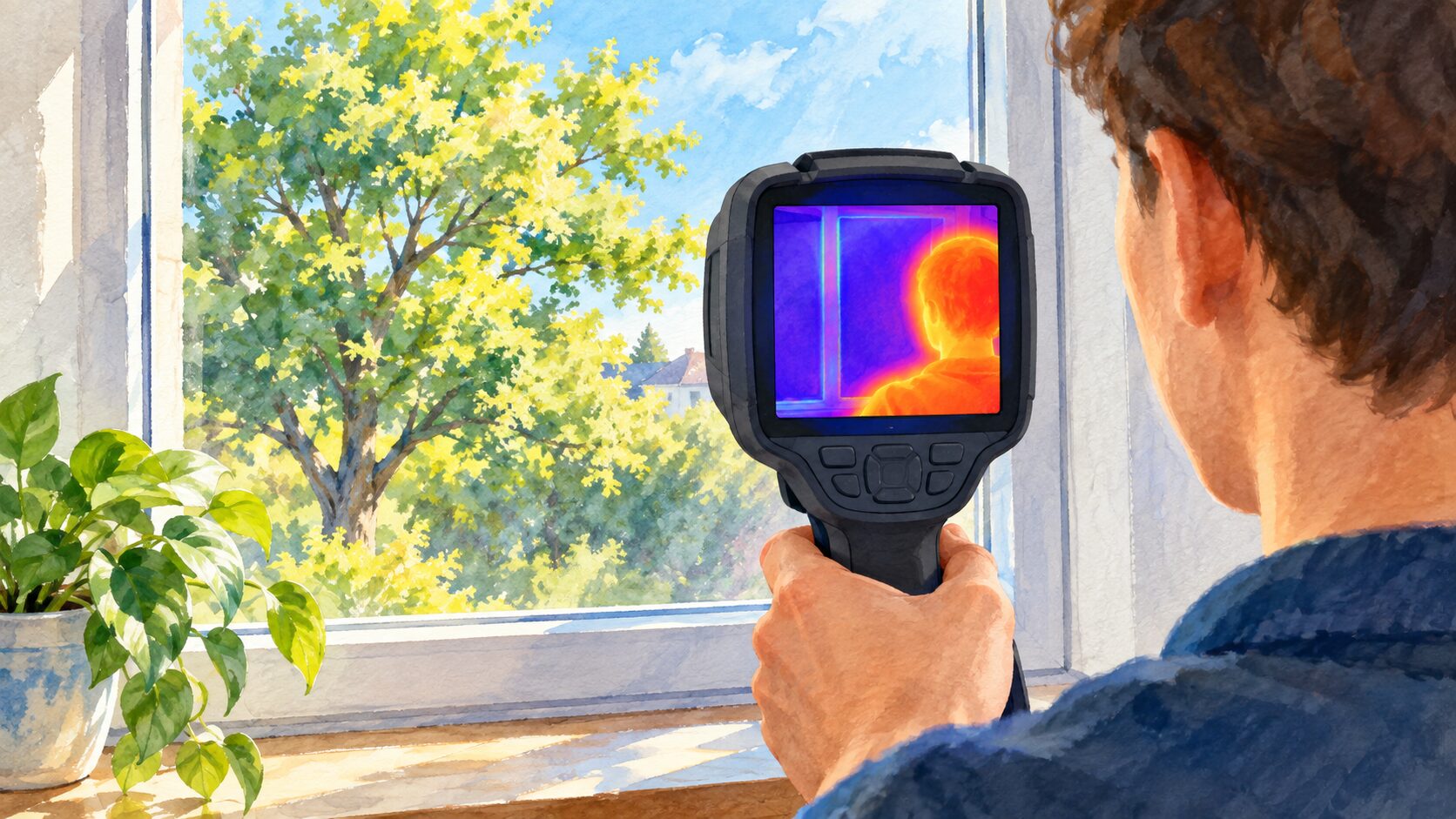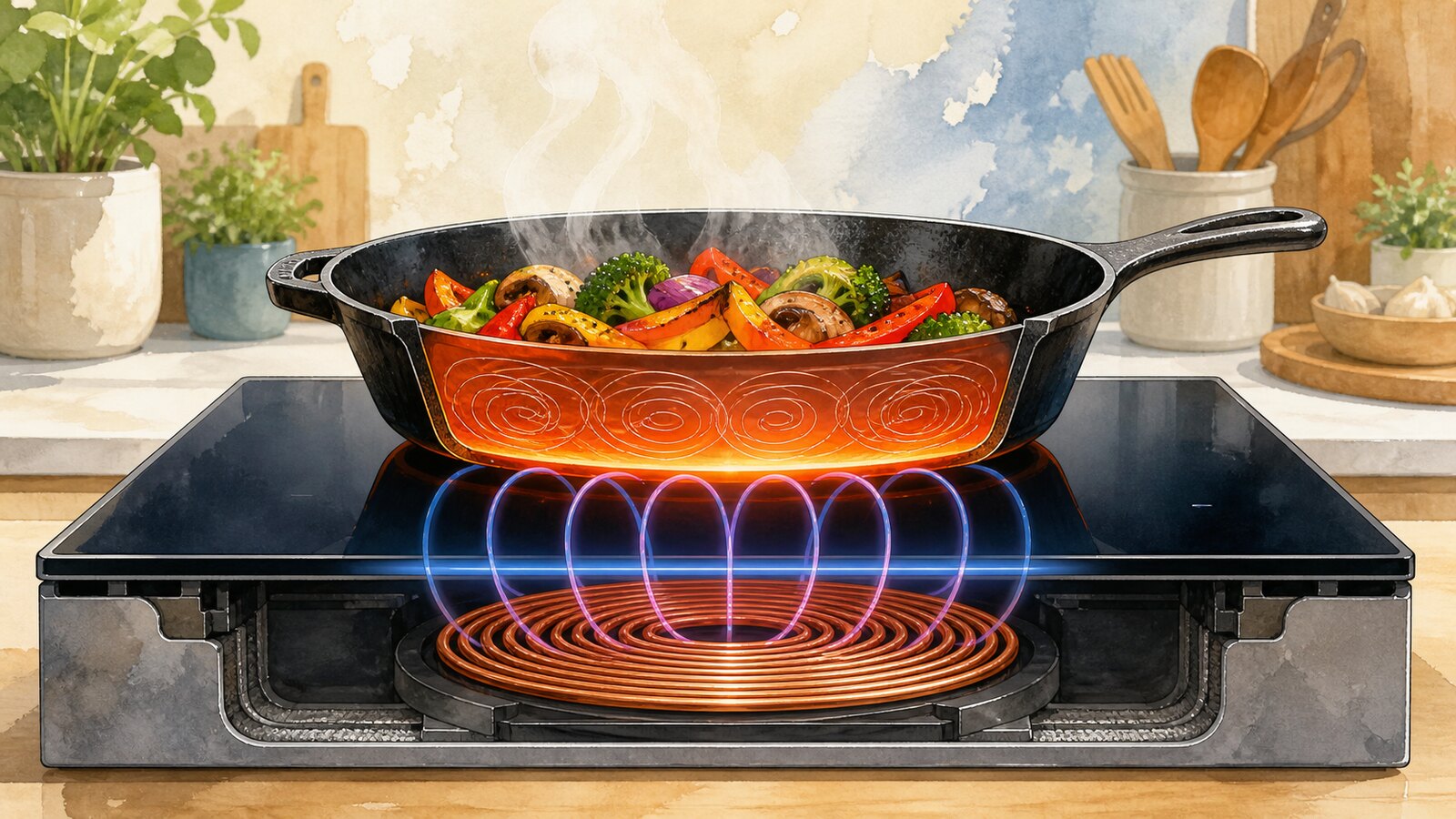
On an induction cooktop, the pan bottom becomes the primary heating element. Electronics send rapidly alternating current through a coil beneath the glass, creating a changing magnetic field. That field induces electrical currents in compatible metal cookware. Because the metal has electrical resistance, the currents dissipate energy as heat inside the pan. A flame or glowing resistance burner is unnecessary because energy is converted where cooking begins.
The cooktop's power electronics convert household alternating current into a higher-frequency current suited to the flat copper coil. As the coil current repeatedly changes magnitude and direction, its magnetic field changes with it. The field passes through the glass-ceramic panel and couples to the pan above. The glass is not the material that the field is mainly designed to heat.
Faraday's law describes how a changing magnetic field produces an electromotive force in a conductor. In a pan base, that force drives circulating eddy currents. Electrons moving through ordinary metal encounter resistance, and electrical energy becomes random atomic motion—heat. Repeated magnetic reversal can add hysteresis losses in magnetic materials, but induced current and resistive heating provide the central explanation for induction cookware.
This is why not every metal pan performs the same way. A ferromagnetic base couples strongly to the coil and helps concentrate its magnetic flux. Cast iron and many magnetic stainless steels work well. Bare aluminum, copper, and glass generally do not heat on a conventional unit, although an aluminum or copper pan can be induction-ready when its manufacturer bonds a suitable magnetic layer into the base.
The refrigerator-magnet test is a useful first check. If a magnet grips a broad area on the bottom firmly, the pan will usually work. A weak attraction, a small magnetic insert, or an unusually shaped base may still lead to poor detection or reduced output. The cookware maker's induction-compatible mark and the appliance instructions are more authoritative. The rule is not merely that any metal will do.
Heat generated in the pan spreads through its base and conducts into food; convection then circulates energy through liquids. The magnetic field is not directly cooking water molecules or soup. Electromagnetic energy is first converted within the cookware, and the cookware transfers thermal energy to its contents. Lifting the pan far above the coil or placing it badly off-center weakens coupling and reduces heating.
Induction responds quickly because there is less intermediate burner mass to heat. Changing coil power promptly changes the currents and heat generated in the pan, and many appliances stop driving the coil when they no longer detect cookware. Yet turning off the field does not remove heat already stored in a heavy pan or hot food. Cooking and temperature rise can continue briefly through thermal inertia.
The common claim that the surface stays cold needs qualification. The magnetic field does not make the glass the main heater, but a hot pan conducts heat back into the contact area. After prolonged cooking, the panel can be hot enough to burn skin, and many models display a residual-heat warning. An empty pan at high power may also overheat rapidly because food or water is not carrying energy away.
Pan detection is an engineered safety feature rather than a magical property that makes every small object harmless. The cooktop measures changes in the coil's electrical behavior to infer whether suitable cookware of adequate size is present, and thresholds vary by model. Users should not test cutlery on an active surface. People with implanted medical devices should follow the appliance manufacturer's and their clinician's guidance about electromagnetic equipment.
An induction hob is best pictured as an energy coupler with a resemblance to a transformer. The coil's changing magnetic field creates currents in the pan, the pan's resistance converts their energy to heat, and the hot pan cooks the food. That direct coupling enables rapid control, but it also requires compatible cookware, sensible positioning, and respect for residual heat. No flame does not mean no heat or no burn hazard.
EDITORIAL RESPONSIBILITY
FactosBrain Editorial Desk
The FactosBrain Editorial Desk researched and reviewed this article under our editorial policy. We assess error reports under our corrections policy.