Look a little closer
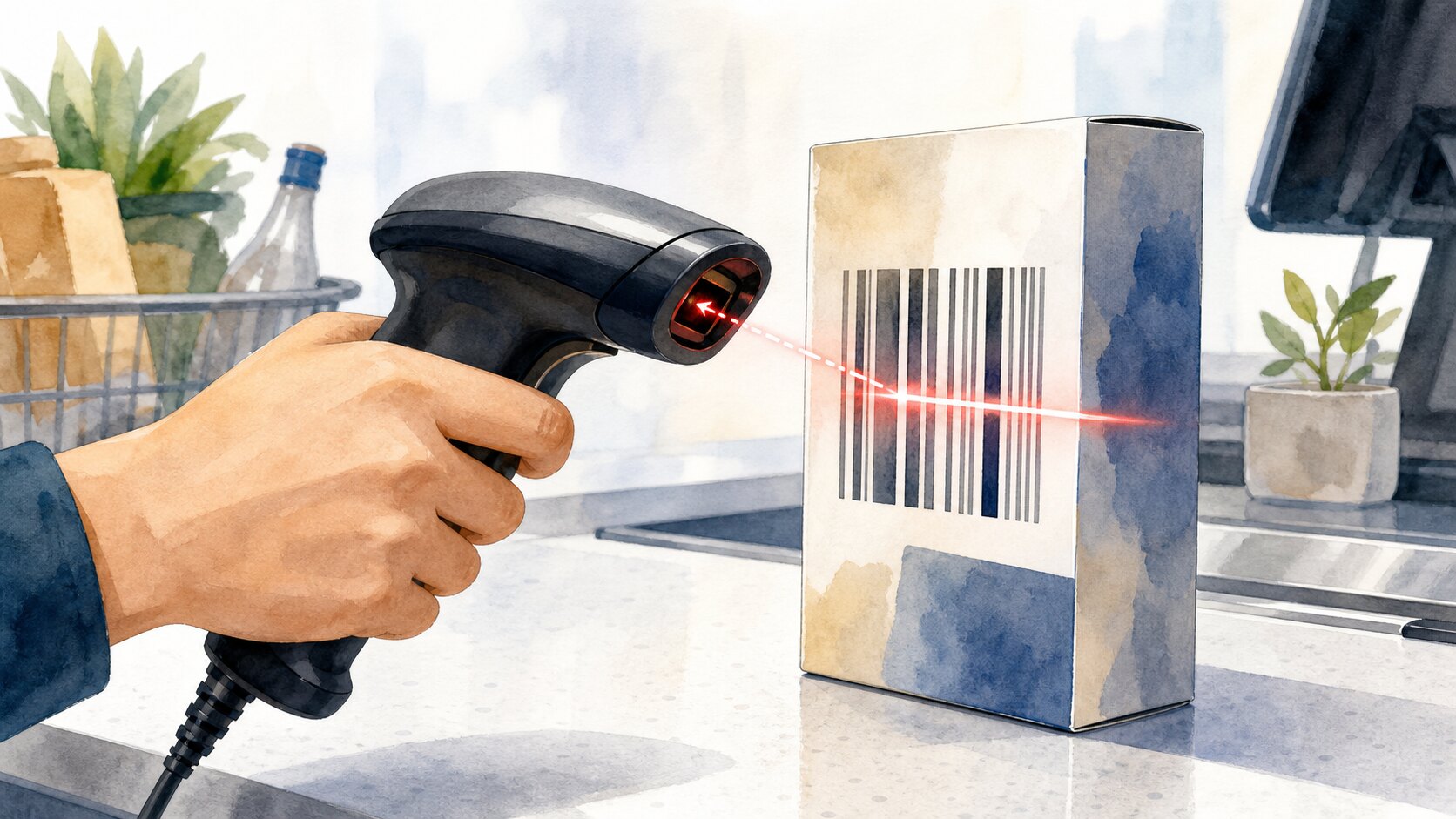
A barcode on a package looks like a pattern of black lines, but combinations of bars and spaces of different widths represent numbers or characters. The familiar one-dimensional barcode arranges vertical bars and spaces along one line. A scanner does more than simply see the lines. It turns differences in reflected light into electrical signals and interprets those signals using a defined set of rules.
A laser scanner often sweeps red light across the barcode. A light background reflects more light and a dark bar reflects less, so a sensor receives a changing pattern of bright and dark reflection. A photodetector converts that pattern into an electrical signal over time. Even when a scanner moves quickly, it can read the symbol's structure if the relative widths of bars and spaces are preserved.
Software then finds the start and end regions and the basic unit of bar width, decoding the pattern into numbers or characters. Each barcode type has rules for which bar-and-space combinations represent which data. Some symbols also include a check character that helps detect reading errors. The value a scanner obtains is usually not a product name or price itself; it is an identifier that a sales system or database can look up.
Lasers are not the only approach today. Image scanners can capture the whole barcode like a photograph and analyze its pattern. They can therefore read not only a 1D row of bars but also 2D codes that store information in a grid of dots or small squares. A 2D code can be read from different orientations and can carry more information, though the symbol type and equipment must be compatible.
Contrast and clear space matter for reliable scanning. Dark bars on a light background make reflection differences easier for a sensor to distinguish, while quiet zones at the sides show where a symbol begins and ends. Creases, glare, blurred printing, and very small sizes can make reading difficult. In the instant of a checkout beep, light, a sensor, standardized coding, and a database are working together.
EDITORIAL RESPONSIBILITY
FactosBrain Editorial Desk
The FactosBrain Editorial Desk researched and reviewed this article under our editorial policy. We assess error reports under our corrections policy.