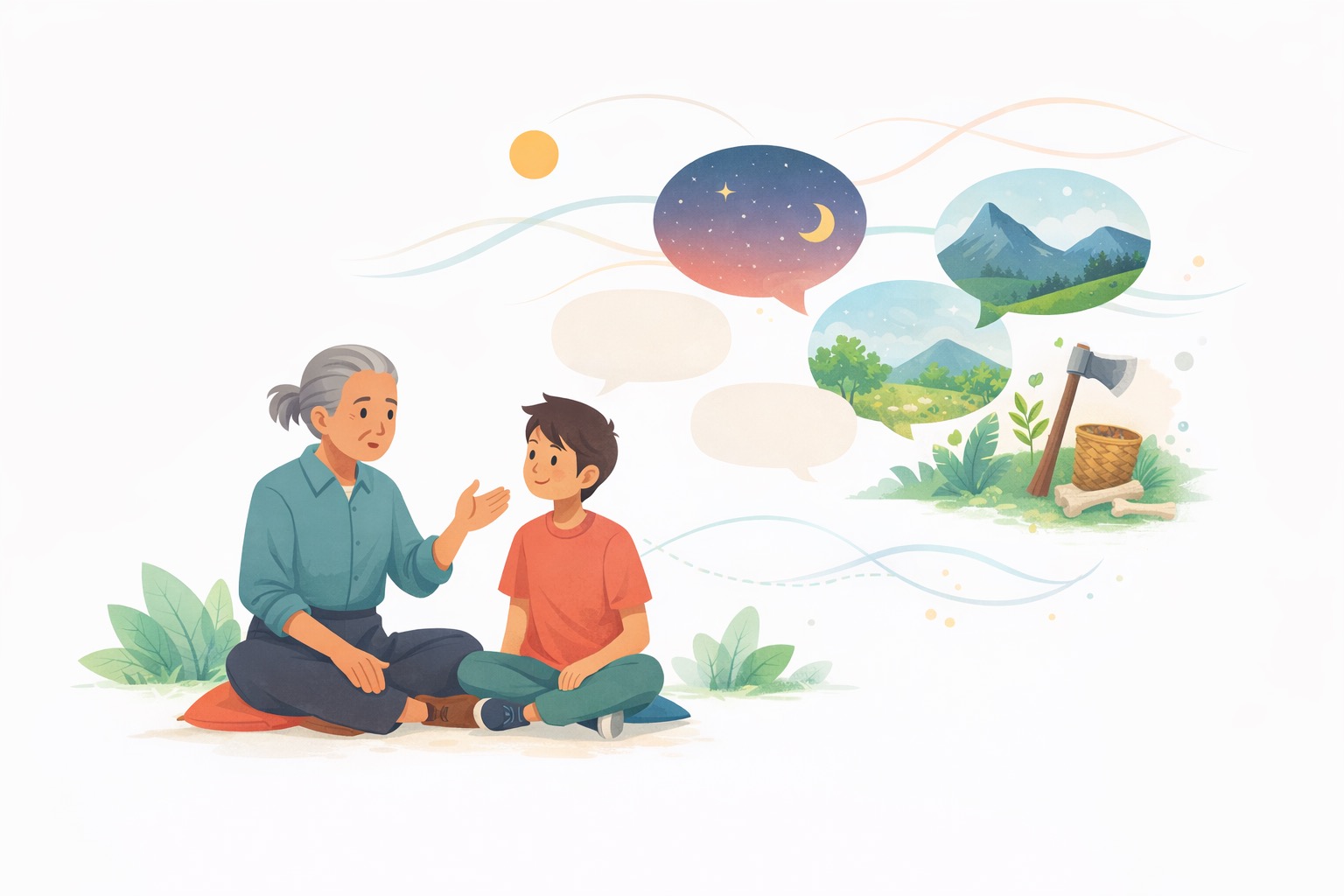
When a language falls out of use, the loss reaches beyond a list of words. A language is a working system for telling stories, classifying the surroundings, marking family relationships, joking, praying and passing on practical knowledge. If children no longer learn it as a language of everyday life, those functions can become harder to transmit even when recordings and dictionaries survive.
Language shift usually happens through social pressure rather than a community simply deciding that its language has no value. Schooling, employment, migration, discrimination and government policy can reward a dominant language while restricting the places where a smaller one is useful. Parents may switch languages to protect their children or expand their opportunities, and fluent speakers gradually become concentrated in older generations.
What disappears is not a mystical worldview shared identically by every speaker. Communities contain disagreement, change and individual expertise. Yet languages can preserve fine distinctions that grew from long experience with local plants, animals, weather, land use, kinship or ceremony. Translating a term may capture its rough reference while losing the network of practices and memories that made it meaningful.
Documentation is therefore essential but incomplete. Audio, video, texts, grammars and dictionaries can preserve evidence for future speakers and researchers. They cannot by themselves recreate conversations between generations or the ordinary situations in which children learn how expressions feel, when they are appropriate and how they change.
A language is not necessarily doomed merely because it has few speakers. Communities have revived or strengthened languages through immersion schools, family programs, public media, digital tools and legal recognition. The decisive issue is not a simple population threshold but whether speakers have the resources, safety and desire to use the language and teach it to children.
Protecting linguistic diversity means supporting people, not freezing their speech as a museum specimen. Communities must be able to decide what to record, what to keep private and how their language should develop. When a language goes silent, humanity loses a living route by which knowledge and identity were continually remade—not just a code that could be stored on a shelf.
EDITORIAL RESPONSIBILITY
FactosBrain Editorial Desk
The FactosBrain Editorial Desk researched and reviewed this article under our editorial policy. We assess error reports under our corrections policy.